
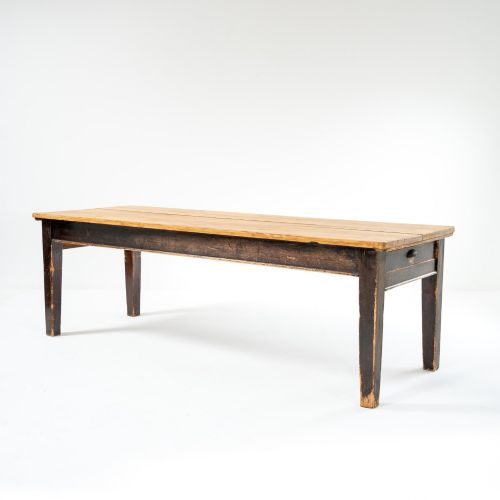
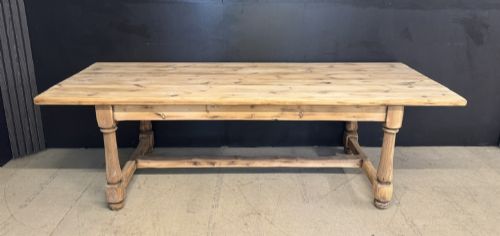
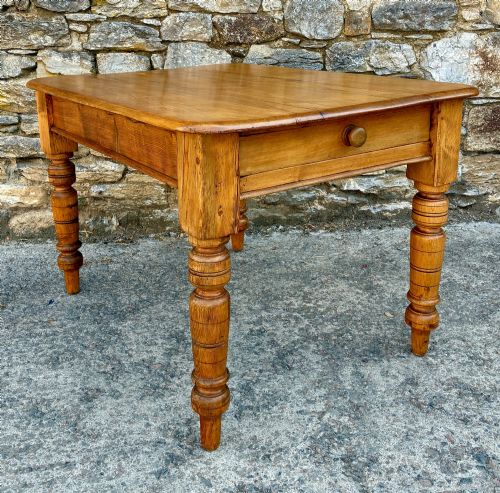

Victorian Country Kitchen Table
These robust timbers and honest joints are what a victorian country kitchen table is about, offering both working utility and daily warmth.
Victorian Country Kitchen Table
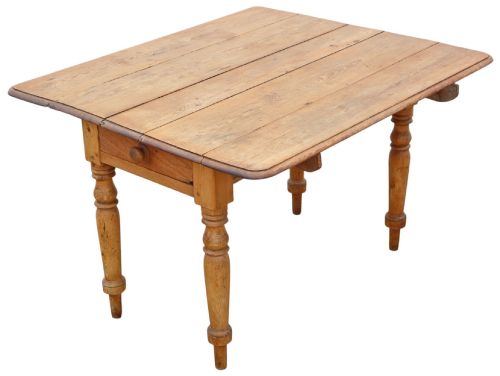
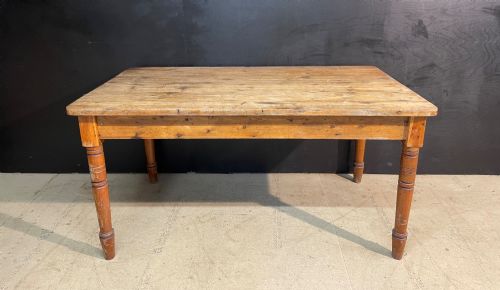
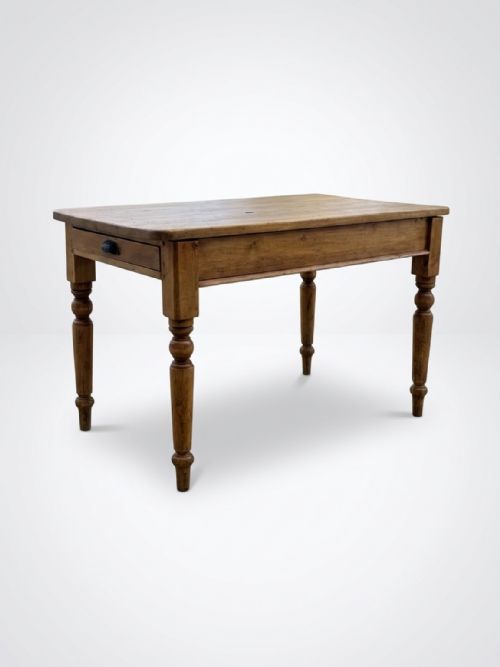
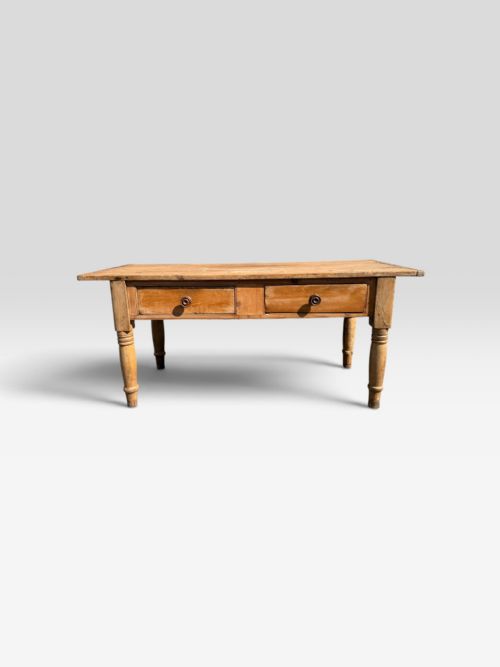
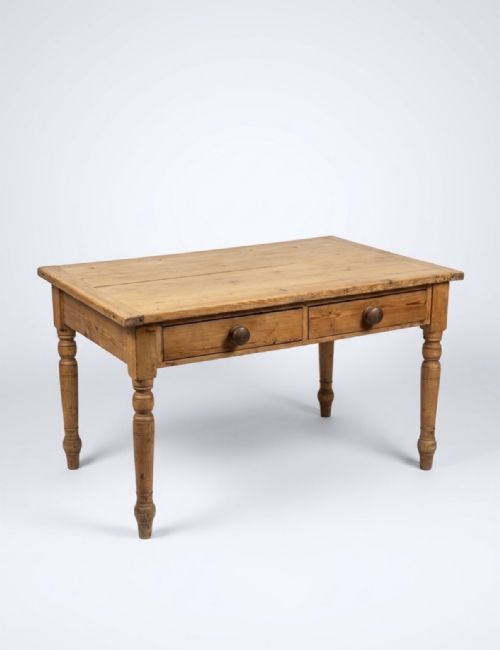
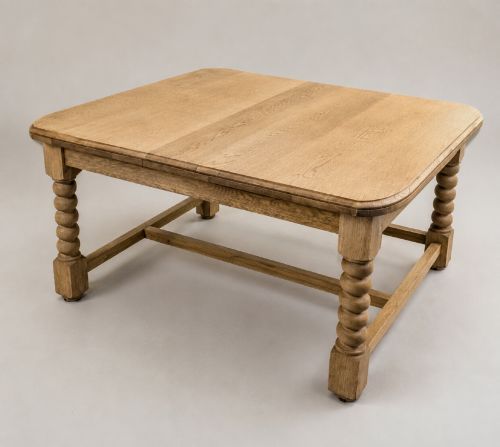
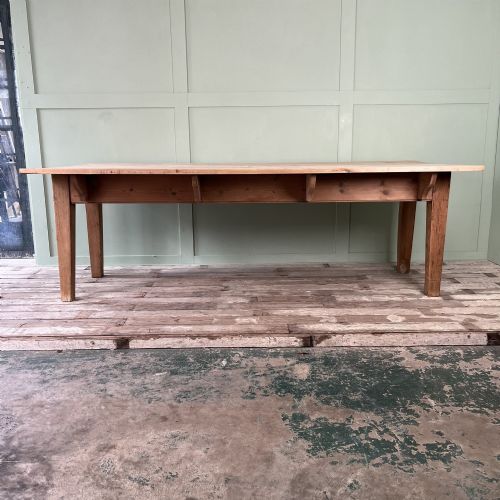
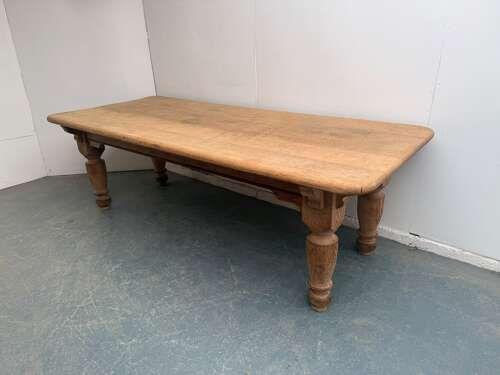
A victorian country kitchen table serves as the heavy-duty centrepiece of domestic life, designed for rolling pastry, scrubbing vegetables and gathering families. The pieces gathered here predominantly date from the nineteenth century, spanning scrubbed pine, golden oak and pitch pine.
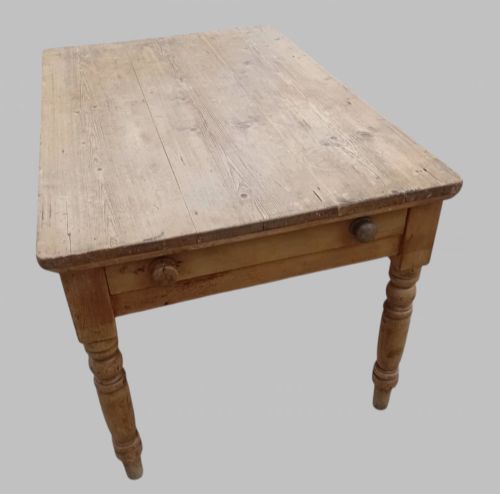
Most examples lean towards utilitarian forms like farmhouse tables, scullery tables and dairy tables, often featuring single drawers or drop leaves. Regional variations span English, Scottish and French provost workshops, reflecting straightforward rural practicality.
Materials and Construction
Makers relied heavily on softwoods and hardwoods such as pine, pitch pine, oak and elm to withstand heavy domestic friction. Planks were joined solidly, frequently showing thick tops supported by square-section legs or heavy trestle ends.
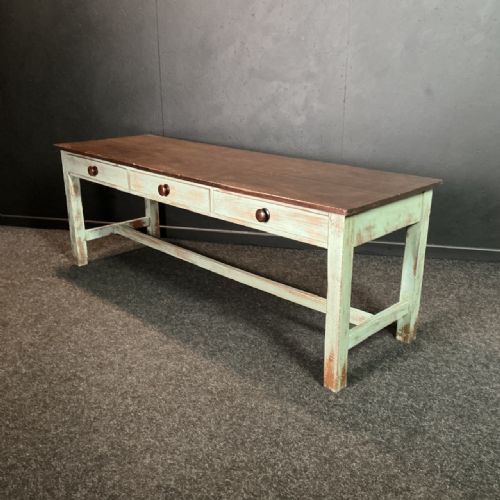
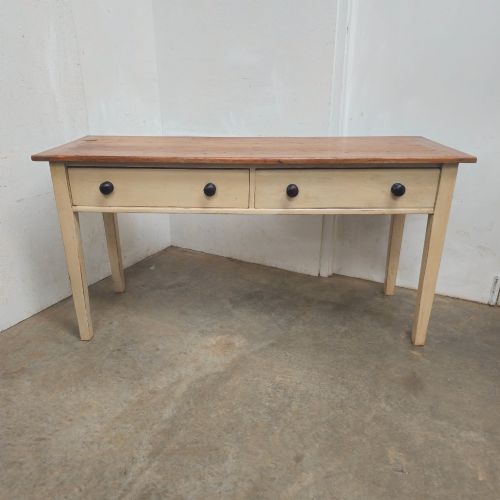
Surfaces often show the marks of historical use, ranging from scrubbed bare wood to remnants of original paint or wax finishes. Iron and metal brackets or fixings appear where structural strengthening was required over decades of service.
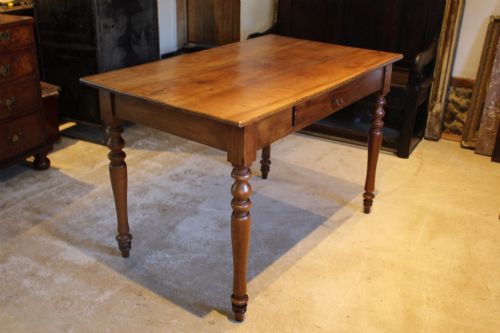
Listings feature woods spanning pine, pitch pine, oak, elm and cherry, alongside painted and scrubbed surface treatments.
Judging Quality
The finest pieces retain honest, untouched surfaces where decades of scrubbing have created a deep, patinated grain rather than an overly sanded flatness. Proportions matter greatly, distinguishing well-balanced dining proportions from clumsily altered proportions.
Quality shows in the structural integrity of the frame and the thickness of the timber top, where original planking beats later replacements. Subtle details like dovetailed drawers and original painted bases elevate specific examples above standard utility pieces.
The Victorian Country Kitchen Table Glossary
- Scrubbed pine
- Softwood timber that has been repeatedly washed and scrubbed clean of finishes, leaving a pale, tactile surface. This finish is typical of preparation and dairy tables.
- Refectory table
- A long, narrow dining table historically used for communal meals. Nineteenth-century country versions utilise sturdy oak, elm or cherry wood.
- Frieze
- The horizontal band or framing situated directly beneath the table top. It frequently houses one or more utilitarian drawers.
- Pitch pine
- A dense, resinous variety of pine known for its durability and strong grain pattern. It was often selected for heavy-duty farmhouse and server tables.
Victorian Country Kitchen Table: Frequently Asked Questions
How were these tables used daily?
These tables functioned as the primary workspace for food preparation, laundry sorting and candle making in busy households.
After chores concluded, families gathered around the same timber surface for communal meals and evening tasks.
Are these tables suitable for modern dining?
Their generous proportions and sturdy construction make them practical choices for contemporary kitchens and dining rooms.
The resilient wooden surfaces naturally accommodate daily use without requiring delicate maintenance.
How do I identify a Victorian pine table?
Look for construction traits like hand-cut joints, thick timber planking and signs of genuine utility wear.
Nineteenth-century examples often use heavier timber gauges and simpler framing than twentieth-century reproductions.
What is the difference between oak and pine versions?
Oak tables generally offer a harder, darker surface with denser grain patterns suitable for formal country houses.
Pile tables provide a softer, lighter aesthetic that brightens smaller spaces while retaining equal durability.