
Victorian Country Dining Table
A victorian country dining table brings unpretentious utility and robust warmth into a room, offering sturdy charm built for daily family life.
Victorian Country Dining Table
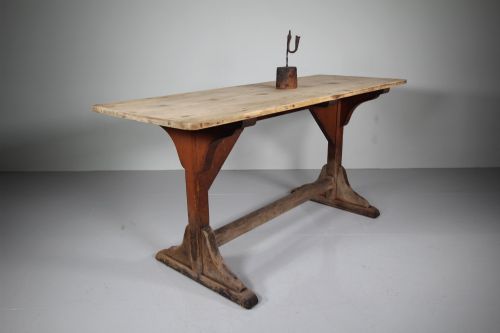
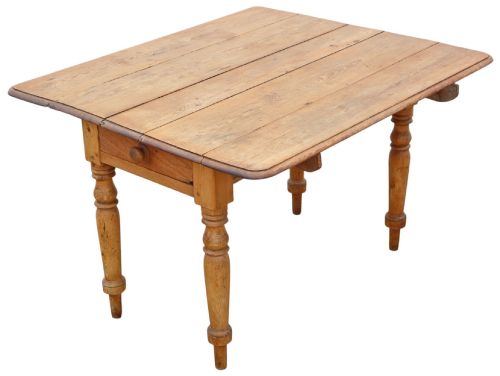
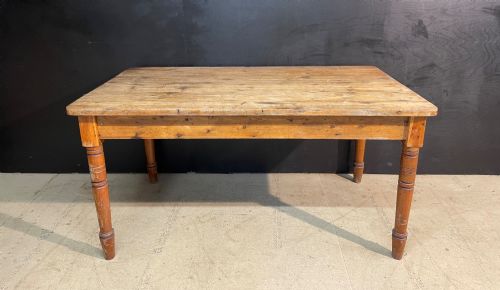
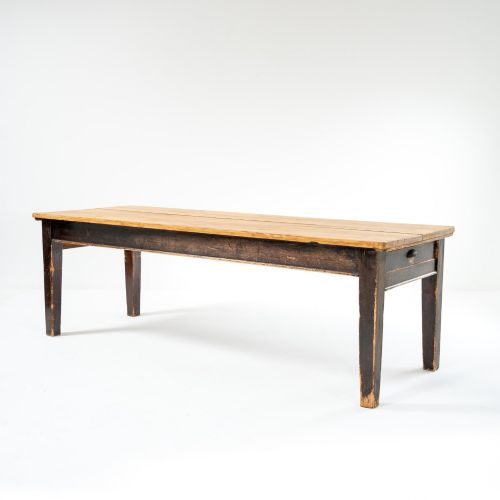
When searching for a victorian country dining table, you are looking at utilitarian furniture originally built for the hard-working kitchens and dining rooms of nineteenth-century farmhouses, country houses, and taverns. These pieces were designed primarily for heavy daily use, prep work, and communal meals rather than formal entertaining.
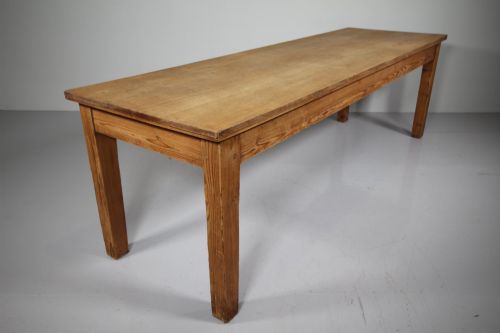
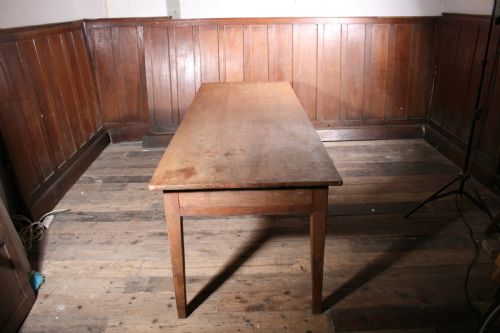
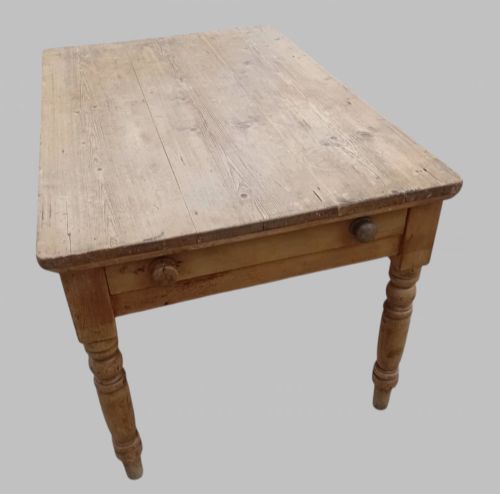
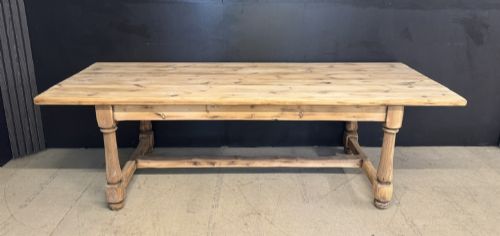
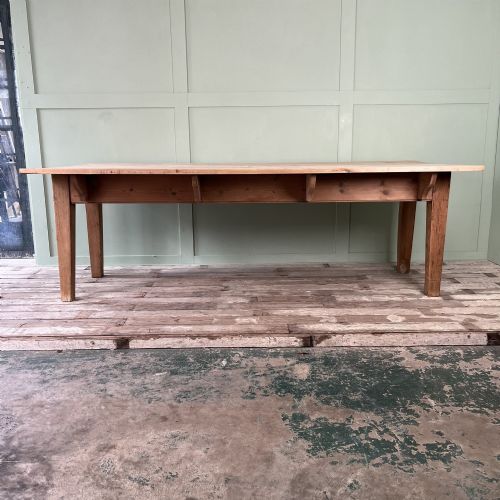
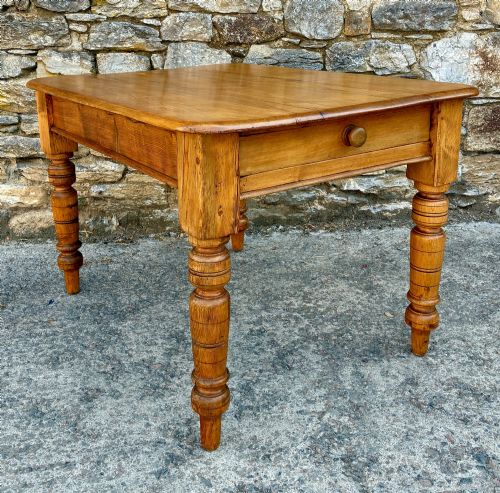
The version you are most likely to meet on this page is constructed from pine, often featuring a scrubbed top and a single drawer, dating from the Victorian period through to the late nineteenth and early twentieth centuries. These tables frequently appear in large formats or harvest styles intended to seat multiple people comfortably.
How They Were Made
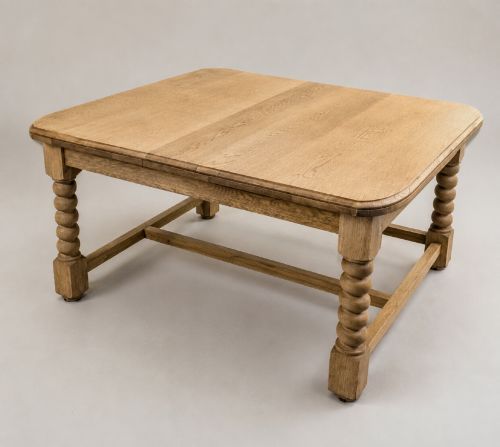
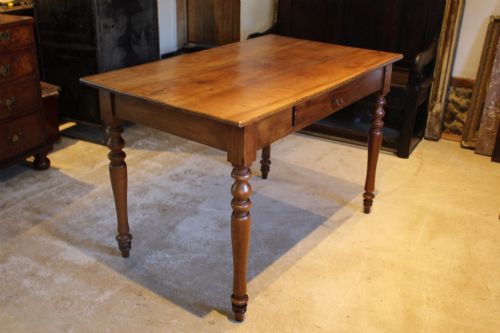
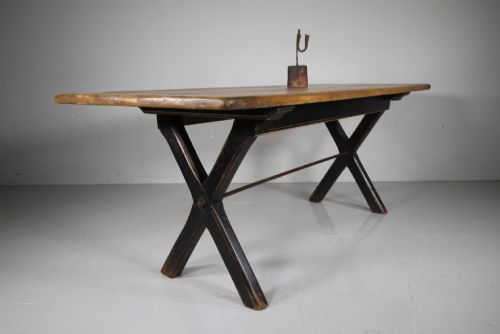
Makers utilised resilient domestic timbers such as pine, oak, elm, and pitch pine, often joining heavy plank tops to solid wooden frames using traditional pegged joinery. Many examples combine different woods within a single piece, pairing fruitwood or cherry elements with sturdier structural supports.
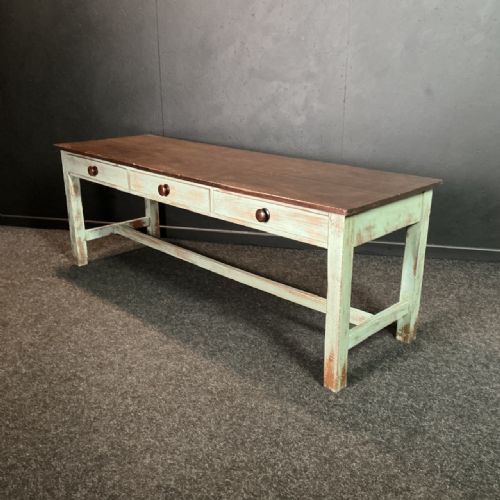
Surfaces frequently show the marks of hand-planing and sustained scrubbing, while some frames retain their original painted finishes, red lead, or wax treatments applied decades ago.
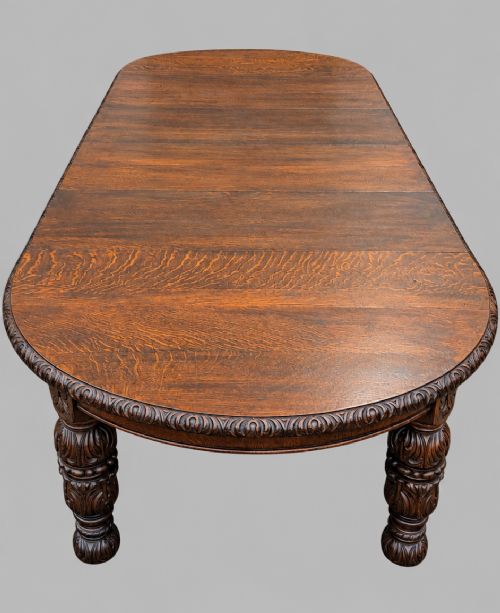
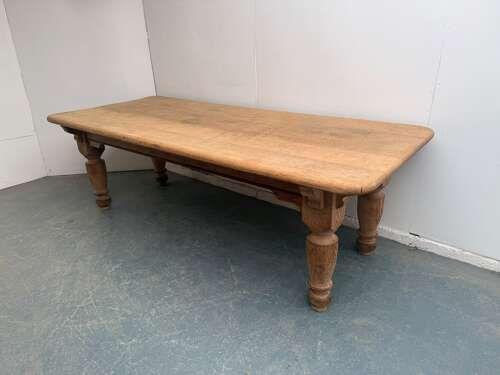
Listings feature robust nineteenth-century oak, elm, and pine tables alongside painted finishes and traditional refectory forms.
What Varies in Quality
Quality rests in the integrity of the timber selection and the structural honesty of the construction, distinguishing honest vernacular pieces from later alterations. Tables built with thick, well-seasoned plank tops and sturdy underframes hold their form better over centuries of expansion and contraction.
The Victorian Country Dining Table Glossary
- Refectory table
- A long, narrow dining table originally designed for communal eating in monasteries and large halls. In country settings, these feature robust wooden legs connected by low stretchers.
- Harvest table
- A large dining table traditionally used during seasonal gatherings, characterised by generous length and ample seating capacity. They often utilise pine or oak planks for the main surface.
- Frieze
- The horizontal band running directly beneath the tabletop, which frequently houses one or more storage drawers in kitchen and preparation tables.
- Scrubbed pine
- A tabletop surface cleaned repeatedly with water and a stiff brush over generations, leaving a pale, tactile grain devoid of modern varnish.
- Plank top
- A surface constructed from several wide boards joined together rather than a single sheet of wood, often displaying natural knots and seasonal splitting.
Victorian Country Dining Table: Frequently Asked Questions
How do I clean a pine table?
Wash the surface gently with warm water and mild soap, using a soft cloth to avoid raising the grain. Avoid harsh chemical cleaners that strip the historic patina from the timber.
Dry the wood thoroughly immediately after cleaning to prevent warping. Nourish unsealed pine occasionally with a clear natural wax to protect against moisture.
Can I use these tables daily?
These tables were built for heavy domestic work, making them remarkably well-suited for modern family dining and kitchen tasks. Their robust construction handles daily wear with ease.
Use protective mats under hot dishes and drinks to safeguard the historic timber. Embracing minor marks and knocks adds to the ongoing character of the piece.
How do I spot an original finish?
Original painted surfaces show authentic wear patterns, subtle crazing, and layers that cannot be replicated by modern distressing techniques. Look for natural fading and consistency around high-touch areas like legs and drawer pulls.
Examine the underside and hidden crevices for traces of early paint or wax. Inconsistencies or modern fixings often indicate later repainting.
Are these tables suitable for small rooms?
While many examples are long and intended for spacious country houses, drop-leaf and smaller kitchen variants offer compact versatility. These formats fit comfortably into restricted kitchen spaces without dominating the room.
Measure your dining area carefully, allowing sufficient clearance around the table for chairs to pull out easily. Consider narrow refectory styles to maximise seating while saving floor space.