


Brown Pine Dining Table
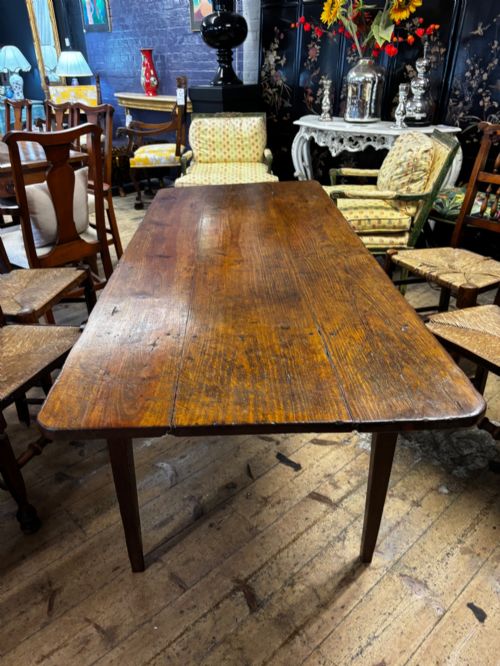
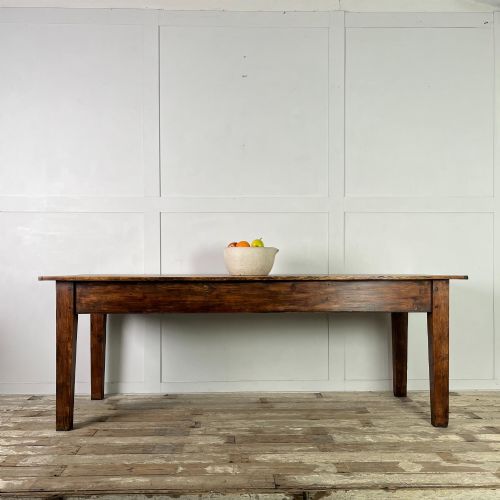
These brown pine dining table pieces offer durable rustic character and generous proportions, built for daily gathering.
Brown Pine Dining Table
A brown pine dining table serves as a sturdy domestic centrepiece, appearing in forms such as farmhouse, kitchen, tavern, and refectory tables. Buyers seeking a brown pine dining table encounter robust examples spanning the nineteenth century and Victorian periods, alongside early twentieth-century workshop pieces.
Most pieces show practical origins, designed for heavy daily use in kitchens and country houses rather than formal parlours. These tables often feature plank tops and unpretentious timber frames, sometimes paired with fruitwood or iron details.
How they were made
Makers constructed these tables primarily from solid pine and fruitwood timber, utilising sturdy joined frames and cleated ends to support heavy plank tops. Iron brackets, braces, and brass feet appear on specific trestle and industrial variants to reinforce the structure.
Joinery techniques prioritised utility and endurance, relying on straightforward carpentry suited to rural workshops and institutional supply contracts.
One extraordinary nineteenth-century piece bears an official crown estate stamp with bronze feet, having served a former life aboard a Victorian ship.
What varies in quality
Quality rests in the integrity of the timber and the honesty of the construction, distinguishing straightforward daily work furniture from more substantial country house or institutional pieces. Tables with thick multi-plank tops and robust underframing show superior longevity.
Proportion and scale also define the hierarchy, ranging from compact domestic kitchen tables to exceptionally long community harvest and refectory formats.
The Brown Pine Dining Table Glossary
- Cleated ends
- Wooden battens fixed across the ends of a tabletop to prevent warping and keep the planks flat. This construction detail appears frequently on nineteenth-century farmhouse examples.
- Refectory table
- A long, narrow dining table traditionally built for communal dining halls. These pieces often feature stretcher bases for added stability.
- Trestle table
- A table supported by structural frames or trestles at either end rather than four corner legs. Iron and wood versions provide sturdy workspace surfaces.
- Pitch pine
- A resinous, durable variety of pine known for its dense grain and strength. It was frequently selected for heavy-duty serving and dining tables.
Brown Pine Dining Table: Frequently Asked Questions
How do I clean a pine table?
Wipe surfaces gently using a slightly damp cloth to remove everyday dust and debris. Avoid harsh chemical cleaners that strip the historic finish.
Dry the timber thoroughly afterwards with a soft cloth to protect the wood grain and maintain the natural lustre.
Can I use these tables daily?
These tables were originally built for hard domestic and institutional work, making them well-suited for regular modern usage. Their robust pine construction handles daily meals and gatherings with ease.
Use protective mats for hot dishes and sharp utensils to preserve the surface timber over time.
What is a harvest table?
A harvest table is an elongated dining surface designed to seat large groups for seasonal meals and community gatherings. They offer exceptional length compared to standard domestic tables.
These pieces often feature sturdy wooden legs and substantial plank tops suited for communal rooms.
How do I identify Victorian pine?
Victorian pine pieces typically display the dense grain patterns and warm patination characteristic of nineteenth-century softwood furniture. Look at the construction joints and timber thickness for period indicators.
Makers from this era focused on utilitarian strength, resulting in heavy, practical frames designed for active kitchens.