



Victorian Corner Armchair
These Victorian corner armchairs combine clever space-saving design with robust nineteenth-century carpentry, offering a practical seating option for a tight corner.
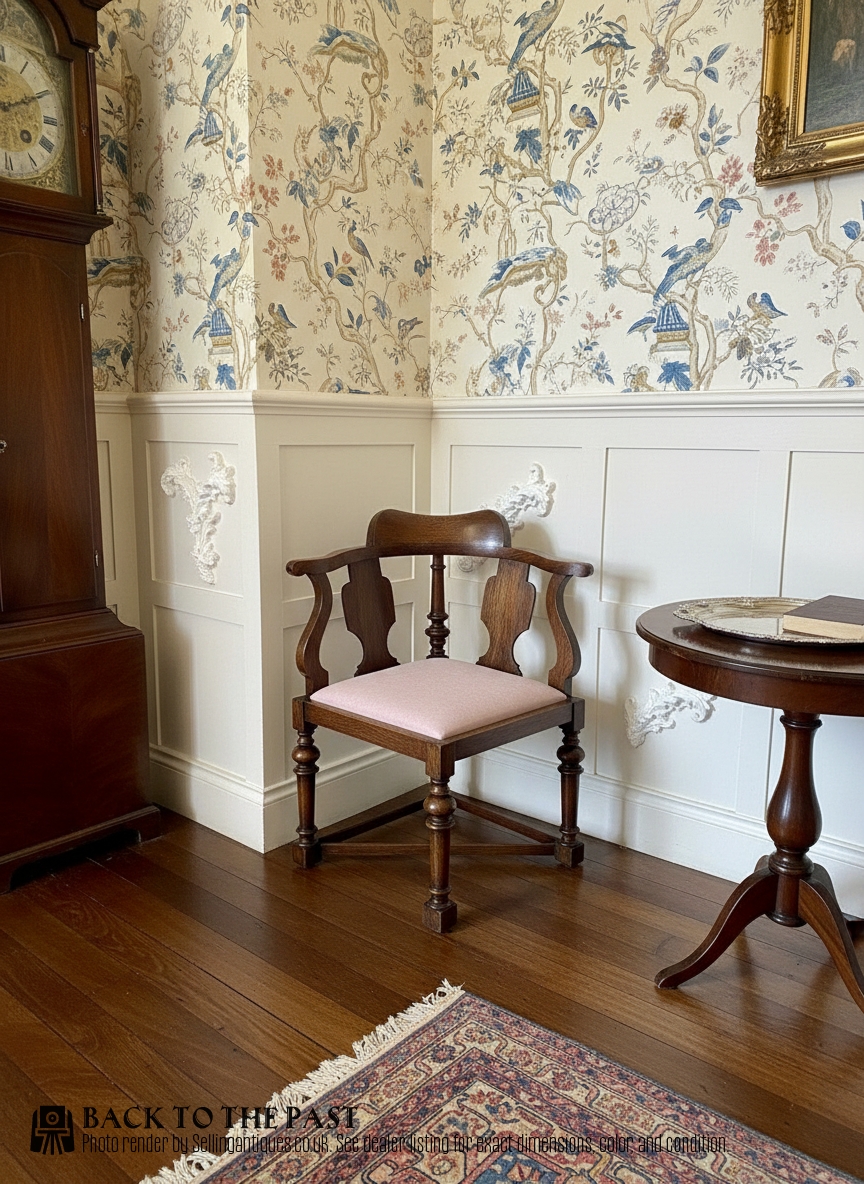
Victorian Corner Armchair
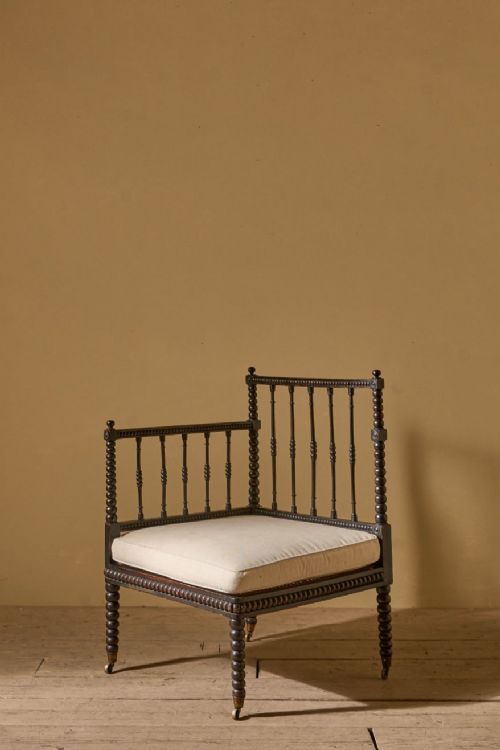
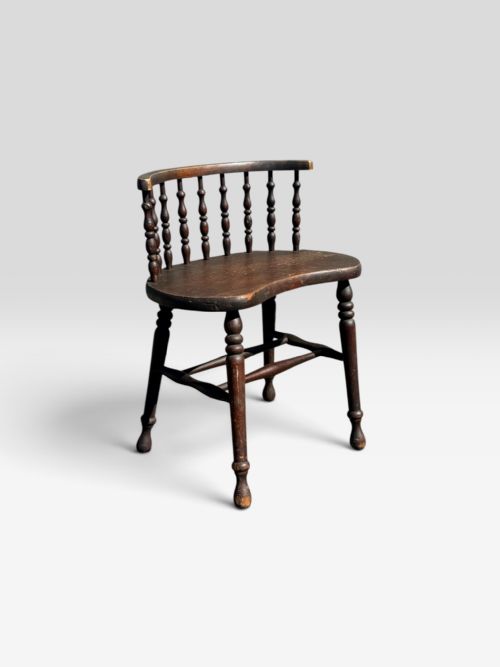
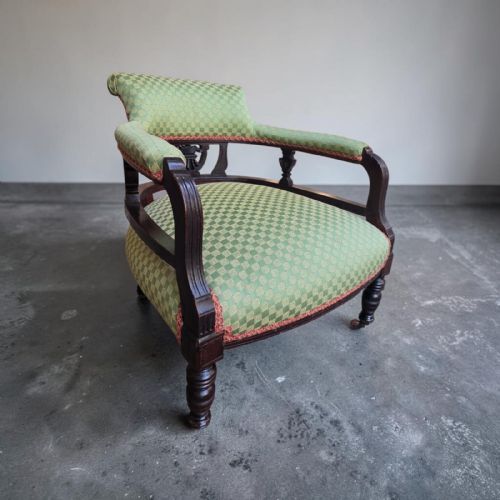
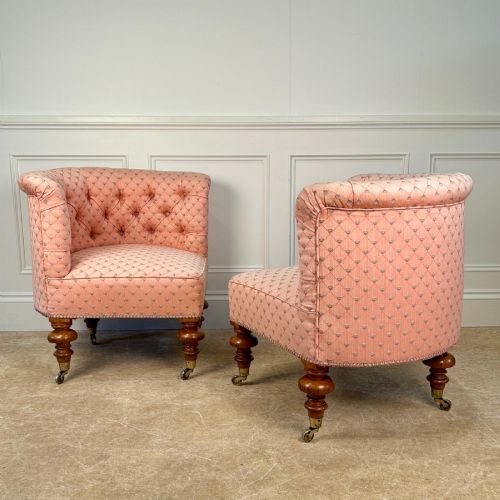
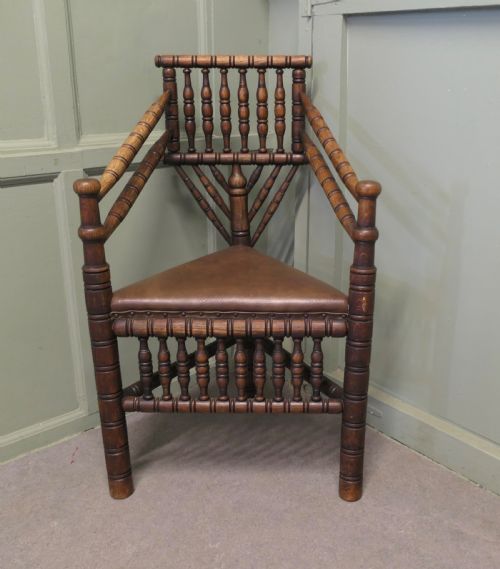
A Victorian corner armchair sits diagonally into room angles, utilising space that standard straight chairs leave empty. The selection on this page spans from robust oak turner's chairs to elegant rosewood and mahogany inlaid pieces.
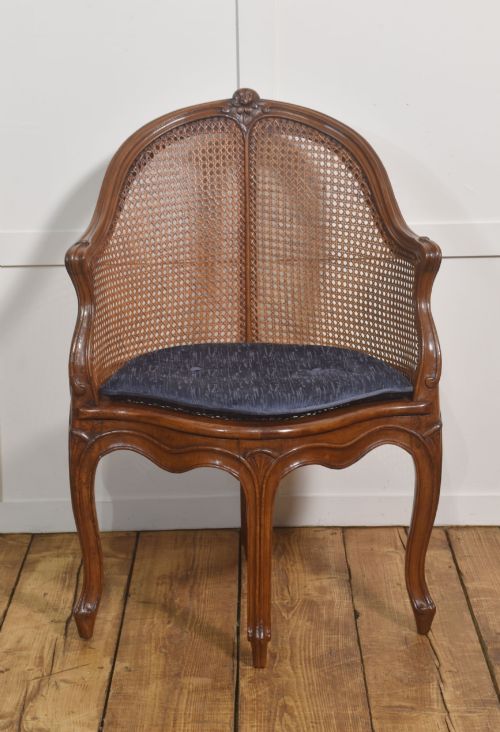
Makers produced these seating forms in various revivals, including Gothic, Saxon, and Renaissance styles, alongside simpler country iterations. Many examples feature curved backs or upholstered pads designed for studies, bedrooms, and drawing rooms.
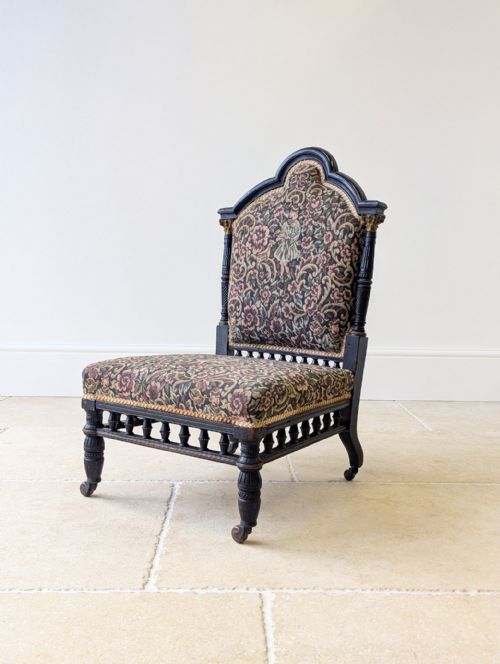
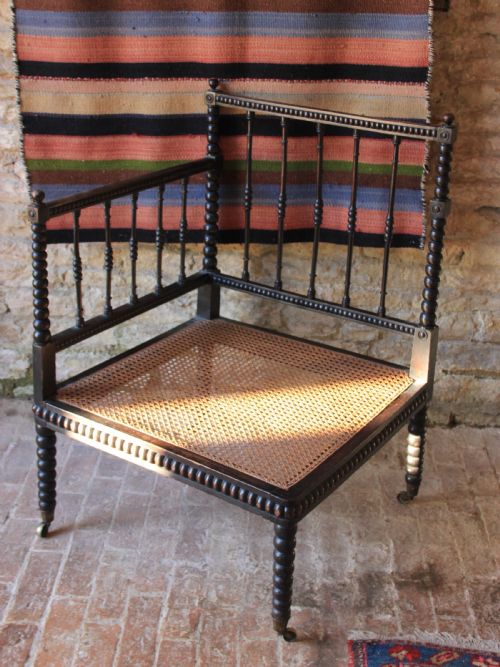
While the core inventory centres on nineteenth-century British oak and walnut examples, variations include ebonised finishes, turned bobbin details, and distinctive Moorish or Mashrabiya panels.
Materials and Construction Methods
Cabinetmakers relied heavily on hardwoods such as oak, walnut, beech, and mahogany, selecting each timber for its structural strength and grain pattern. Ebonised finishes and intricate marquetry inlay frequently enhanced the visual weight of these timbers.
Joinery techniques combined traditional turning, spindle work, and deep carving with applied cane seating or upholstered pads covered in velvet, fabric, or leather. Metal elements like brass occasionally appeared on castors or decorative mounts.
Victorian Corner Armchair Retail Price Guide 2026
Typical asking prices for victorian corner armchair among the pieces listed under this phrase on Sellingantiques today, from the lower quarter to the upper quarter. They describe what is for sale here now, not the wider market.
Distinguishing Craftsmanship and Design
Quality reveals itself in the crispness of the hand-carving and the rigidity of the diagonal frame construction. Superior pieces maintain tight joints and balanced proportions without relying on excessive decorative additions.
The choice of timber and the complexity of the turning or inlay dictate the upper tiers of the range. Simpler country models contrast with finely figured mahogany and rosewood examples bearing documented cabinetmaker attribution.
S&H Jewell·Liberty and Co·Miles & Edward's
The Victorian Corner Armchair Glossary
- Turner's chair
- A sturdy chair constructed primarily from turned wooden spindles and members, often associated with early English forms revived during the nineteenth century.
- Mashrabiya
- An intricate wooden lattice or turned-work panel used in Islamic joinery, occasionally incorporated into late nineteenth-century aesthetic and eclectic seating.
- Bobbin chair
- A seat characterised by frame members turned on a lathe to resemble a series of bobbins or spools, popular during the Victorian period.
- Tub chair
- An armchair featuring a continuous curved back and arms that enclose the sitter in a rounded, bucket-like form.
- Marquetry
- The art of applying decorative veneer pieces in wood to form intricate geometric or figural patterns on the surface of a chair frame.
Victorian Corner Armchair: Frequently Asked Questions
Where should I place a corner armchair?
These chairs fit neatly into empty room angles or smaller alcoves where standard square furniture fails to sit comfortably. They function well in bedrooms, studies, and drawing rooms as accent seating.
Because of their diagonal footprint, they utilise awkward dead space while providing a supportive seat for reading or conversation.
How do I identify a true Victorian piece?
Examine the timber, construction methods, and overall stylistic revival cues that align with nineteenth-century manufacturing techniques. Characteristics such as hand-turned spindles, traditional joinery, and specific nineteenth-century revival motifs point to the period.
Compare the timber ageing and wear patterns to confirm the piece matches the expected mid to late nineteenth-century timeline.
What is a turner's chair?
A turner's chair is a heavy, sturdy seat built almost entirely from cylindrical and bulbous turned wooden members fitted together. These designs draw on ancient precedents and saw a major revival during the Victorian era.
They frequently feature low, triangular or square seats and prominent spindle backs.
Are these chairs comfortable for daily use?
Many examples feature upholstered pads, leather seats, or supportive angled wooden backs designed for sitting over extended periods. Versions with squab cushions or padded velvet offer softer seating.
Selection depends on whether the specific model is a rigid wooden showpiece or an upholstered armchair intended for relaxation.