



Victorian Corinthian Oil Lamp
These Victorian corinthian oil lamps combine classical architecture with period domestic lighting, offering striking focal points for traditional interiors.
Victorian Corinthian Oil Lamp
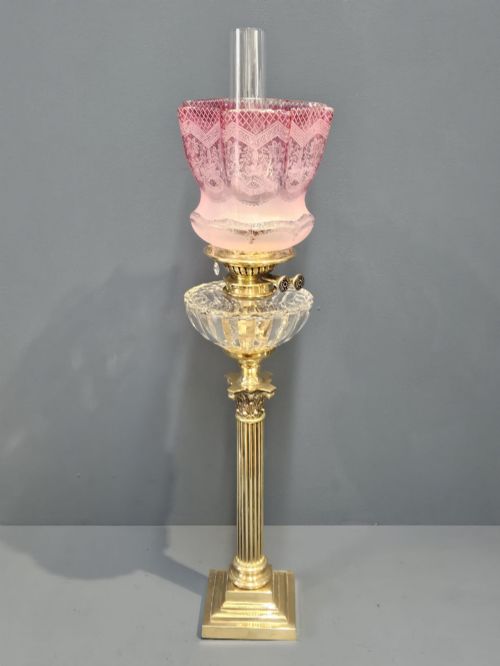
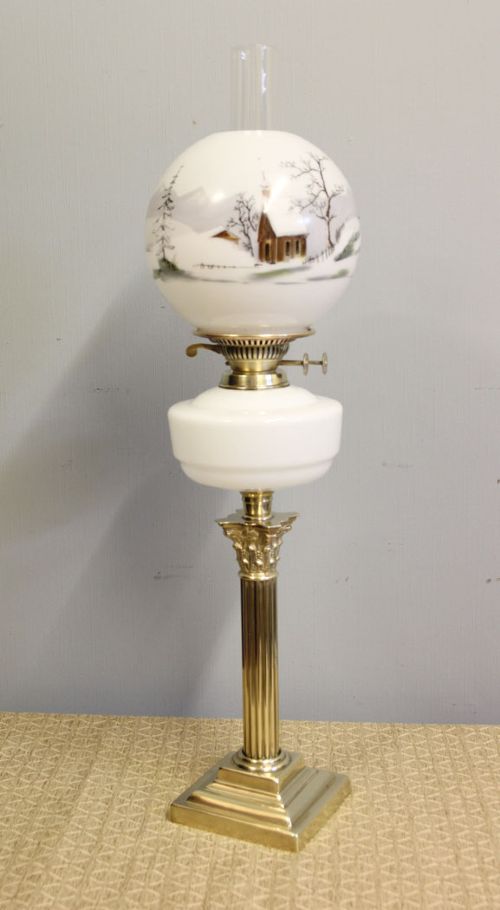
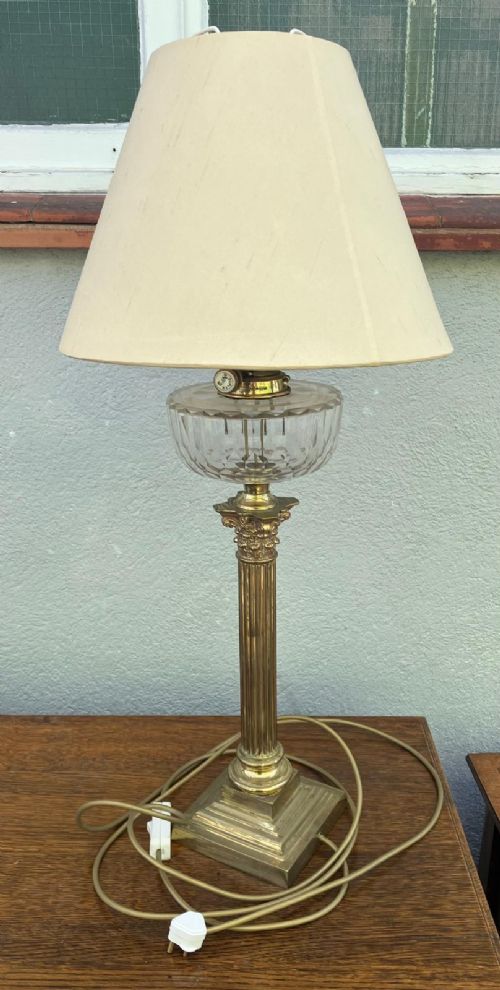
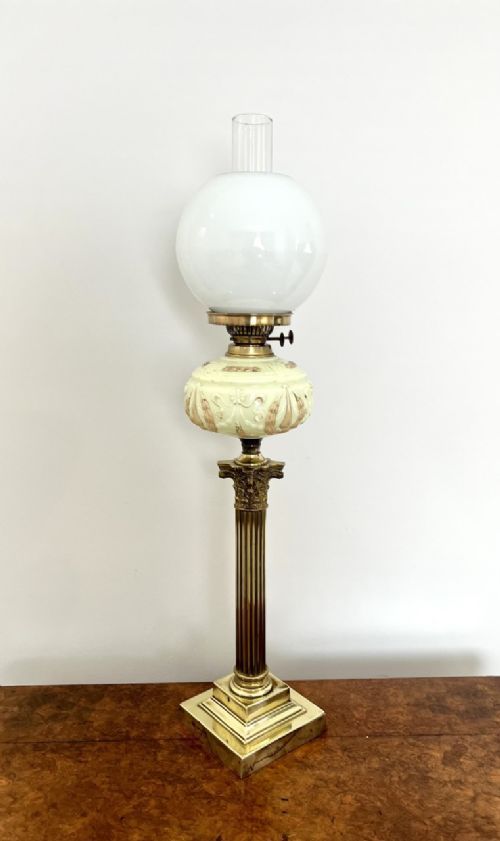
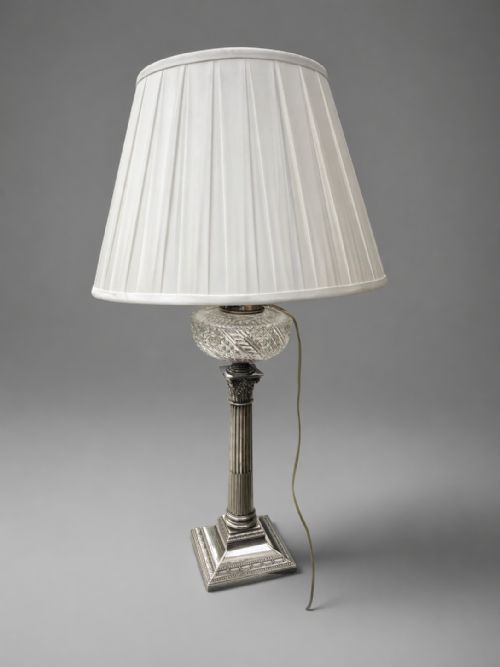
A Victorian corinthian oil lamp centres on a stepped plinth and a fluted column topped with acanthus leaf capitals, echoing classical temple architecture. These domestic lighting pieces most commonly appear as tall table lamps or standard floor lamps resting on heavy weighted bases.
Makers adapted classical proportions to suit nineteenth-century interiors, pairing metallic columns with glass fonts or ceramic reservoirs. The forms range from compact desk pieces to monumental standard lamps designed to stand directly upon the floor.
The surviving selection includes examples featuring twin duplex burners alongside conversions fitted for electricity. Many retain their original glass shades, spanning plain clear vessels to deep cranberry and ruby glass bowls.
Materials and construction methods
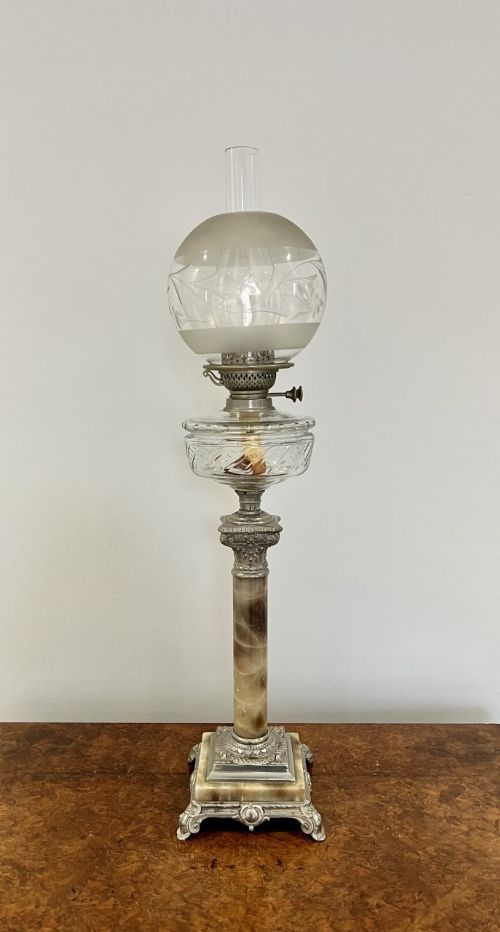
Foundries cast brass, silver plate, and ormolu into fluted columns and detailed Corinthian capitals, often mounting them upon stepped square bases. These metal components provide the structural weight necessary to support large glass reservoirs and heavy burners.
Glassmakers blew and cut clear, crystal, and cranberry glass to form removable fonts and decorative tulip shades. Artisans etched floral or winter scenes onto the glass surfaces, combining coloured glass vessels with polished metal columns.
Materials documented across the inventory include brass, silver plate, cut glass, cranberry glass, ceramic, and ormolu.
Assessing quality in design and execution
Quality reveals itself in the crispness of the acanthus leaf casting upon the capital and the depth of the fluting down the column shaft. Finer pieces demonstrate precise proportions where the heavy metal base balances the height of the standard.
The grade of the glass reservoir and associated shade marks another distinction, with layered cranberry glass and intricate cut crystal separating standard utilitarian items from exhibition pieces. Maker attribution through stamped burner mechanisms also elevates the standing of an individual lamp.
Hinks of Birmingham·Goldsmiths and Silversmiths Company·Palmer and Co
The Victorian Corinthian Oil Lamp Glossary
- Corinthian column
- An architectural column style featuring an ornate capital decorated with carved acanthus leaves. This classical motif forms the central pillar of the lamp standard.
- Duplex burner
- A double-wick mechanism developed in the nineteenth century to produce a brighter flame. These twin burners appear frequently on larger table and standard lamps.
- Font
- The removable glass or metal reservoir that holds the lamp oil. Fonts are frequently rendered in cranberry glass, cut crystal, or ceramic.
- Standard lamp
- A tall floor lamp designed to stand directly upon the ground rather than a table. These monumental pieces share the same classical column construction.
- Ormolu
- Gilded bronze or brass applied to decorative metalwork. This finish provides a warm, golden tone to select nineteenth-century lighting items.
Victorian Corinthian Oil Lamp: Frequently Asked Questions
How do I operate an oil lamp?
Operating a period lamp involves removing the burner to fill the font with paraffin or oil, then trimming the cotton wick before lighting.
Modern users often choose to keep the original wick mechanism intact for display or have a professional convert the wiring for safe electrical use.
Were these lamps converted to electricity?
Many nineteenth-century lighting pieces undergo conversion to electricity to allow safe daily use in modern homes without altering the exterior appearance.
Original burners and collars are frequently retained within the conversion process to preserve the historic character of the metalwork.
How should I clean brass columns?
Polishing brass requires a soft cloth and a gentle metal cleaner designed for antiques to avoid removing the underlying patina.
Glass shades and reservoirs wash safely in warm soapy water, provided they are dried completely before being remounted onto the metal base.
What glass shades belong on these lamps?
Original setups frequently pair the brass column with a blown cranberry glass font and a matching etched tulip shade.
Plain clear glass, ruby glass bowls, and patterned winter scene shades also appear across the surviving nineteenth-century examples.