
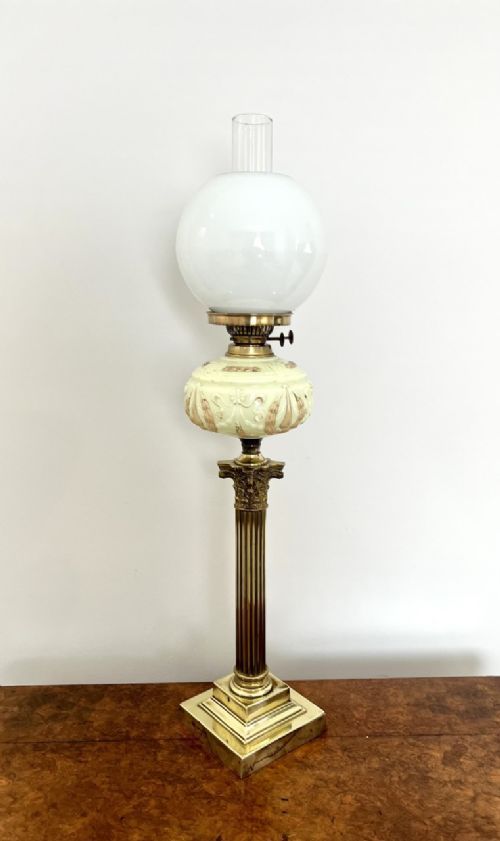


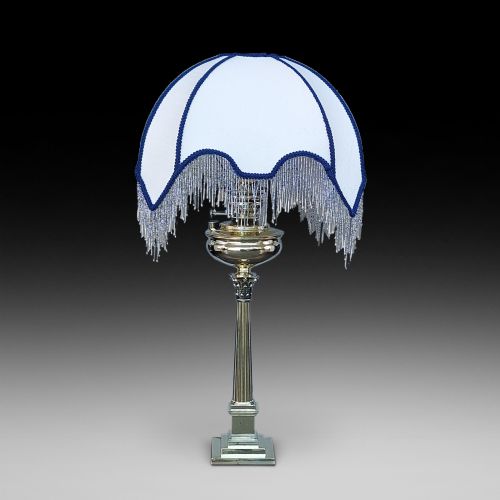

Corinthian Column Paraffin Lamp
These corinthian column paraffin lamp examples combine neoclassical architectural dignity with Victorian domestic utility, offering a stately form collectors prize for period interiors.
Corinthian Column Paraffin Lamp
When searching for a corinthian column paraffin lamp, buyers encounter tall lighting fixtures dating primarily from the Victorian era and the nineteenth century. These pieces adapt ancient Greek architectural orders into domestic furnishings designed for tabletop use.
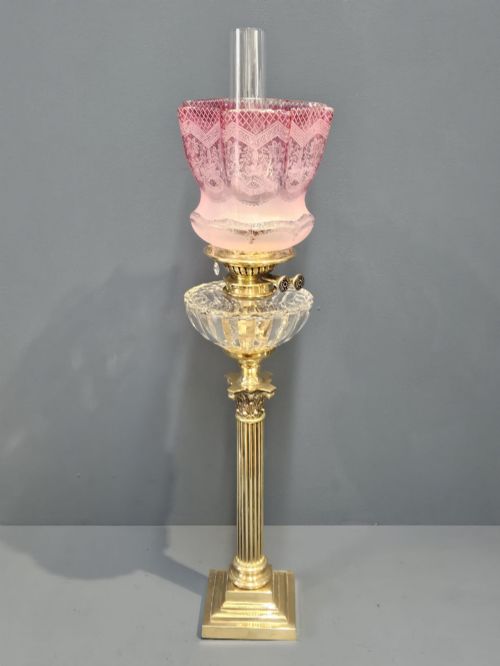
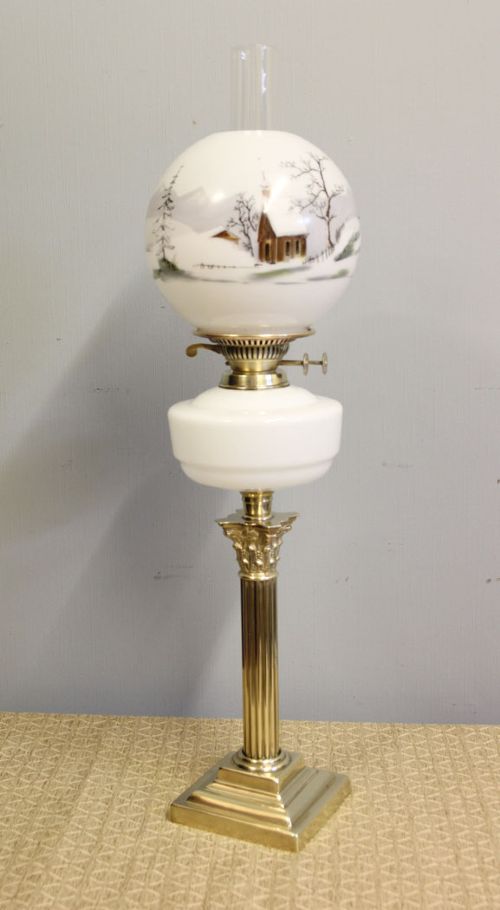
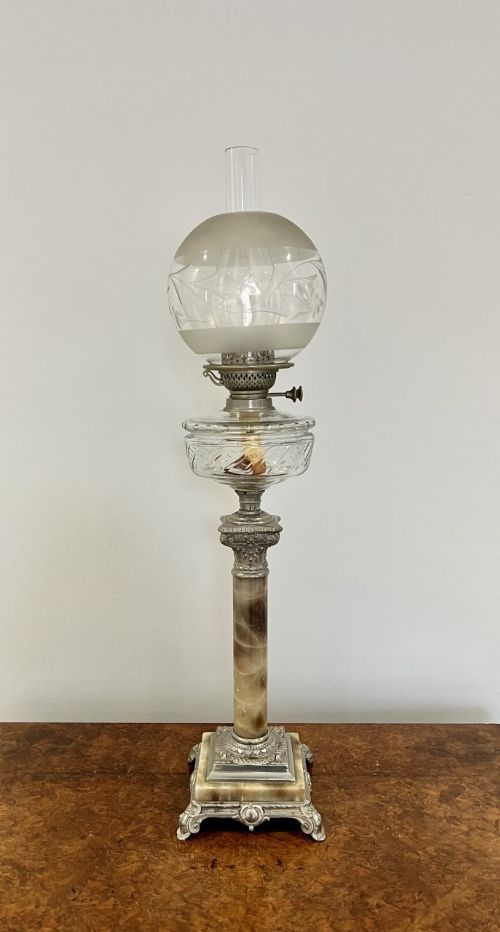
The most common examples on this page feature polished brass columns supporting glass vessels, often paired with cranberry glass or etched glass shades. Variations span simple brass shafts to elaborate designs incorporating crystal, ormolu, and onyx.
Originating largely within the nineteenth century, these oil lamps survive both in their original burning configuration and as later conversions to electricity. Their enduring appeal lies in the striking contrast between heavy metallic pedestals and brightly coloured or patterned glass components.
What varies in quality
The distinction between ordinary and superior examples rests upon the crispness of the brass casting and the depth of detail in the column capital. Finer specimens display sharp acanthus foliage and heavy gauge metalwork rather than thin, pressed components.
Quality also appears in the selection and decoration of the glass font and shade, particularly where rich cranberry hues or complex etched winter scenes are present. Maker signatures on the burner mechanisms, such as those by Hinks of Birmingham, indicate higher production standards.
Some Victorian households relied on these towering brass columns not just for reading, but to chase away the gloom of dense London fogs.
Hinks of Birmingham
The Corinthian Column Paraffin Lamp Glossary
- Corinthian Column
- An architectural support featuring a capital decorated with carved acanthus leaves. This classical motif forms the central aesthetic feature of the lamp shaft.
- Duplex
- A type of double-wick burner mechanism popular in nineteenth-century lighting. It provided a significantly brighter illumination than single-wick alternatives.
- Font
- The upper reservoir container that held the paraffin or lamp oil. These vessels were frequently fashioned from coloured, cut, or cranberry glass.
- Ormolu
- Finely ground high-carat gold cast onto a bronze or brass base object. This technique produced a rich, durable metallic lustre on luxury pieces.
Corinthian Column Paraffin Lamp: Frequently Asked Questions
How do I date a corinthian column paraffin lamp?
Dating relies on examining the materials, burner mechanisms, and manufacturing marks found on the metal collars. Victorian examples frequently display specific burner patents and heavier brass casting techniques characteristic of the nineteenth century.
Stylistic shifts also help establish age, as mid-century pieces often feature simpler brass work while later nineteenth-century versions incorporate complex coloured glass fonts and etched tulip shades.
Were these lamps meant for dining rooms?
These tall lighting fixtures served primarily in principal reception rooms such as drawing rooms and dining parlours where their impressive height and decorative glass added visual splendour. Their substantial brass columns provided the necessary stability for daily use on large tables.
As domestic lighting evolved, many were placed on sideboards or pedestals to illuminate evening gatherings before the widespread adoption of domestic electricity.
Can converted lamps use modern bulbs?
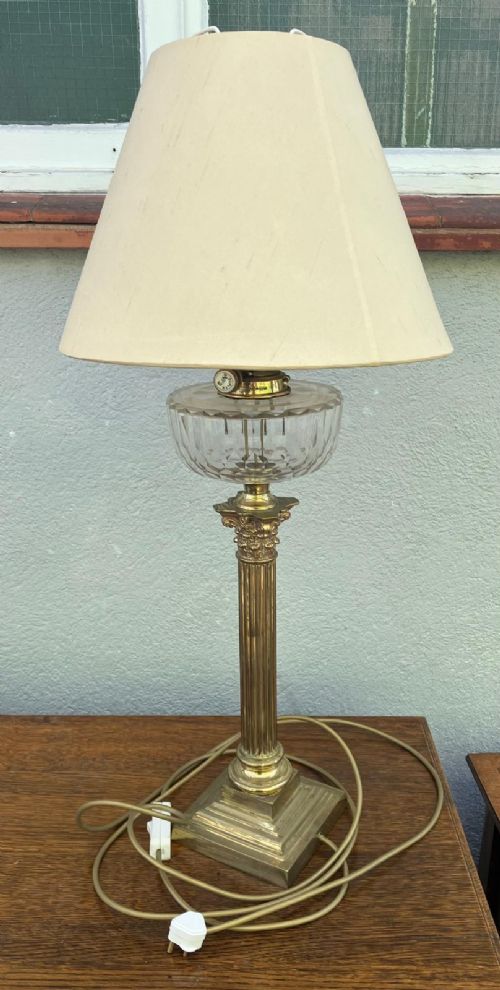
Many surviving examples have undergone professional conversion to electricity, allowing them to function safely as modern table lamps while retaining their historic appearance. This adaptation typically preserves the original brass column and glass font without altering the exterior silhouette.
Collectors often seek both unconverted oil-burning examples and those thoughtfully adapted for contemporary electrical wiring, depending on intended domestic use.
What is cranberry glass?
Cranberry glass is a rich pinkish-red transparent material created by adding gold chloride to the molten glass batch during production. This specialised coloration was highly fashionable in Victorian interior furnishings and table settings.
When utilised for lamp fonts and matching shades, the glass produces a warm, vibrant glow whether the lamp is unlit or illuminated.