


Victorian Copper Coal Scuttle
When you search for a victorian copper coal scuttle, you are tracking down a practical fireside vessel that brought both warmth and lustre to the nineteenth-century hearth.

Victorian Copper Coal Scuttle
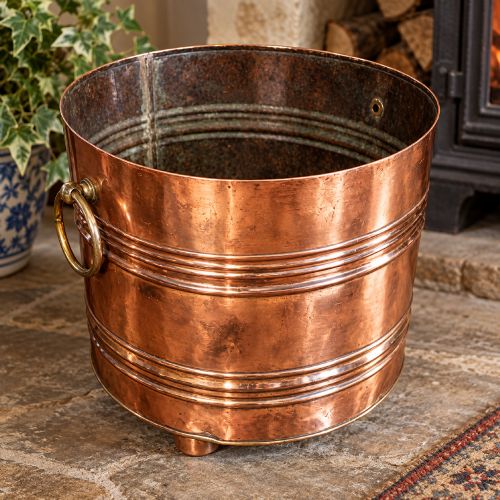
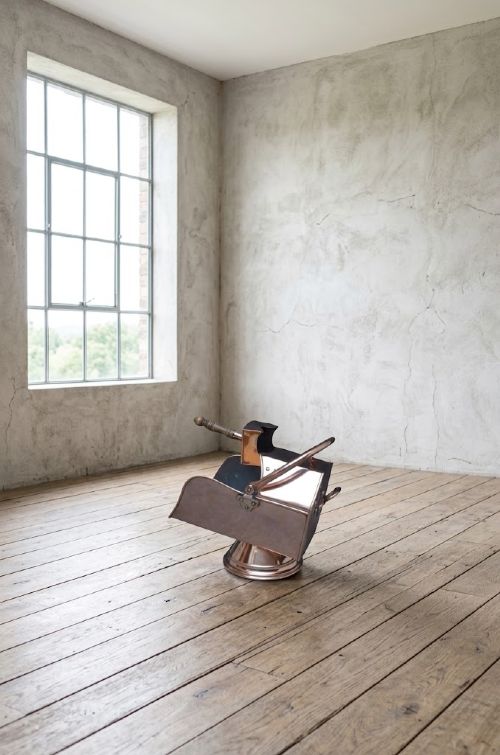
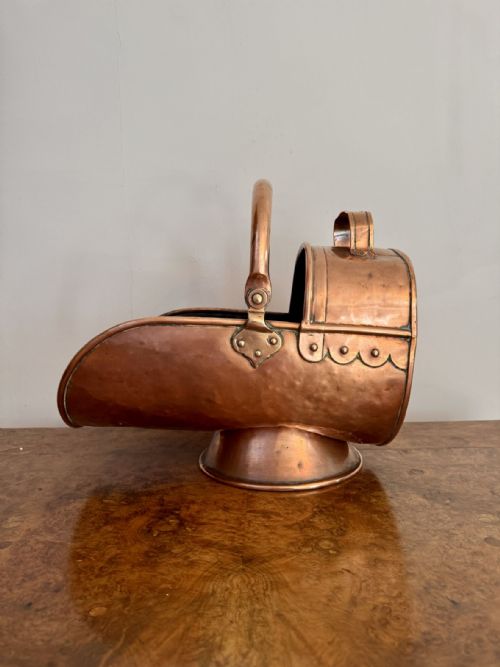
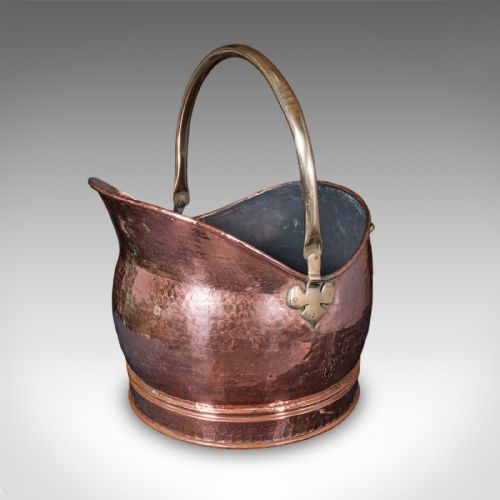
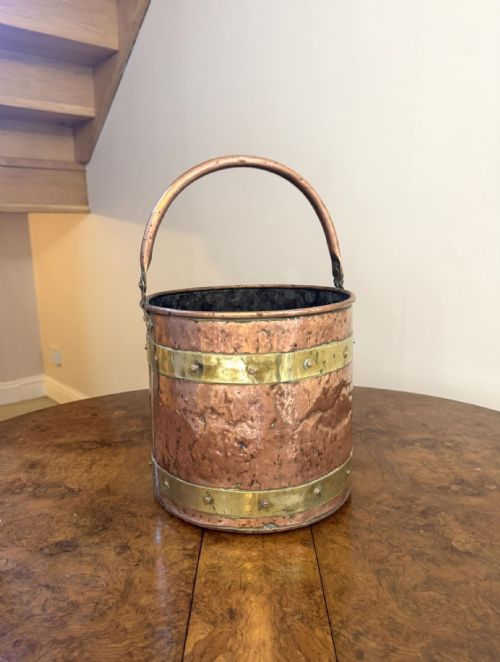
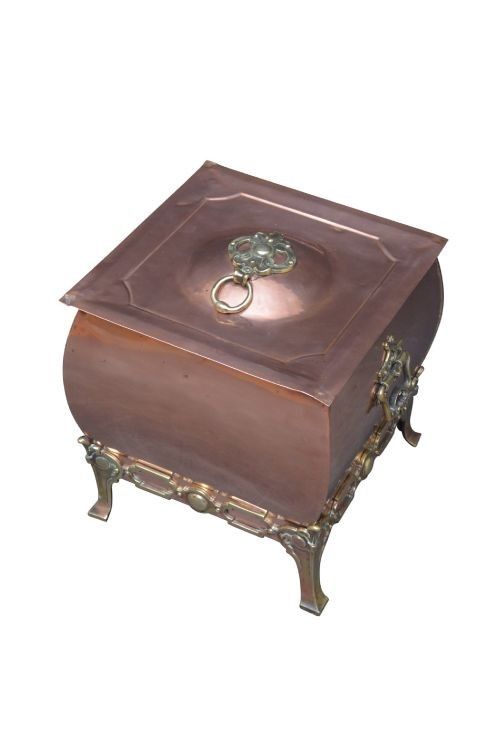
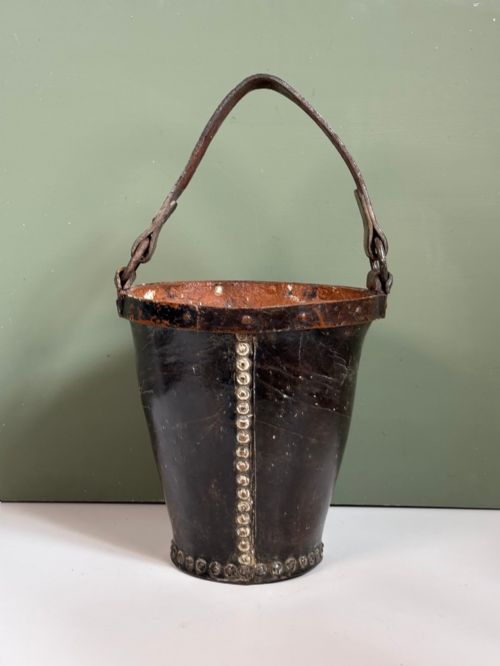
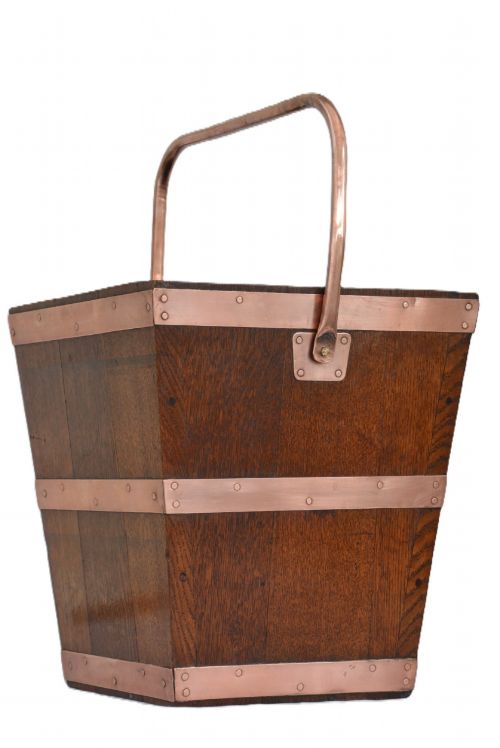
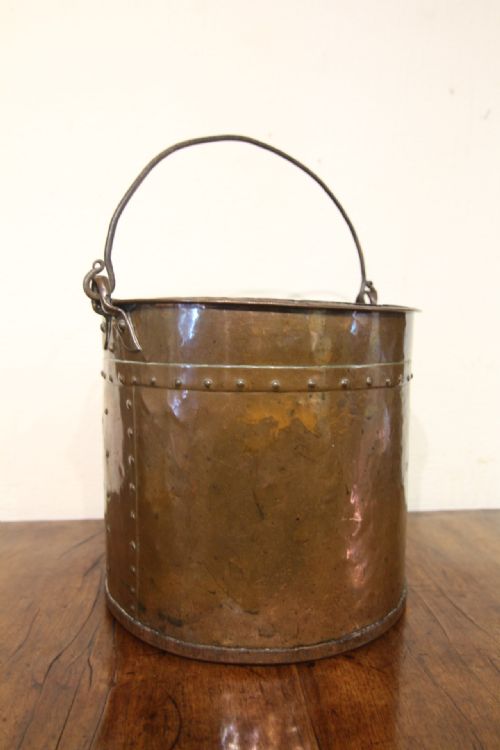
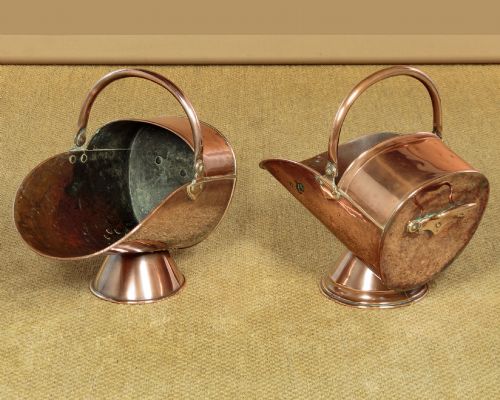
A victorian copper coal scuttle takes several distinct shapes by the fireside, most frequently appearing as the classic helmet scuttle with a fixed loop handle and a smaller grip at the back for tipping. Buyers also encounter cylindrical bins, bucket forms with drop handles, and low scuttle boxes designed to hold fuel neatly beside the hearth. These pieces belong primarily to the nineteenth century, stretching from the Victorian era into the Edwardian period and the Arts and Crafts movement.
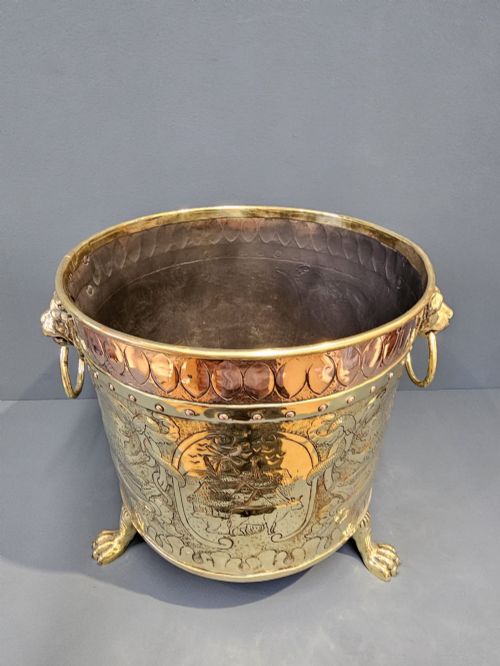
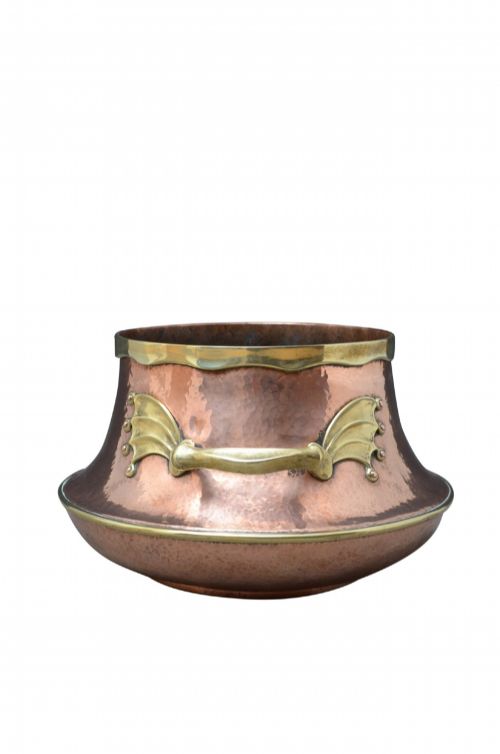
Beyond traditional coal storage, many surviving examples double as log bins, peat buckets, or large planters and jardinieres for the home. While the majority are rendered entirely in polished copper, makers frequently combined the metal with brass bands, iron fittings, or oak staves to provide structural strength. The variety reflects domestic requirements of the period, where utility near an open fire demanded robust construction combined with presentable exterior design.
Materials and Construction
Surface treatment ranges from smooth, polished finishes to heavily hand-hammered textures characteristic of Arts and Crafts workshops. Riveting served both a practical purpose for holding heavy metal plates together and an aesthetic one, outlining seams with geometric regularity. Artisans shaped the copper sheets by hand or with early mechanical assistance, creating sturdy vessels intended to endure heavy daily use near the coal shovel.
Victorian Copper Coal Scuttle Retail Price Guide 2026
Typical asking prices for victorian copper coal scuttle among the pieces listed under this phrase on Sellingantiques today, from the lower quarter to the upper quarter. They describe what is for sale here now, not the wider market.
Listings feature vessels spanning the Victorian period, the Edwardian era, and the Arts and Crafts movement, utilising copper, brass, iron, and oak.
Distinguishing Quality
Quality in a copper coal scuttle lies in the gauge of the metal and the integrity of the joints rather than mere decorative flourish. Thicker sheet copper resists dents and maintains its structural form under the heavy weight of coal, whereas thin metal yields too easily to knocks from a fireside shovel. The sturdiness of the handle attachments and the neatness of the riveted seams separate utilitarian workshop pieces from finer domestic vessels.
Design detail also dictates distinction, separating standard helmet shapes from pieces bearing hand-beaten Arts and Crafts surfaces or robust brass mountings. The proportion of the swing handle, the weight of the brass feet, and the crispness of any embossed decoration indicate the level of care invested by the maker. Better examples show balanced weight and secure fittings that remain firm after decades of lifting.
Henry Loveridge and Co
The Victorian Copper Coal Scuttle Glossary
- Helmet Scuttle
- A coal container featuring a flared mouth reminiscent of a classical helmet, designed to pour fuel cleanly into a grate. It typically includes an arched swing handle over the top and a smaller steadying handle at the rear.
- Jardiniere
- An ornamental pot or receptacle, usually ceramic or metal, designed to hold growing plants or flowers. In fireside contexts, metal vessels often served this dual purpose.
- Riveted Seam
- A method of joining sheet metal plates by inserting metal pins through overlapping edges and hammering them flat. This technique provides both physical strength and a decorative grid of metal dots.
Victorian Copper Coal Scuttle: Frequently Asked Questions
How were these coal scuttles used?
These vessels sat beside the fireplace to store coal, logs, or peat close to the hearth for easy access during winter months. The flared helmet shape or pivoting bucket allowed the user to tip fuel directly into the grate without spilling debris onto the carpet.
Beyond their original hearth duties, many pieces were repurposed over time as umbrella stands, waste bins, or large indoor planters. Their durable metal construction made them versatile enough to handle both heavy dry fuel and damp garden foliage.
How do I clean old copper?
Maintenance depends entirely on whether you prefer a bright polished shine or a dark, aged patina accumulated over a century. Gentle washing with warm soapy water removes accumulated dust and soot without stripping the historical character of the metal.
Harsh abrasive chemical cleaners should be avoided because they can wear down thin hand-beaten surfaces and erase subtle tool marks. A light application of appropriate metal polish brings out the original warmth of the copper if a bright reflective finish is desired.
How do I tell Victorian from Edwardian pieces?
Victorian examples tend to feature heavy brass trim, embossed coats of arms, and classic helmet profiles designed for formal nineteenth-century drawing rooms. The construction often relies on heavy riveted seams and robust cast brass handles built to withstand daily service.
Edwardian and later Arts and Crafts pieces frequently embrace simpler silhouettes with hand-hammered surfaces rather than applied ornament. These later items reflect a shift toward exposed craftsmanship and understated utility inspired by the Arts and Crafts movement.
Can I use these for logs today?
These vessels remain entirely functional for holding firewood or kindling beside a modern hearth or wood-burning stove. Their sturdy copper and brass construction easily accommodates the weight of logs without losing structural integrity.
Checking the interior for moisture retention or old coal dust is recommended before placing clean wood inside. Lining the base with a protective mat can also prevent scratching if heavy logs are dropped repeatedly into the bottom.