


Victorian Condiment Stand
A victorian condiment stand brings order to the dining table, holding bottles and salts with the practical elegance of the nineteenth century.

Victorian Condiment Stand
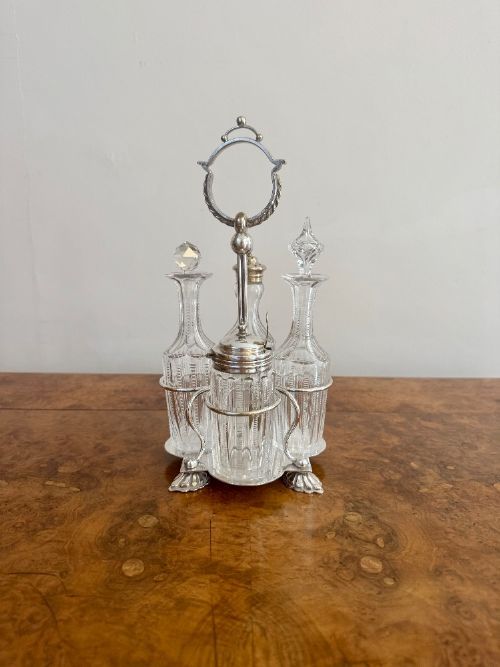
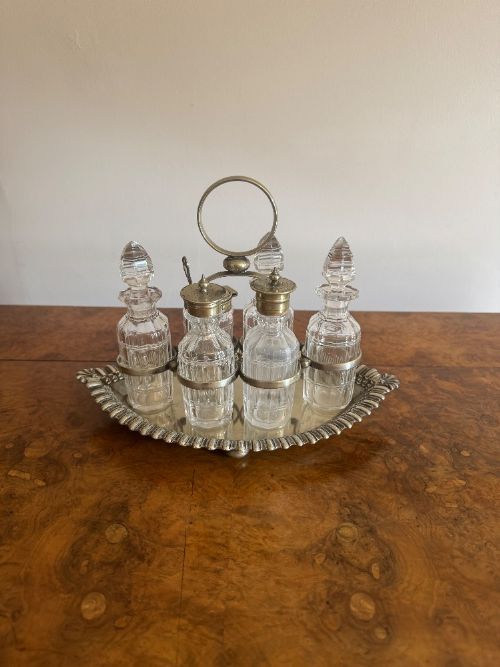
A victorian condiment stand gathers cruet sets, preserve dishes, and salt cellars into a single table arrangement. The pieces span periods from the nineteenth century into the Edwardian era, taking forms such as multi-bottle cruet frames, revolving lazy susans, and open salt cellars.
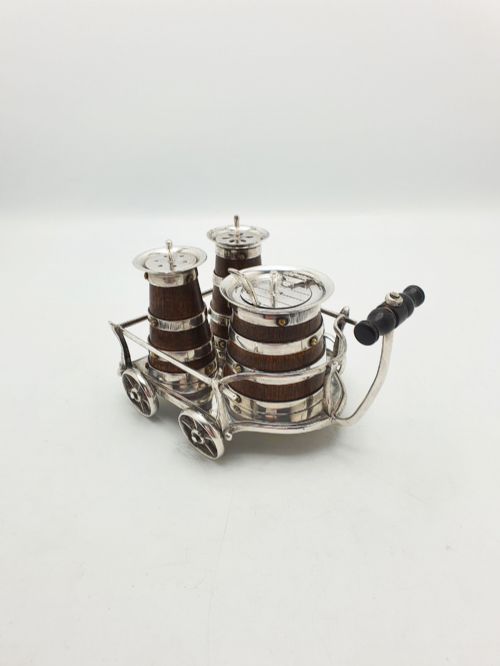
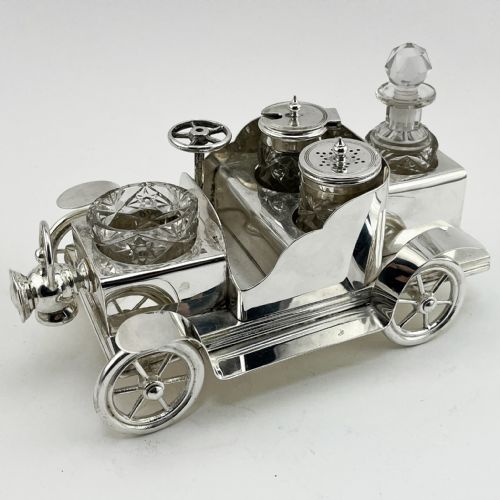
Novelty designs appear frequently alongside standard tableware, showing whimsical shapes like cars, farmyards, hunting scenes, and Black Forest bears. Makers also produced bachelor cruet sets and sauce holders with wirework stands designed for smaller gatherings.
Silver plate dominates the metalwork on this page, accompanied by sterling silver, oak, walnut, and glass. Cranberry glass and vaseline glass inserts provide bright colour within silver or wooden frames.
Materials and Construction
Silversmiths and manufacturers formed the frames from sterling silver or applied silver plate over base metals, often incorporating oak or walnut timbers for stands and barrels. Wirework techniques created open, airy frames for sauce holders and baskets.
Cut glass and blown glass formed the bottles, jars, and preserve bowls that fit into the metal frames. Coloured glass elements, particularly cranberry and vaseline varieties, required specialised glassmaking techniques to achieve their distinct hues.
Listings on this page include silver plate, sterling silver, oak, walnut, cranberry glass, and vaseline glass across multiple decades of the nineteenth and early twentieth centuries.
Assessing Craftsmanship and Condition
The standard of a victorian condiment stand rests on the weight of the metal, the precision of the silver plating, and the crispness of any cast novelty details such as animals or carriages. Superior examples retain matching sets of original cut glass bottles with proper stoppers.
Makers' marks stamped into the metal distinguish workshop production from anonymous manufacturing. Pieces bearing hallmarks from recognised firms demonstrate higher fidelity in design and sturdier construction across the frame and handle.
Mappin Brothers·Walker & Hall·Elkington & Co·Wade Wingfield Wilkins·William Hutton & Sons
The Victorian Condiment Stand Glossary
- Cruet set
- A collection of glass bottles for holding condiments like oil, vinegar, mustard, and pepper, fitted into a standing frame. These sets sat at the centre of dining tables for easy access during meals.
- Silver plate
- A layer of silver fused to a base metal, commonly utilised by nineteenth-century manufacturers to achieve the appearance of solid silver at a lower cost.
- Cranberry glass
- A transparent pinkish-red glass made by adding gold chloride to the molten metal. It is frequently seen in preserve dishes and bowls from the period.
- Bachelor cruet
- A smaller version of a standard cruet set, designed for individual use or intimate dining with fewer condiment bottles. These compact pieces often feature a central carrying ring.
- Lazy susan
- A revolving tray or stand placed on a table to allow easy sharing of dishes. Nineteenth-century examples often incorporated condiment holders into the rotating mechanism.
Victorian Condiment Stand: Frequently Asked Questions
What is a victorian condiment stand used for?
These stands organised table sauces, vinegars, oils, and seasonings during formal and informal meals. They kept multiple bottles and salt cellars together in a portable frame.
Servants or diners could easily pass the stand around the table to reach individual condiments as courses changed.
How do I clean silver plated stands?
Silver plate requires gentle cleaning with a soft cloth and specialised silver polish to avoid wearing through the thin metal layer. Harsh abrasives will damage the plated surface permanently.
Glass inserts and bottles can be washed separately in warm soapy water, ensuring all metal mounts remain dry to prevent corrosion.
Are novelty cruet sets older than standard designs?
Novelty cruet sets emerged during the same decades as conventional frames, spanning the mid-to-late nineteenth century and into the Edwardian period. Makers produced novelty items alongside traditional geometric cruets to satisfy changing Victorian tastes.
Figural designs shaped like animals, carriages, or musical instruments date from the 1870s onward, matching the timeline of standard silver plated tableware.
How can I tell if glass bottles are original?
Original glass bottles fit snugly into the cutouts of the metal frame and match the period's manufacturing techniques, showing hand-cut facets or pontil marks. The glass colour and thickness should coordinate with the style of the stand.
Replacement bottles often sit loosely in the rings or show mismatched patterns compared to the primary stand.