


Victorian Castor Set
A victorian castor set brings together the functional silver plate and cut glass needed for the dining table, with pieces dating from the nineteenth century.

Victorian Castor Set
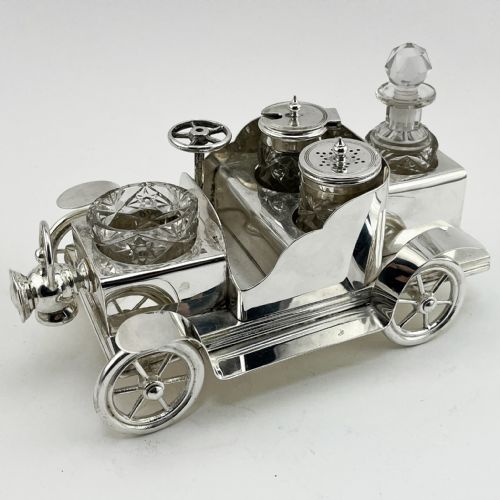
When searching for a victorian castor set, collectors generally encounter silver plated cruet stands fitted with multiple glass bottles for condiments. These table accessories emerged in various forms during the nineteenth century, ranging from simple four-bottle frames to large six-bottle arrangements.
The evidence shows these dining table sets often date from the middle to the late decades of the victorian era, alongside examples from around nineteen hundred. They are distinct from pieces of furniture fitted with small wheels, even though both share the term castor.
How they were made
Makers produced these table sets using silver plate over a base metal foundation, combining polished metal frames with cut glass bottles and cruet containers. The manufacturing process relied on electroplating techniques developed during the period to apply a silver layer to the metal body.
Cut glass inserts were shaped with geometric patterns to hold mustard, vinegar, oil, and pepper, fitting securely into dedicated rings within the metal framework.
Listings for this phrase include silver plate, cut glass, brass, and oak materials spanning the victorian period and the early twentieth century.
What varies in quality
Quality in these dining sets rests upon the crispness of the metalwork, the weight of the silver plating, and the condition of the glass bottles. Sets that retain their original matching cut glass bottles stand apart from those assembled later with mixed replacements.
Finer examples display detailed casting on the handle and frame supports, while simpler versions rely on plain wirework frames without decorative chasing.
The Victorian Castor Set Glossary
- Cruet set
- A collection of small bottles or pots for holding condiments and sauces at the dining table. These sets sit within a dedicated metal frame equipped with a central carrying handle.
- Silver plate
- A thin layer of silver bonded to a base metal such as brass or Britannia metal. This technique allowed nineteenth-century manufacturers to offer tableware with the appearance of solid silver at a lower cost.
- Cut glass
- Glass decorated by grinding facets and patterns into the surface using a wheel. It added weight and brilliance to the condiment bottles housed within the frame.
- Castor
- A small bottle with a perforated top used for sprinkling sugar or pepper over food. The term also refers to the rolling wheels fitted to nineteenth-century furniture legs.
Victorian Castor Set: Frequently Asked Questions
What is a victorian castor set used for?
These sets held condiments such as mustard, vinegar, oil, and pepper during formal meals. They sat in the centre of the dining table for guests to serve themselves.
Over time, dining habits changed and these collections transitioned from active table service to decorative display pieces.
How do I clean silver plated cruet sets?
Silver plate requires gentle cleaning with a soft cloth and a specialised silver polish to preserve the thin metal layer. Abrasive cleaners strip away the plating over time.
Glass inserts can be washed in warm soapy water separately from the metal frame.
Are all castor sets made of silver?
Most surviving examples utilise silver plate over a base metal rather than solid silver. Solid silver cruet sets were expensive and are much harder to find.
The metal framework is typically marked to indicate silver plating rather than solid precious metal.
How many bottles should a cruet set have?
Nineteenth-century sets commonly contain four, five, or six glass bottles depending on the size of the frame. Some specialised arrangements include mustard pots with attached spoons.
Sets found today frequently lack some of their original glass components due to accidental breakages over the decades.