


Tabletop Cruet Stand
A tabletop cruet stand brings practical elegance to the dining table, holding essential condiments within easy reach.

Tabletop Cruet Stand
A tabletop cruet stand is a structured frame designed to hold multiple condiment bottles, cruet sets, and bottle holders together for dining use. These pieces appear across the Victorian, Edwardian, and Art Deco periods, showing forms from simple bachelor sets to elaborate seven-bottle arrangements.
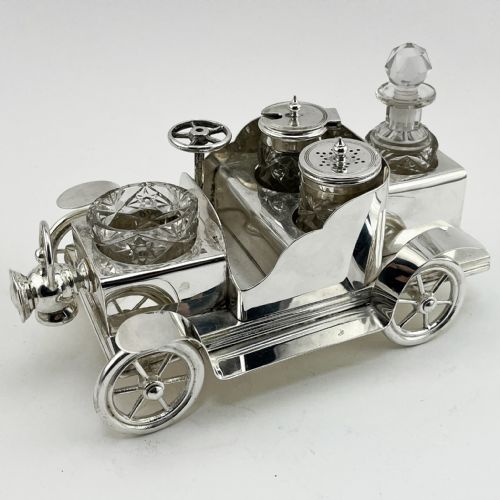
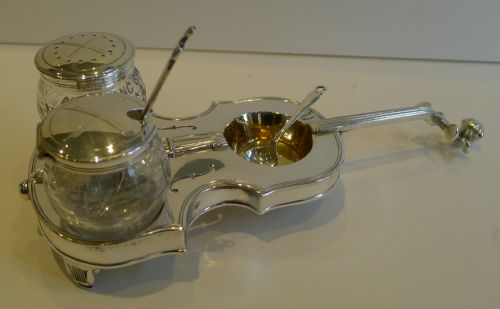
The most common examples encountered on this page date from the late nineteenth century in silver plate, alongside later twentieth-century modernist designs. Formats range from standard circular and rectangular frames to unusual novelty interpretations shaped like vintage cars and musical violins.
Makers utilised various configurations, accommodating anywhere from single bottle holders to complex frames housing cut glass cruet bottles. Buyers select these items for their combination of functional utility and period decorative character.
Materials and construction methods
Makers constructed these frames primarily from silver plate, sterling silver, nickel silver, and chrome, often pairing metalwork with cut glass or plain glass bottles. Workshops shaped and soldered the metal bases and handles to support the weight of multiple filled condiment vessels securely.
Cut glass bottles feature heavily in the composition of these sets, shaped with geometric or floral facets that catch the light. Metal mounts and collars were frequently fitted to the glass bottles to match the finish of the main stand.
Someone in eighteen-ninety decided dinner needed a cruet set shaped like a musical violin.
Assessing quality in construction and design
The distinction between standard examples and the finest pieces lies in the crispness of the metalwork, the weight of the frame, and the integrity of the glass inserts. Elaboration of design, such as ornate cast mounts and central shields, indicates higher workshop ambition.
Novelty forms and pieces bearing recognised maker marks demonstrate superior design value compared to mass-produced utilitarian sets. The matching of original cut glass bottles to the specific frame elevates the completeness and standing of the piece.
Mappin Brothers·Elkington & Co
The Tabletop Cruet Stand Glossary
- Cruet set
- A collection of small glass bottles or jars designed to hold liquids and seasonings such as oil, vinegar, mustard, and pepper. These vessels sit within a dedicated metal frame for tabletop service.
- Bachelor set
- A smaller scale cruet set intended for individual use or intimate dining, typically featuring fewer bottles than a standard family dining table arrangement.
- Novelty cruet
- A cruet stand shaped to represent an object, animal, or scene, such as a musical violin or a vintage motor car. These pieces combined functional diningware with whimsical Victorian conversation-piece design.
- Silver plate
- A base metal, such as nickel silver or copper, coated with a thin layer of pure silver through electroplating or older fusion methods. This technique provided the appearance of solid silver at a lower production cost.
- Cut glass
- Glassware shaped and patterned by grinding wheels and polishing to create decorative facets and light-reflecting cuts. It formed the standard material for high-quality cruet bottles.
Tabletop Cruet Stand: Frequently Asked Questions
What is a tabletop cruet stand?
A tabletop cruet stand is a metal frame or caddy designed to hold condiment bottles, cruet sets, and bottle holders for easy transit and presentation at the dining table.
These pieces typically organise multiple glass vessels containing seasonings, oils, and sauces within a single structured handle and base.
How were cruet stands used?
Cruet stands were placed in the centre of the dining table during meals so guests could season their food to taste.
They allowed servants or diners to pass various condiments around the table efficiently without cluttering the dining surface with individual loose bottles.
How do I date a cruet stand?
Dating relies on stylistic clues, manufacturing materials, and any maker marks or registration numbers stamped into the metal frame. Victorian pieces often display ornate cast decoration, while Edwardian examples tend towards lighter forms and Art Deco pieces exhibit geometric modernist lines.
Materials also provide a guide, with chrome and nickel silver becoming more prevalent in twentieth-century designs alongside traditional silver plate and sterling silver.
Are the glass bottles usually original?
Finding a set with its original matching cut glass bottles is common, though replacements do occur due to accidental breakage over decades of use.
Examining the fit of the bottles within the frame and the consistency of the glass style helps determine if the components belong together.
How do I care for silver plated stands?
Silver plated cruet stands require gentle cleaning with a specialist silver polish to maintain the finish without wearing through the thin plating layer.
Glass inserts can be washed separately in warm soapy water, ensuring they are dried thoroughly before being placed back into the metal frame.