
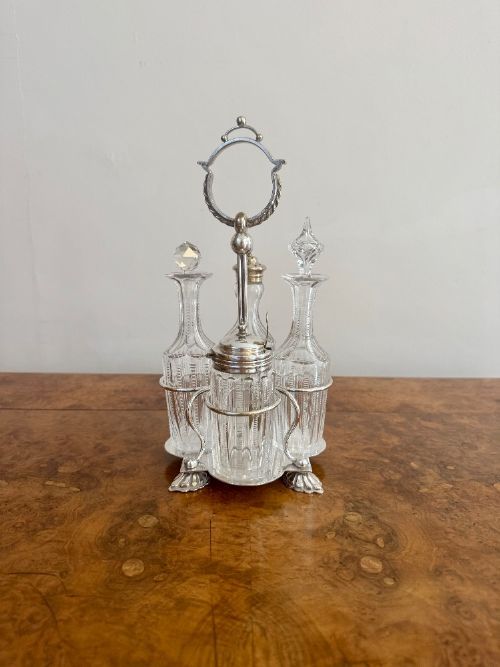


Silver Oil Vinegar Caddy
These silver oil vinegar caddy pieces bring formal dining elegance to the table, combining cut glass bottles with gleaming metal frames for daily use.

Silver Oil Vinegar Caddy
A silver oil vinegar caddy, commonly catalogued among cruet sets and condiment sets, organises tableware dressings with structured elegance. These dining accessories hold bottles for oil, vinegar, and various condiments within a secure metal framework.
The selections available here span from Georgian pieces down through Victorian, Edwardian, and Art Deco eras. Buyers frequently encounter Edwardian and Victorian silver plated examples fitted with cut glass bottles.
Forms range from compact bachelor sets holding fewer vessels to large oval frames carrying six or eight pieces. Each iteration reflects the dining customs and table service needs of its respective period.
Construction and materials
Silversmiths and manufacturers formed the frames using sterling silver or silver plate over a base metal. These supportive structures often incorporate intricate wirework, carrying handles, and secure bottle rings.
The accompanying vessels utilise cut glass, shaped and faceted to catch the light during dining service. Master glasscutters created geometric patterns on the bottles, which fit precisely into their designated metal slots.
Georgian dining tables required entire metal racks just to keep the salad dressings from migrating.
Assessing quality and craftsmanship
Quality rests upon the crispness of the metalwork and the weight of the frame. Heavier sterling silver or substantial silver plate indicates superior manufacture compared to lighter, more utilitarian alternatives.
The integrity of the cut glass bottles significantly influences the piece. Matching sets where every bottle shares the same facet pattern and fits the frame without wobble represent the higher tier of production.
Mappin Brothers·Wade Wingfield Wilkins
The Silver Oil Vinegar Caddy Glossary
- Cruet set
- A collection of glass bottles or cruets mounted on a metal stand for oils, vinegars, and sauces. These assemblies served meals by keeping seasonings accessible at the dining table.
- Condiment set
- A broader term encompassing small containers for seasonings, salt, pepper, and mustards. They share many structural similarities with oil and vinegar frames.
- Silver plate
- A layer of pure silver fused to a base metal such as copper or Britannia metal. This technique allowed makers to produce elaborate dining wares at a lower cost than solid silver.
- Cut glass
- Glass decorated by grinding facets and patterns into the surface using rotating wheels. This method enhances sparkle and tactile grip on condiment bottles.
Silver Oil Vinegar Caddy: Frequently Asked Questions
What is a silver oil vinegar caddy?
It is a decorative tabletop stand designed to hold glass bottles for oil and vinegar during meals. These frames keep dressings orderly and easy to pass.
Most examples feature a central carrying handle and individual rings to secure each bottle safely in place.
How were these sets used?
Dinners relied on these sets to serve liquid seasonings directly at the table. Guests or servants could pour oil and vinegar onto their food as desired.
Larger versions also accommodated mustard pots, pepper casters, and salt cellars alongside the primary cruets.
How do I clean the glass bottles?
Warm soapy water and a bottle brush usually suffice for cleaning the interior of cut glass cruets. Avoid harsh abrasives that might scratch the surface.
Ensure the glass dries thoroughly before placing the bottles back into their silver plated frames.
How can I identify the period?
Stylistic details such as heavy Victorian ornamentation, Edwardian delicacy, or Georgian simplicity point toward specific eras. Maker marks stamped on the metal frames provide further dating evidence.
Manufacturing techniques and the specific cut of the glass also help distinguish eighteenth-century pieces from later nineteenth- and twentieth-century reproductions.