


Silver Cruet Frame
A silver cruet frame holds the condiments of the table in a fitted metal stand.
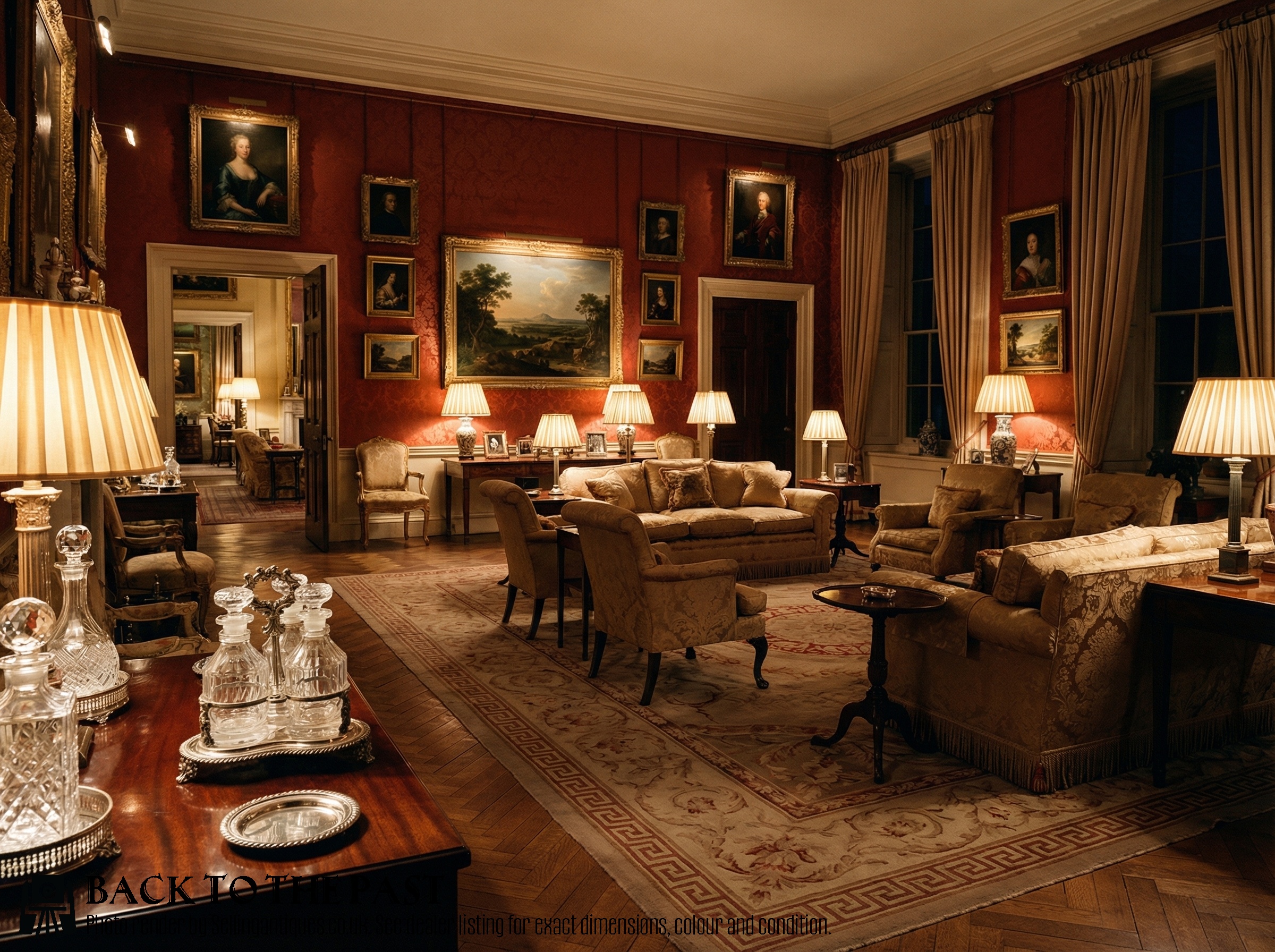
Silver Cruet Frame
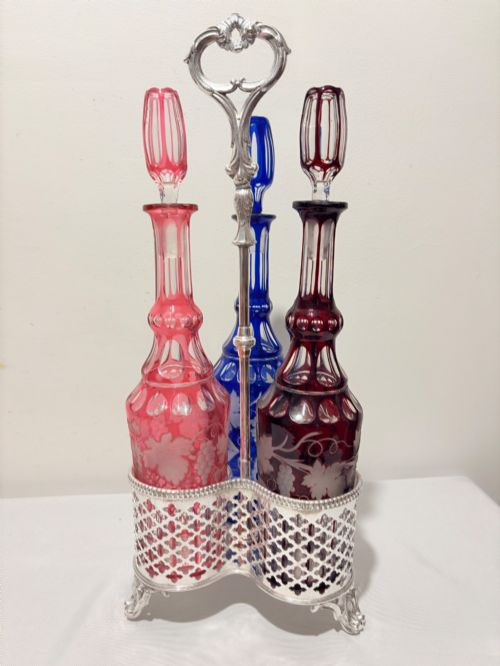
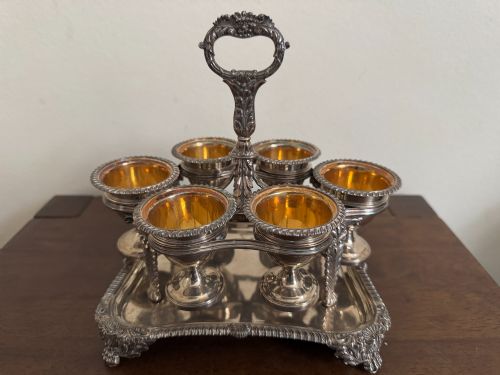
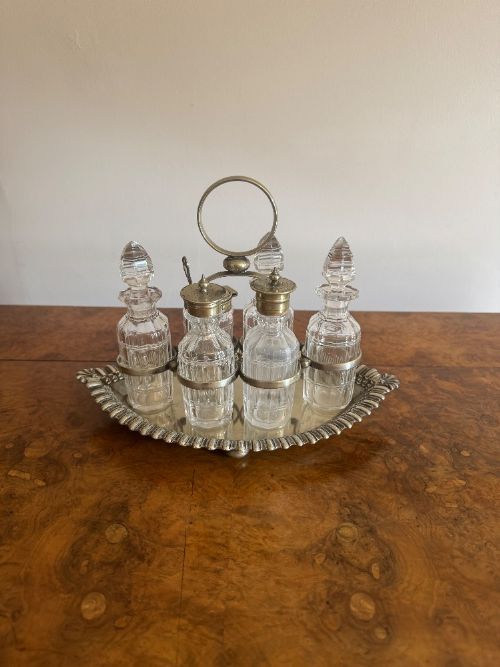
When you search for a silver cruet frame, you are looking at table hardware designed to carry bottles, casters and jars of seasoning. The pieces on this page span the eighteenth, nineteenth and twentieth centuries, taking forms from simple wirework stands to elaborate oval plate frames. Most examples you meet combine a metal framework with glass bottles for oil, vinegar, mustard and pepper.
The objects range from bachelor sets with three bottles to large seven-bottle and eight-piece dining table arrangements. You will find Georgian sterling silver frames alongside Victorian and Edwardian silver plated stands. Some hold decanters or incorporate figural novelties, while others provide a central ring handle for carrying from the sideboard.
Materials and construction
The frames are formed from sterling silver, Old Sheffield plate, or silver plate on a base metal foundation. Silversmiths cast, stamped, and soldered the metal into structured stands featuring feet, ring holders, and central carrying handles. Early examples show hand-wrought sterling construction, while later Victorian and Edwardian pieces utilise electroplated techniques over base metals.
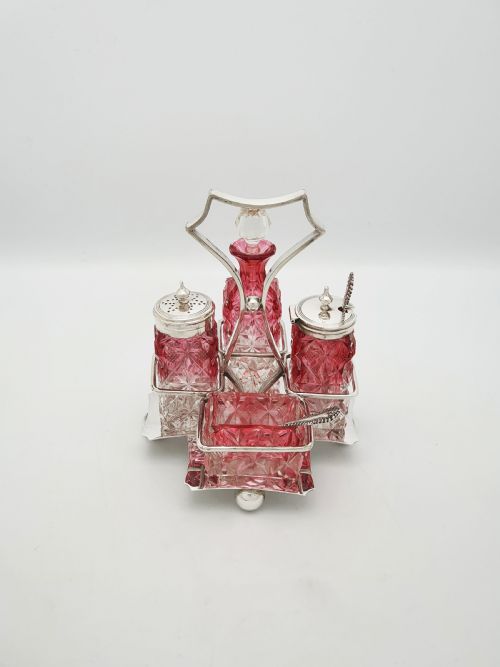
The fitted vessels are made from cut glass, coloured glass, and cranberry glass, shaped to sit securely within the metal rings. Many bottles retain matching silver or plated mounts, stoppers, and caster caps. Gold gilt interiors appear on specific condiment spoons and linings within the sets.
Listings span the eighteenth to the twentieth centuries, featuring Georgian, Victorian, Edwardian, and Art Deco styles.
What separates the best from the rest
Quality in a silver cruet frame rests upon the integrity of the fitted glassware and the crispness of the metalwork. Sets that retain their original matching cut glass bottles or decanters sit higher in desirability than those assembled with replacement vessels. The weight of the silver or the thickness of the plating also dictates the grade of the piece.
Maker attribution elevates certain examples, particularly those bearing the marks of known silversmiths like Hester Bateman or Elkington and Co. The complexity of the frame, from plain Georgian bottle holders to ornate Victorian novelty designs, defines the ambition of the original maker.
William Burwash·Charles Thomas Fox·Mappin Brothers·Elkington and Co·Hester Bateman·William Hutton and Sons·S Wood
The Silver Cruet Frame Glossary
- Cruet set
- A collection of glass bottles and jars housed in a fitted metal frame for table condiments. They organise oil, vinegar, and sauces during dining.
- Caster
- A small cylindrical jar with a perforated top used for sprinkling sugar or dry spices. They form part of larger cruet arrangements.
- Old Sheffield plate
- A method of fusing a thin sheet of sterling silver to a copper core before forming the item. This technique precedes nineteenth-century electroplating.
- Bachelor set
- A smaller cruet frame designed for individual or small-scale dining, typically holding three bottles. They offer a compact alternative to full dinner service frames.
- Cranberry glass
- A rich pinkish-red glass produced by adding gold chloride to the molten batch. It appears frequently in Edwardian bottle sets.
Silver Cruet Frame: Frequently Asked Questions
What is a silver cruet frame?
A silver cruet frame is a portable metal stand designed to hold bottles of oil, vinegar, and various seasonings for the dining table. They keep condiment bottles organised and transportable between the kitchen and the dining room.
Most frames feature a central handle and individual rings to secure each glass bottle or caster in place. They evolved in style across the Georgian, Victorian, and Edwardian periods to match contemporary dining fashions.
How do I know if the bottles are original?
Original bottles fit snugly into the numbered or sized ring apertures of the specific frame. They share the same glass colour, cut pattern, and wear characteristics as the metal stand.
Replacement bottles often sit loosely in the rings or show mismatched glass cutting styles. Examining the base of each bottle for matching age wear helps confirm originality.
What styles of cruet frame exist?
Styles range from restrained Georgian sterling silver frames to ornate Victorian and Gothic revival plated stands. Edwardian pieces often introduce coloured glass like cranberry, while novelty designs adopt figural shapes.
Decanter stands and bottle holders represent variations built for serving wine and spirits rather than liquid condiments.
How do I clean a silver cruet frame?
Cleaning requires a soft cloth and a gentle silver polish suitable for sterling or plated surfaces. Care must be taken around applied mounts and engraved maker marks to avoid abrasion.
Glass bottles and stoppers wash separately in warm soapy water. Metal frames should be dried thoroughly after cleaning to prevent moisture damage.