


Vintage Glass Liquor Decanters
These vintage glass liquor decanters are heavy cut crystal and coloured vessels designed to hold spirits with elegance.
Vintage Glass Liquor Decanters
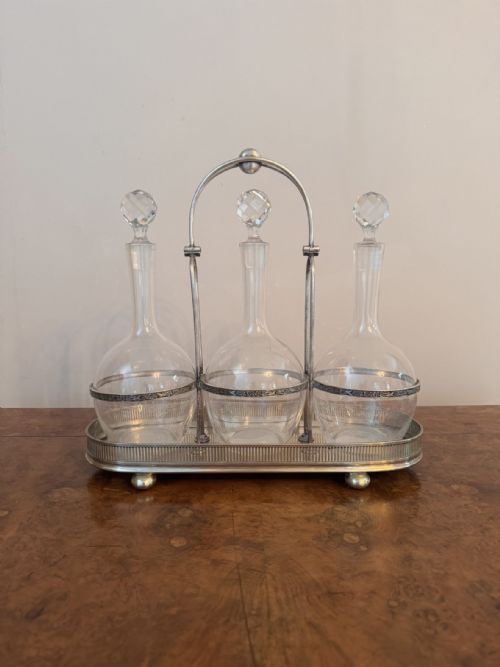
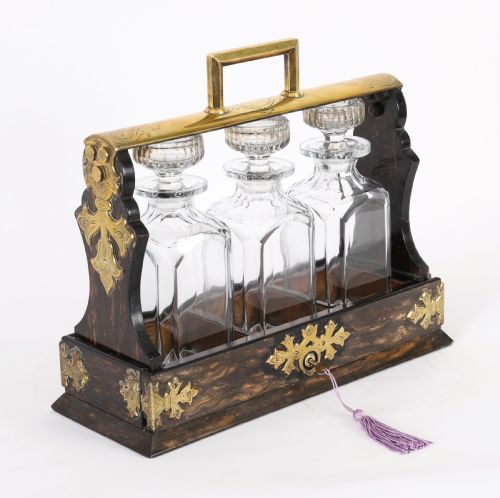
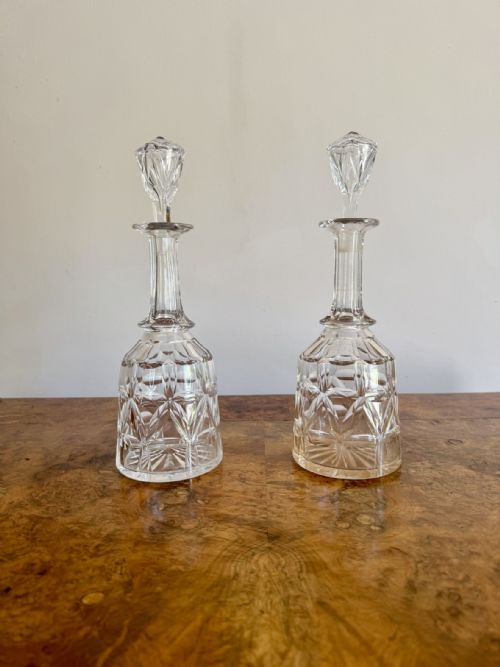
When searching for vintage glass liquor decanters, a buyer encounters pieces originating from the Victorian and Edwardian eras through to the Art Deco period of the 1930s. The selection on this page relies heavily on Edwardian and Victorian forms, alongside functional tantalus sets and complete drink dispenser groupings.
The objects take many shapes, from bell-shaped vessels and spirit bottles to hip flasks, ewers, and whisky noggins. Makers often paired the glass bodies with silver plate, sterling silver, or brass mounts to create serving pieces for the home bar.
Materials and technique
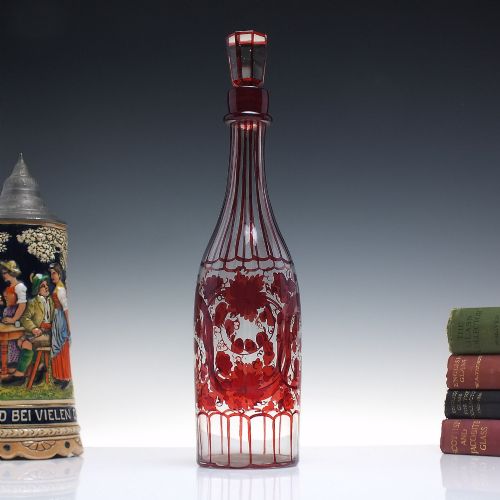
The primary materials span standard glass, cut crystal, and lead crystal, shaped through blowing and heavy cutting techniques. Artisans often utilised overlay methods, cutting through a coloured glass layer to reveal the clear glass beneath.
Metal components required specialist silversmithing and metalworking skills to produce hallmarked sterling silver collars, silver-plated stands, and oak or coromandel tantalus frames fitted with locking mechanisms.
Surface ornamentation involved hand engraving, enamel work, and painting directly onto the glass body. Makers also applied cast brass mounts and Old Sheffield plate to secure and elevate the glass containers.
Some nineteenth-century spirit bottles were boldly enamelled with regional whisky blends like Pigeon Blend to tempt thirsty travellers.
Assessing quality
Quality rests upon the clarity and weight of the crystal and the depth of the hand-cut facets. Heavier lead crystal bodies with crisp, sharp cutting lines generally represent superior manufacturing standards.
The integration of the metalwork defines the tier of the piece, particularly where hallmarked sterling silver mounts, substantial silver-plated stands, or fitted coromandel and oak tantalus boxes are present. Complete sets featuring matching glasses and intact stoppers maintain greater architectural and decorative coherence.
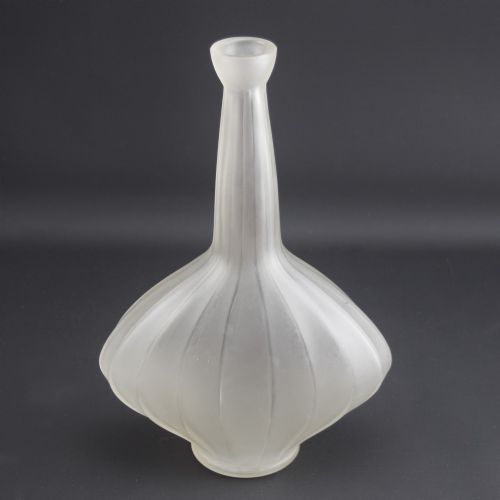
Betjemann·Rene Lalique·Karl Palda·Baccarat·James Powell·Hukin & Heath·Elkington
The Vintage Glass Liquor Decanters Glossary
- Tantalus
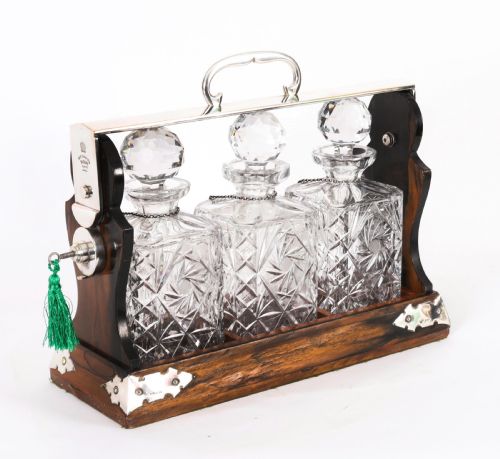
- A locking wooden frame holding decanters securely so they cannot be removed without a key. These security frames typically utilise oak or coromandel wood with brass or silver mounts.
- Whisky Noggin
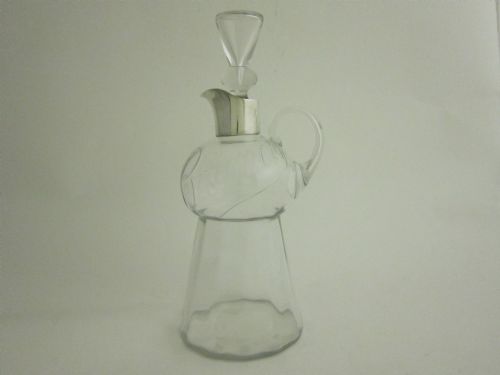
- A small spirit decanter or flask, often featuring a single handle and a silver collar. They hold a modest measure of whisky for individual service.
- Cave a Liqueur
- A French liqueur set housed within a decorative wooden or brass-mounted box. These typically contain a set of matching decanters and cordial glasses inside.
- Old Sheffield Plate
- A composite material made by fusing a thin layer of silver to a copper base. This technique was widely used for mounts and stands before modern electroplating.
- Overlay Glass
- Glass created by fusing one or more coloured layers over a clear glass base. Artisans then cut through the outer layer to display contrasting colour patterns.
Vintage Glass Liquor Decanters: Frequently Asked Questions
What is a tantalus?
A tantalus is a locking stand that secures decanters behind a wooden bar to prevent unauthorized access to the spirits.
Victorian and Edwardian households used them in entertaining spaces, keeping the bottles visible yet secure under lock and key.
How do I date a decanter?
Dating relies on stylistic markers, glass cutting techniques, and metal hallmarks on the silver collars or stands.
Victorian pieces often feature heavy cutting and elaborate silver plate, while 1930s examples lean towards geometric Art Deco forms and Czech crystal designs.
Are stoppers usually original?
Stoppering was specific to each hand-ground neck, meaning replacements rarely fit with absolute precision.
Examining the grind marks on both the stopper peg and the inner neck helps confirm whether the pairing is original to the piece.
How should I clean vintage decanters?
Gentle washing with warm water and non-abrasive cleaning beads protects the interior glass surfaces without scratching.
Harsh detergents and sudden temperature changes must be avoided to preserve the clarity of antique crystal and any engraved decoration.