


Victorian Column Plinths
Victorian column plinths elevate sculpture and lamps with classical presence, bringing nineteenth-century architectural dignity to any interior.
Victorian Column Plinths
Victorian column plinths provide architectural support and display height for busts, figures, urns, and lamps within domestic interiors. When searching for victorian column plinths, collectors encounter vertical display forms ranging from slender torcheres to sturdy architectural columns.
The selections span the nineteenth century, including specific dates from eighteen-fifty to nineteen-hundred alongside broader Victorian and nineteenth-century designations. Pieces manifest as pedestals, display stands, plant stands, and architectural columns.
Makers and workshops utilised various regional influences, producing Italian Renaissance revival, neoclassical, and aesthetic movement designs. Forms appear singly or as pairs, serving practical display functions while introducing classical proportion to rooms.
Materials and Construction Techniques
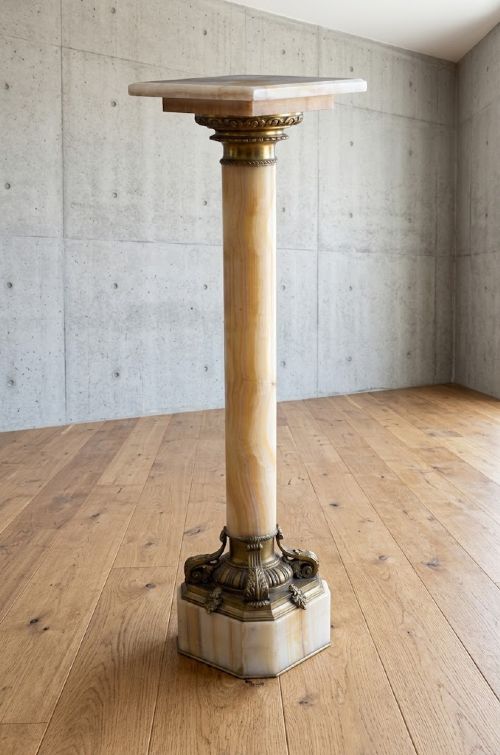
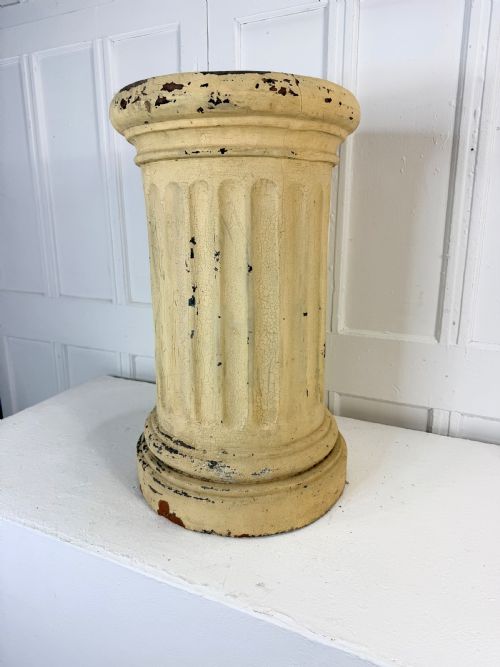
Craftsmen built these columns using a diverse palette of natural stone, exotic timbers, and metals. Recorded materials include marble, onyx, alabaster, scagliola, terracotta, stoneware, cast iron, and painted finishes applied to wood bases.
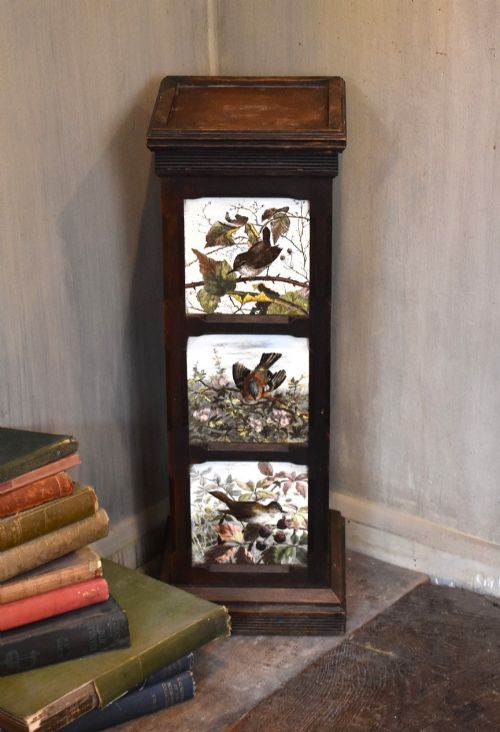
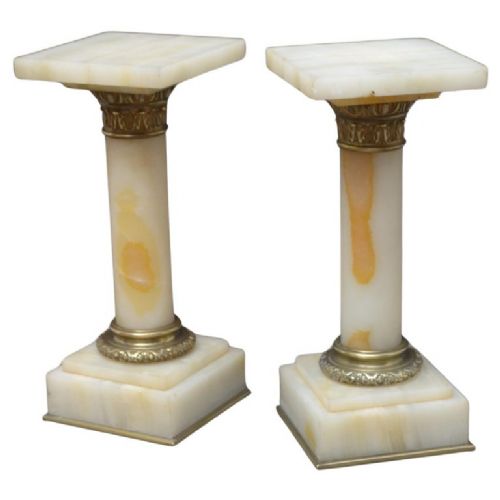
Woodworking examples utilise mahogany, satinwood, walnut, amboyna, birch, and oak, often shaped into turned pillars or spiral columns. Stonework incorporates verde antico and honey-coloured marble, frequently paired with ormolu collars, gilt bronze mounts, or brass details.
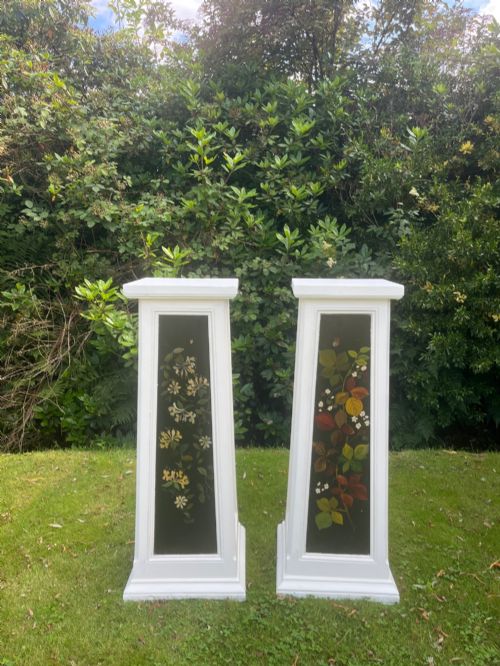
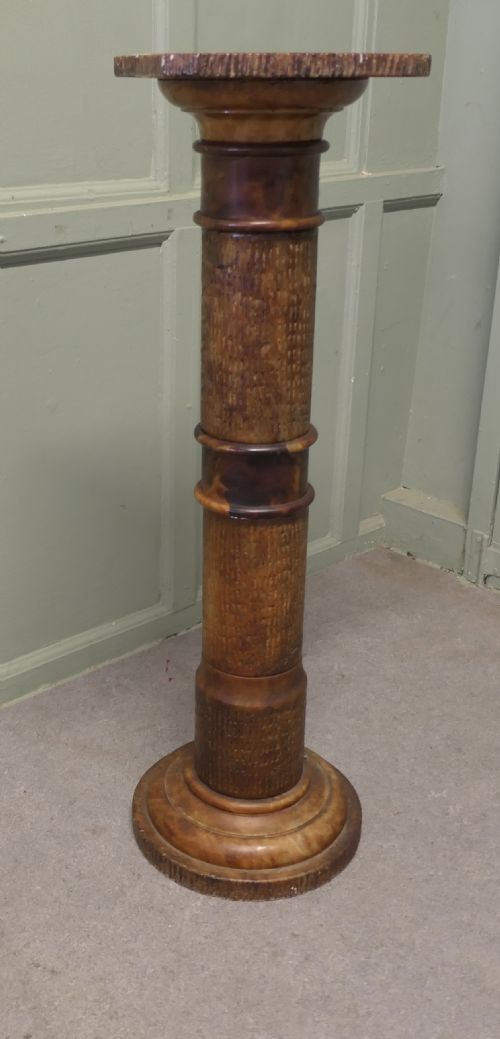
Surfaces demonstrate sophisticated decorative treatments such as grain painting and faux marble effects on pine and wood supports. Stonemasons and cabinetmakers combined structural stability with refined surface ornamentation to emulate classical architectural marble.
The documented styles span neoclassical, aesthetic movement, and Italian Renaissance revival periods across the Victorian era.
Distinctions in Quality and Execution
Quality resides in the selection of materials and the fidelity of classical proportions. Solid marbles, fine honey-coloured stone, and exotic hardwoods such as amboyna represent a higher tier than grain-painted pine or basic timber supports.
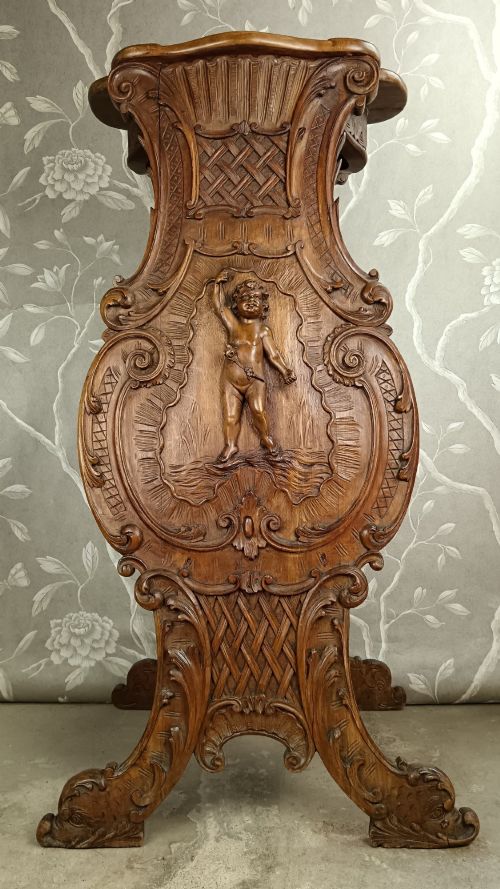
Carving depth and metal mount integration distinguish superior pieces from standard workshop output. Finely carved stained birch, detailed walnut, and cast ormolu collars elevate an object through precise craftsmanship.
The presence of matched pairs adds architectural symmetry and utility, particularly for garden planters, bust stands, and decorative torchere columns. Exhibition quality examples combine scarce timbers with intricate carving and robust structural integrity.
Gillow and Co
The Victorian Column Plinths Glossary
- Torchere
- A tall ornamental stand designed to hold a lamp or candle. These slender columns elevate lighting sources above floor level.
- Scagliola
- A composite material made from selenite, glue, and pigments, mimicking natural marble and other stones. Artisans applied this technique to achieve smooth, decorative column shafts.
- Verde Antico
- A dark green serpentine breccia marble prized in classical and neoclassical design. It creates a rich, mottled surface on nineteenth-century columns.
- Socle
- A short plinth or pedestal supporting a column or bust. This architectural base grounds the vertical shaft firmly.
- Ormolu
- Gilt bronze mounts applied to furniture and decorative objects during the nineteenth century. These metallic accents highlight capitals and collars on stone columns.
Victorian Column Plinths: Frequently Asked Questions
What were Victorian column plinths used for?
These vertical stands supported heavy items such as marble busts, bronze figures, botanical specimens, and oil lamps. They raised decorative objects to eye level within nineteenth-century reception rooms and hallways.
Their sturdy construction also suited exterior spaces, allowing garden planters and stoneware urns to stand securely on terraces and lawns.
How do I identify different stone types?
Natural marble and onyx display cold surfaces with distinctive veining and crystalline structures unique to geological formation. Scagliola feels slightly warmer and often reveals a composite core beneath polished plaster finishes.
Alabaster offers a softer, translucent quality that diffuses light when examined closely. Verde antico is instantly recognised by its deep green and white mottled breccia pattern.
Where should I place a column plinth?
Place these columns in corners, flanking doorways, or against blank walls to break up flat expanses of interior space. They provide an ideal focal point for sculptural art, trailing plants, or table lamps.
Ensure the floor surface is level to maintain stability, especially when supporting heavy stone or cast iron sculptures.
Are painted columns authentic?
Nineteenth-century workshops frequently employed grain painting and faux marble techniques to replicate expensive stones on cheaper timber bases like pine. This practice was a standard decorative method rather than a later alteration.
Examine the wear patterns and pigment composition to confirm nineteenth-century application rather than modern restoration work.