
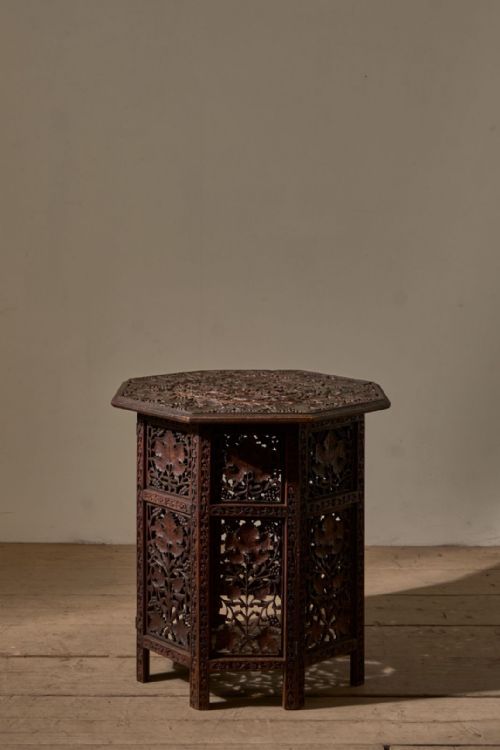


Victorian Colonial Tea Table
A victorian colonial tea table brings dense tropical hardwoods and intricate regional carving straight from the nineteenth-century British Empire into a modern room.
Victorian Colonial Tea Table
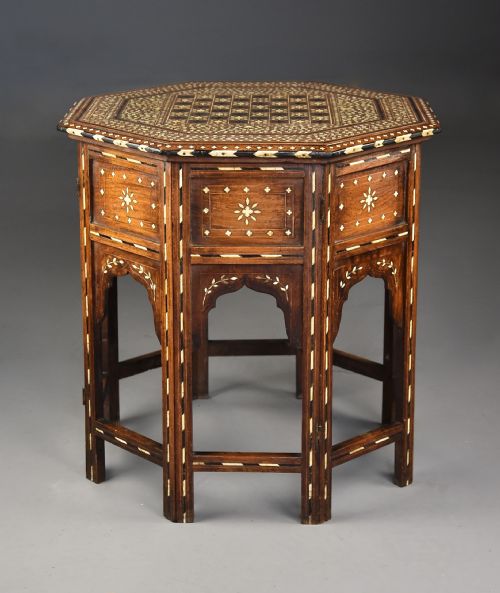
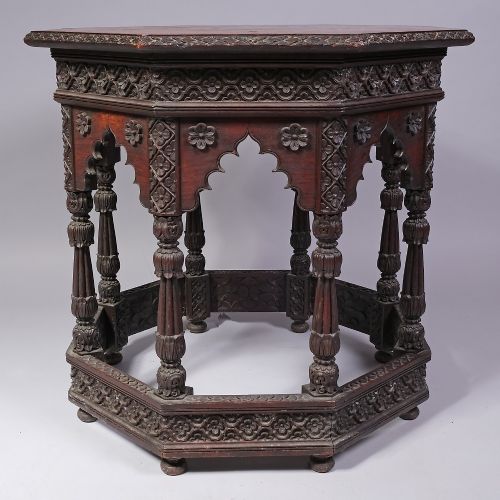
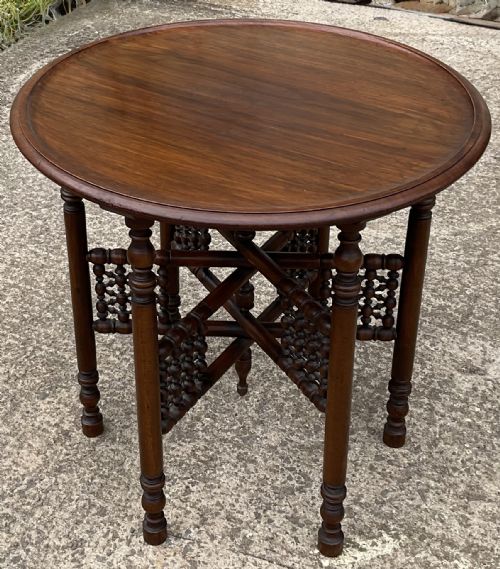
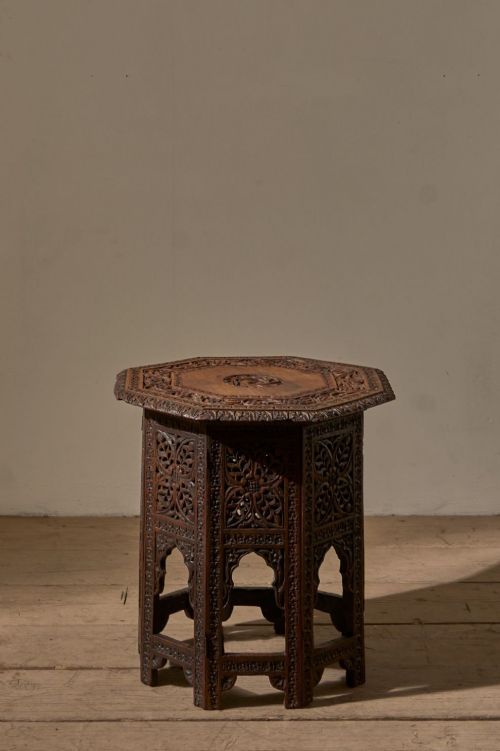
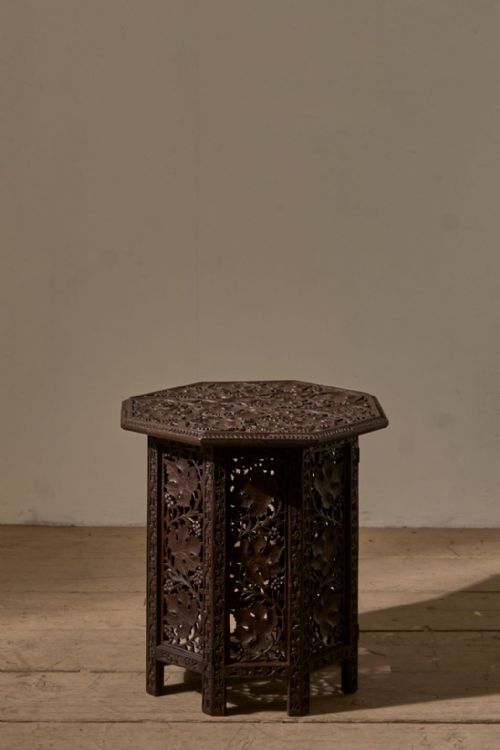
A victorian colonial tea table embodies the cross-cultural exchange of the nineteenth century, blending British domestic forms with South Asian and Southeast Asian craftsmanship. These pieces most commonly appear as occasional, side, or centre tables featuring octagonal, circular, or shield-shaped tops.
The regional styles span Anglo-Indian, Anglo-Burmese, and Ceylonese origins, dating predominantly from the mid to late nineteenth century through to nineteen hundred. Workshops in centres such as Bombay and Hoshiarpur produced these works for colonial officials and export markets.
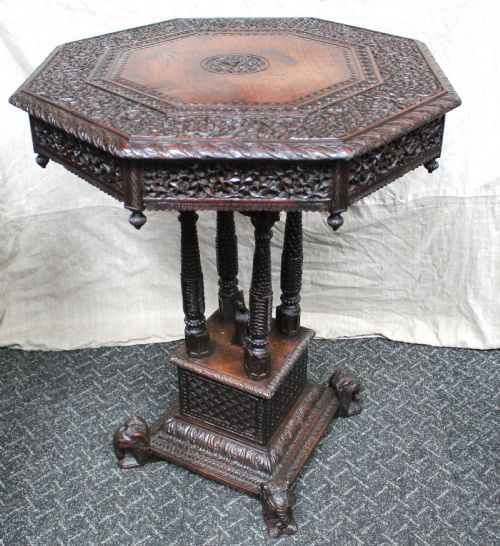
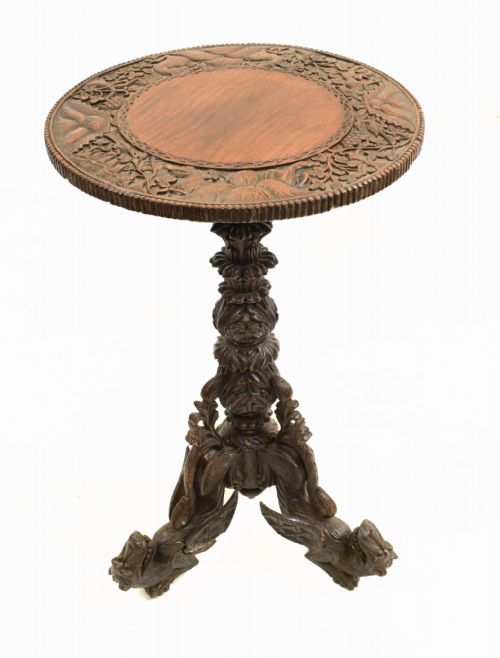
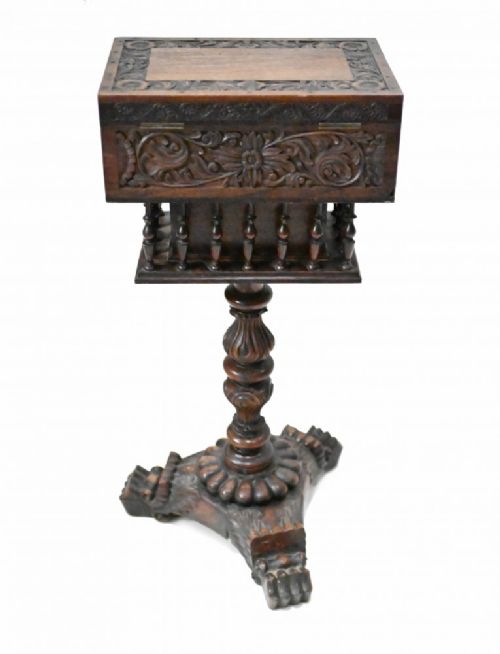
Forms range from folding campaign pieces designed for travel to heavily carved pedestal and pillar designs incorporating traditional motifs like elephants, peacocks, and dragons. The typical survivor on this page presents a rich timber surface intended for display in a drawing room or study.
Materials and construction methods
The primary structure relies on dense tropical timbers including padauk wood, teak, rosewood, and ebony, selected for their stability and weight. Artisans shaped these hard woods using intricate hand-carving techniques, producing deep relief foliage and figural motifs across the aprons and surfaces.
Decoration frequently incorporates contrasting media such as bone, mother of pearl, and brass inlay set directly into the timber. Many smaller examples utilise folding or tilt-top mechanisms designed for portability, combining utilitarian campaign engineering with decorative local artistry.
Several tables feature carved elephants supporting the top, ensuring your tea service travels on the back of sturdy pachyderms.
Assessing quality in colonial tables
Quality rests in the depth, crispness, and control of the hand-carved relief work, where superior examples exhibit sharp undercut foliage rather than shallow, mechanical stamping. The choice of timber also dictates standard, with rich grain patterns in solid padauk or rosewood marking out finer commissions.
The precision of the inlay work separates ordinary items from exceptional pieces, particularly where bone, brass, or mother of pearl forms tight, flush geometric or floral patterns. Structural integrity in folding mechanisms and pedestal bases indicates superior regional cabinet-making.
The Victorian Colonial Tea Table Glossary
- Padauk wood
- A dense, reddish-brown tropical hardwood prized by colonial cabinet-makers for its durability and rich natural lustre. It takes a fine carved edge and deep polish.
- Campaign table
- A portable item designed for military officers or colonial administrators, featuring folding legs or collapsible frames for transit. These pieces prioritise practical disassembly alongside decorative carving.
- Hoshiarpur
- A town in Punjab renowned for intricate inlaid woodwork utilising bone, brass, and shisham or other hardwoods. Tables from this region feature dense geometric and floral patterns.
- Tilt top
- A table construction where the surface pivots on a catch, allowing the top to store vertically against the base when not in use. This mechanism is common in nineteenth-century occasional and pillar tables.
- Teapoy
- A small occasional table or stand originally designed to hold tea canisters and equipment. In colonial contexts, the term often applies to compact serving or display tables.
Victorian Colonial Tea Table: Frequently Asked Questions
How were these tables used originally?
Colonial households employed these tables for serving afternoon tea, displaying ornaments, or functioning as movable writing surfaces in drawing rooms and verandas.
Folding campaign versions were built for travel, allowing officials to pack furniture easily when relocating across regions.
Are these tables suitable for daily use?
These pieces function well as coffee tables, lamp stands, or side tables in contemporary interiors, provided they are protected from direct heat and moisture.
Careful placement preserves the delicate brass, bone, or mother of pearl inlay set into the timber tops.
What woods should I expect to find?
The dominant timbers are heavy tropical hardwoods such as padauk, teak, rosewood, and ebony, chosen for their resilience against humidity and pests.
These dense materials carry a deep natural colour that deepens with age and traditional waxing.