






Victorian Colonial Carved Cabinet
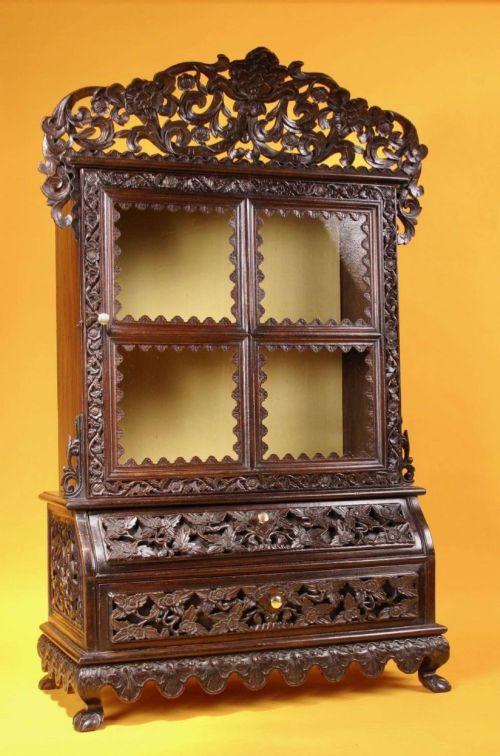
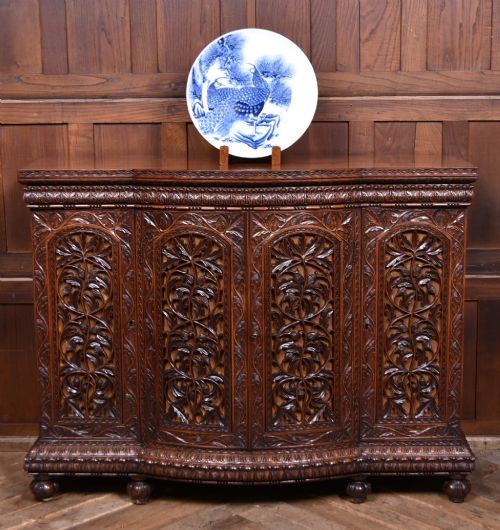
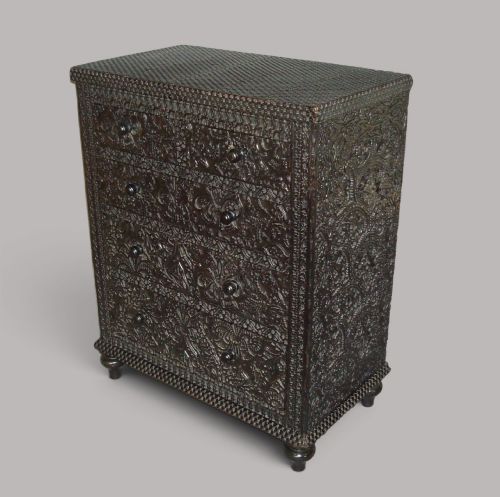
These victorian colonial carved cabinet examples bring dense foliage, carved animals and dense timber into a room.
Victorian Colonial Carved Cabinet
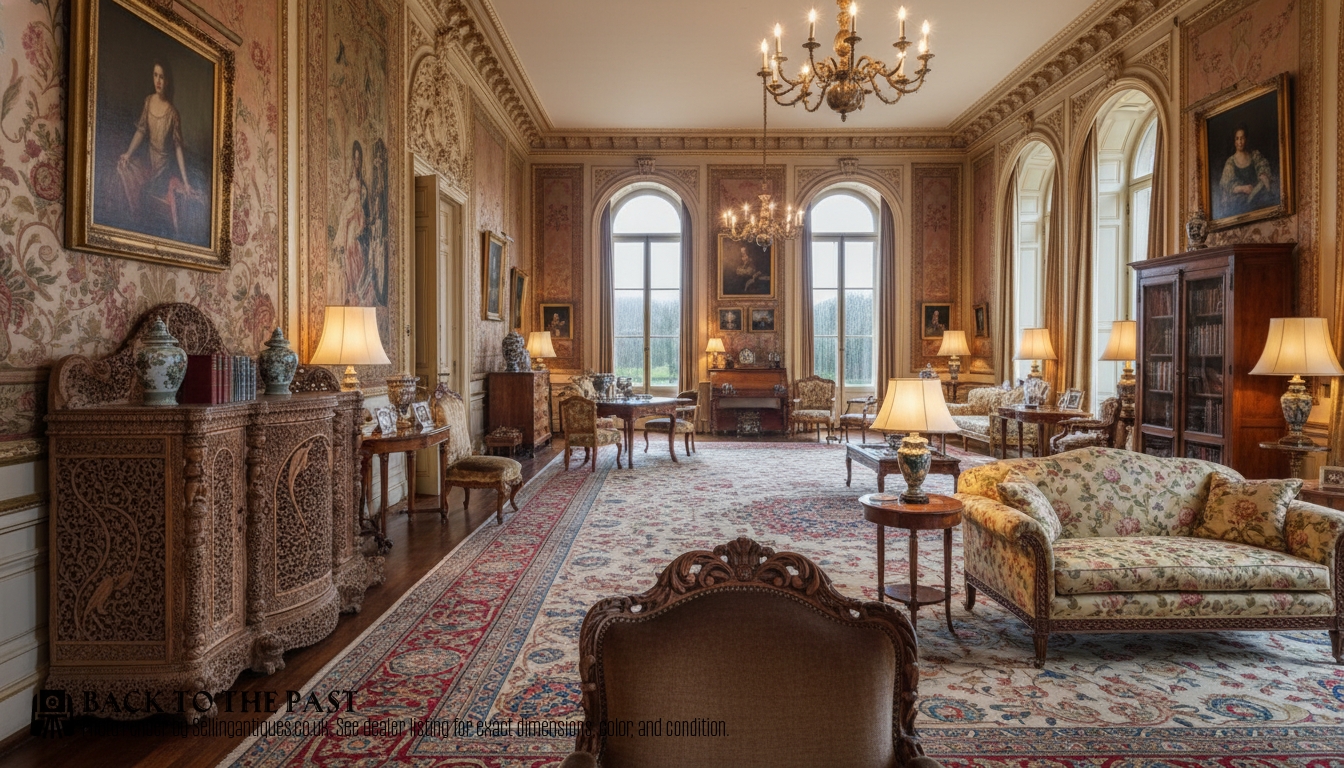
A victorian colonial carved cabinet takes several distinct forms across the selection, ranging from sideboards and side cabinets to bookcases, corner cabinets, and writing desks. These pieces originate from the nineteenth century, including specific dates around eighteen eighty and nineteen hundred, reflecting the British colonial presence in regions such as India, Burma, and Ceylon.
Buyers encounter variations such as small display cabinets, linen presses, desktop smokers cabinets, and chests of drawers alongside larger sideboard and bookcase iterations. The dominant stylistic influences recorded are Anglo-Indian and Anglo-Burmese, creating functional furniture infused with intricate regional carving traditions.
Materials and construction methods
Makers constructed these cabinets using dense exotic timbers native to the regions of production, notably padouk wood, teak, rosewood, and solid satinwood, alongside hardwood, elm, and ebonised finishes. Brass fittings frequently complement the heavy timber structures, while glass panels appear in the doors of bookcases and display cabinets.
The defining construction method is deep relief hand carving, which covers surfaces with floral motifs, scrollwork, and figurative elements. Joinery accommodates the dense nature of woods like padouk and teak, yielding heavy furniture built to withstand tropical climates.
Victorian Colonial Carved Cabinet Retail Price Guide 2026
Typical asking prices for victorian colonial carved cabinet among the pieces listed under this phrase on Sellingantiques today, from the lower quarter to the upper quarter. They describe what is for sale here now, not the wider market.
The listings span the nineteenth century, including specific dates around eighteen eighty and nineteen hundred, with forms ranging from sideboards and bookcases to desktop smokers cabinets.
Distinctions in craftsmanship and design
Quality rests upon the depth, clarity, and continuity of the hand carving across the timber surfaces, where crisp undercut foliage distinguishes superior work from shallow or hurried execution. The selection of timber grain, such as figured satinwood or richly toned padouk, further elevates a piece.
Structural integrity in heavy exotic hardwoods and the preservation of original brass hardware contribute significantly to the standing of individual cabinets. Proportion and the successful integration of regional decorative motifs into recognizable European furniture forms also separate standard production from exceptional examples.
The Victorian Colonial Carved Cabinet Glossary
- Anglo-Indian
- A descriptive term for furniture made in India during the British period, combining British furniture forms with local Indian carving styles and dense timbers. These pieces often feature dense foliate relief work.
- Padouk
- A heavy, durable tropical hardwood with a reddish-brown hue that deepens with age, frequently utilised for nineteenth-century sideboards and cabinets. Its density allows for exceptionally sharp carved detail.
- Satinwood
- A lustrous, yellowish timber valued for its fine grain and smooth finish, used in select side cabinets and furniture. Highly polished surfaces showcase the natural shimmer of the wood.
- Linen Press
- A tall piece of furniture designed for storing folded textiles, featuring sliding trays or shelves enclosed by doors above drawers. Miniature versions also exist within these colonial groups.
- Ebonised
- Wood treated with a chemical stain or dark finish to imitate ebony, creating a dense black surface. This technique appears on specific nineteenth-century chests and cabinets.
Victorian Colonial Carved Cabinet: Frequently Asked Questions
What is a Victorian colonial carved cabinet?
It is a piece of nineteenth-century furniture produced in regions under British administration, combining European forms with local carving traditions.
These items utilise dense tropical timbers like teak and padouk to create heavily ornamented storage pieces.
Which woods were used in these cabinets?
Makers predominantly employed exotic hardwoods native to South Asia, including padouk wood, teak, rosewood, and solid satinwood.
Additional materials such as elm, brass hardware, and glass panels also appear across the various recorded forms.
How do I identify Anglo-Indian furniture?
Identification relies on the combination of standard British nineteenth-century furniture shapes with intricate, deep-relief hand carving characteristic of Indian workshops.
Motifs typically include dense foliage, vines, and regional flora executed in heavy timbers like padouk or teak.
Where were these pieces made?
Production occurred across regions influenced by the British Empire in South and Southeast Asia, specifically India, Burma, and Ceylon.
Local artisans executed the intricate carving work upon forms requested by the colonial market.
Are all these cabinets large?
The selection encompasses a wide size range, from large sideboards, bookcases, and side cabinets down to miniature linen presses and desktop smokers cabinets.
Corner cupboards and small display cabinets offer alternative proportions for different interior spaces.