


Victorian Cobalt Blue Stoneware
Victorian cobalt blue stoneware brings together striking cobalt decoration and durable stoneware bodies from the nineteenth century.
Victorian Cobalt Blue Stoneware
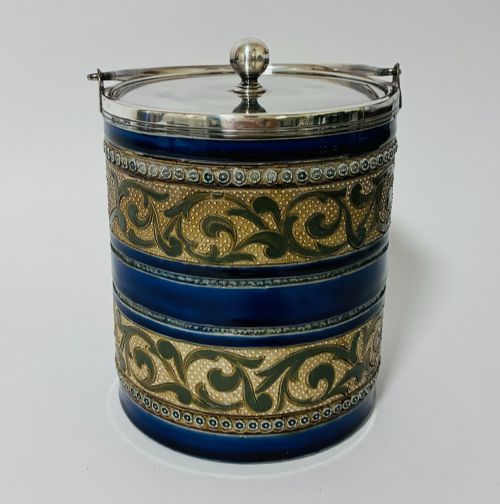
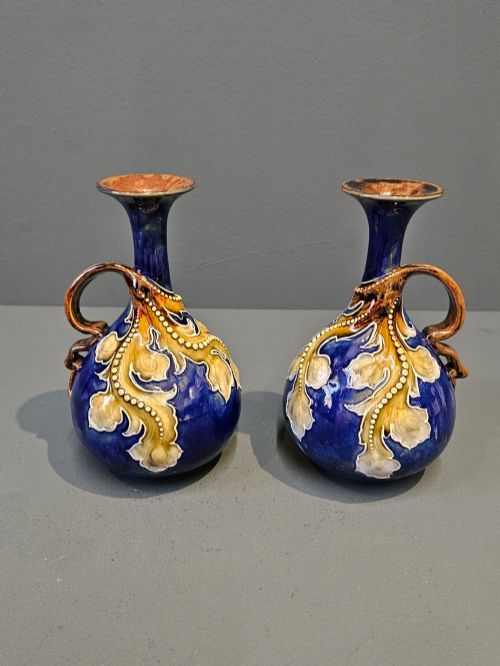
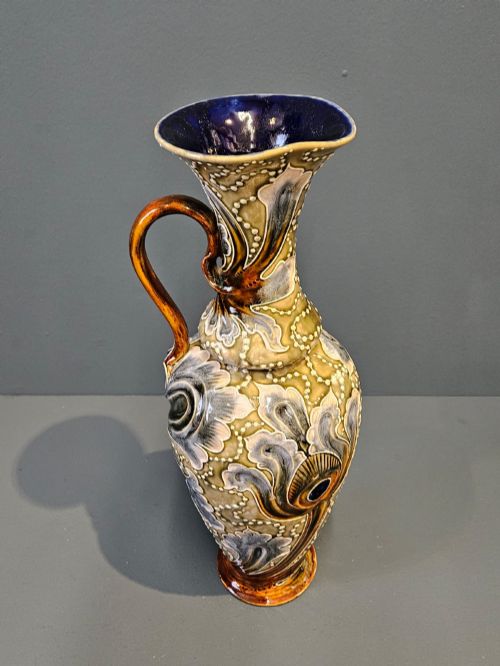
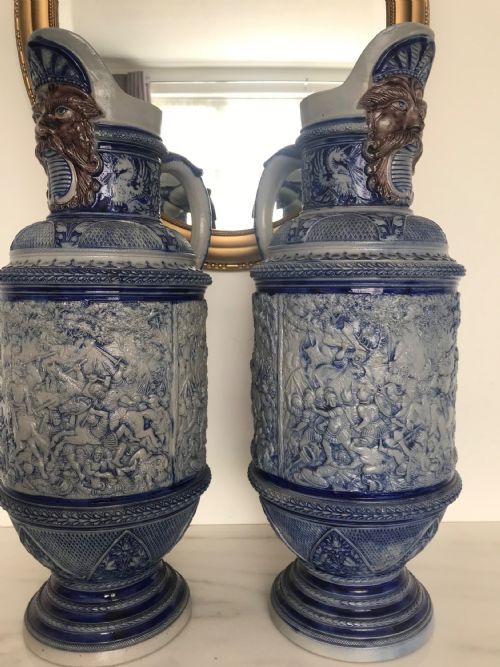
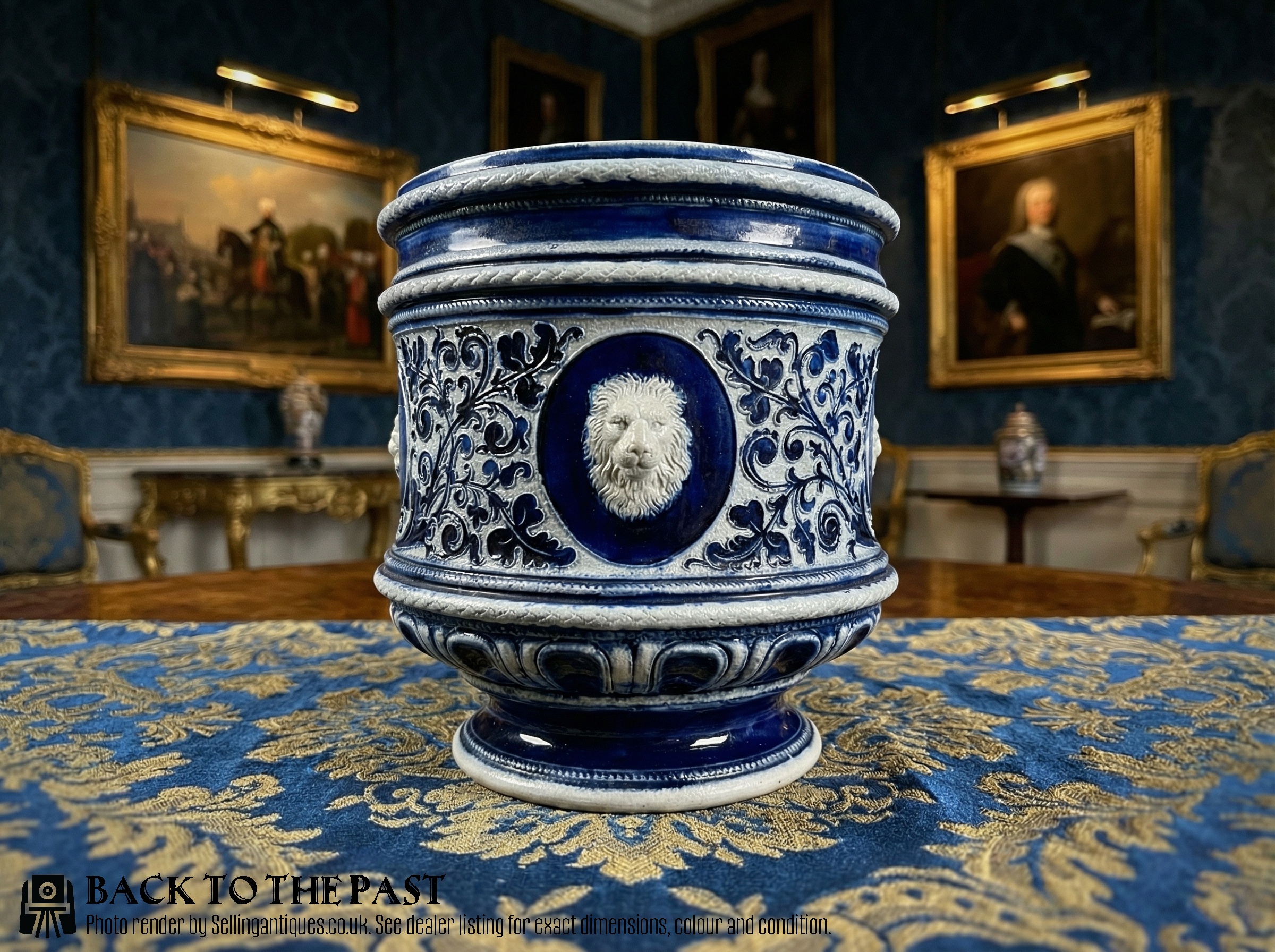
Victorian cobalt blue stoneware encompasses utilitarian and decorative vessels produced across the nineteenth century, most frequently appearing in the form of Doulton Lambeth vases, biscuit barrels, and jardinieres. These pieces combine robust ceramic bodies with rich blue hues, reflecting the diverse styles of the Victorian era.
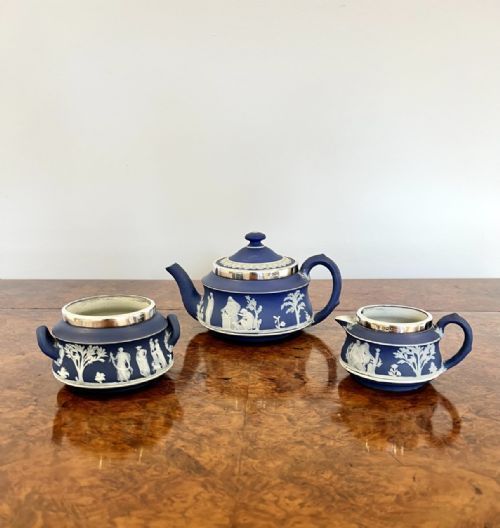
The selection ranges from salt-glazed German pitchers to English art pottery and jasperware tea sets. Buyers frequently encounter pieces associated with major potteries like Doulton and Wedgwood, spanning periods from the 1850s through to 1900.
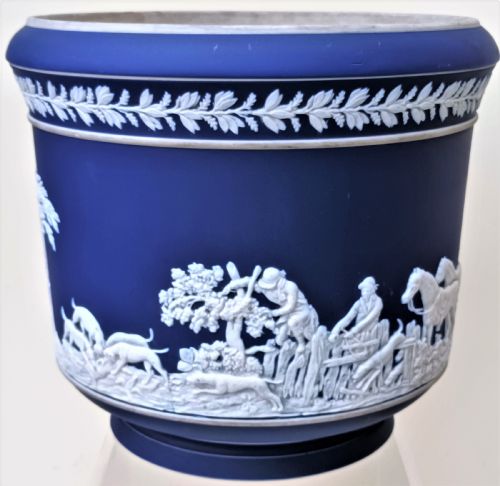
Objects vary from large ewers and jardiniere planters down to small cabinet vases and patch boxes. The forms draw upon neoclassical motifs, Art Nouveau lines, and traditional salt-glazed techniques.
How they were made
Makers utilised stoneware and ceramic bodies, often applying salt glaze treatments or distinctive blue jasper dip finishes directly onto the clay. Cobalt oxides provided the deep blue coloration seen across the surfaces.
Many examples incorporate decorative details such as silver plate mounts, gold leaf accents, and intricate enamel work. Artisans shaped these vessels through throwing and moulding before firing them at high temperatures.
Several heavy tobacco jars from this selection spent their later retirement safely converted into table lamps.
What varies in quality
The standard of victorian cobalt blue stoneware depends heavily upon the crispness of applied reliefs and the depth of the cobalt coloration. Pieces featuring detailed hand-decoration by named artists or robust silver-plated mountings stand apart from simpler production runs.
Execution of form and glaze consistency also dictate the standing of individual items. Well-preserved surfaces without firing distortions represent the upper tier of these nineteenth-century ceramics.
Doulton Lambeth·Royal Doulton·William Adams and Sons·Simon Peter Gerz·Wedgwood·John Ridgway·Emily Edwards
The Victorian Cobalt Blue Stoneware Glossary
- Stoneware
- A heavy, dense ceramic fired at high temperatures until vitrified. This process renders the material waterproof and highly durable.
- Salt glaze
- A glassy, pitted texture formed by throwing common salt into the kiln during high-temperature firing. The salt vaporises and reacts with the silica in the clay body.
- Ewer
- A large jug featuring a wide spout and a substantial handle. These vessels were traditionally used for pouring water or serving drinks.
- Biscuit barrel
- A covered container designed for storing dry biscuits at the table. They frequently incorporate ceramic bodies fitted with silver-plated rims and lids.
Victorian Cobalt Blue Stoneware: Frequently Asked Questions
What is victorian cobalt blue stoneware?
These pieces comprise nineteenth-century ceramic and stoneware vessels decorated in deep cobalt blue. They include utilitarian storage jars, decorative vases, and tableware.
Production spans English potteries like Doulton and Wedgwood alongside continental salt-glazed jugs. The category covers items made from the 1850s up to 1900.
How were these stoneware vessels used?
Many items served practical domestic functions such as storing biscuits, holding tobacco, or serving water and tea at the table. Others functioned purely as decorative jardinieres and vases.
Larger ewers and jardiniere planters occupied prominent positions in Victorian reception rooms. Smaller patch boxes and tableware items were utilised in private sitting spaces.
How do I live with victorian stoneware?
These robust stoneware bodies require little special maintenance beyond gentle cleaning with warm water. They anchor interior displays effectively when placed on wooden sideboards or mantels.
Pieces with silver-plated mounts or delicate enamel benefit from careful handling and positioning away from direct moisture. They integrate well into both traditional and contemporary room settings.
How do I tell different periods apart?
Dating relies upon stylistic markers, potter's marks, and manufacturing techniques recorded across the nineteenth century. Earlier pieces often display simpler salt glazes, while later works embrace Art Nouveau or rich Slaterware textures.
Reference marks stamped into the ceramic base help narrow down production eras. Comparing decorative motifs like neoclassical reliefs against later floral designs clarifies the timeline.