




Cobalt Blue Ceramic Jardiniere
These cobalt blue ceramic jardiniere pieces are striking plant pots made to hold large indoor greenery, bringing rich colour and historic character to any room.
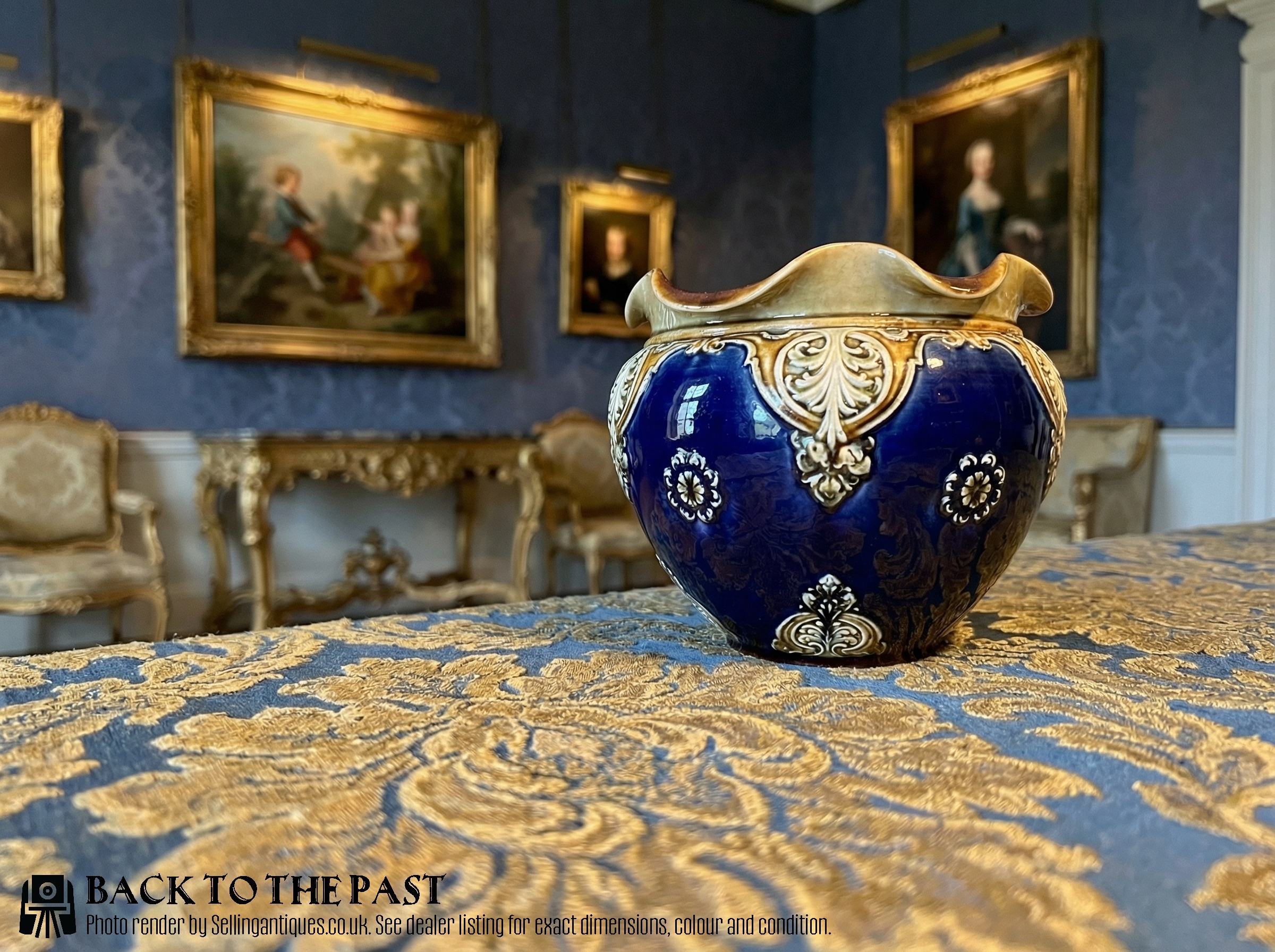
Cobalt Blue Ceramic Jardiniere
When you search for a cobalt blue ceramic jardiniere, you are looking at substantial decorative planters designed to house potted plants indoors. The selection spans the nineteenth and early twentieth centuries, encompassing Victorian, Edwardian, and Asian export pieces.
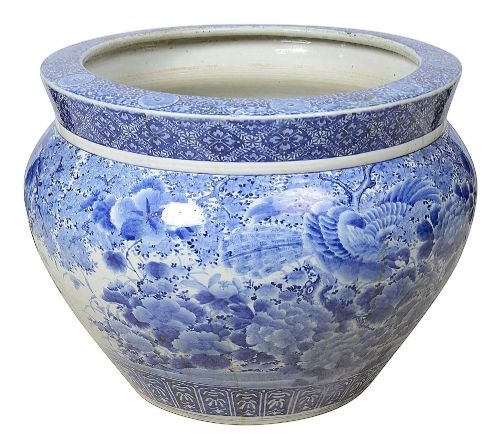
The most common examples you will meet on this page are nineteenth-century English and French productions, alongside Japanese and Chinese blue and white ceramics. These range from utilitarian salt-glazed vessels to ornate Victorian majolica and jasperware cachepots.
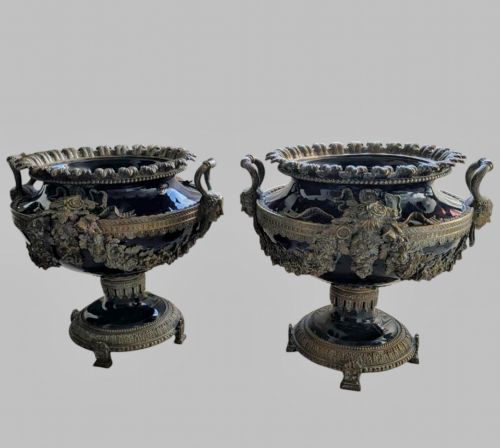
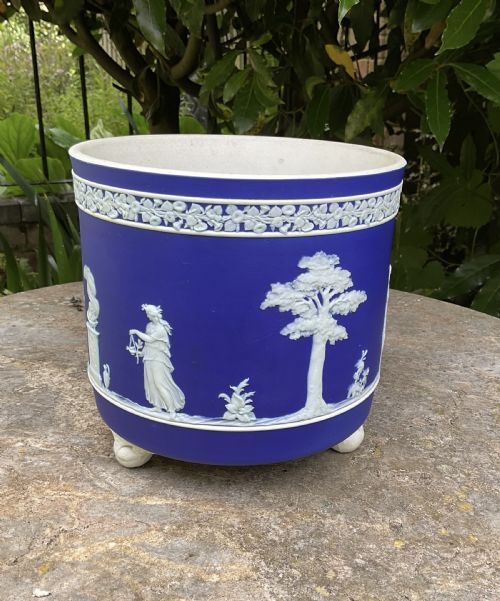
Forms vary from traditional tapering bowls to pieces standing on three feet or paired as matching sets. They frequently serve as centrepiece bowls or floor-standing planters rather than simple garden pots.
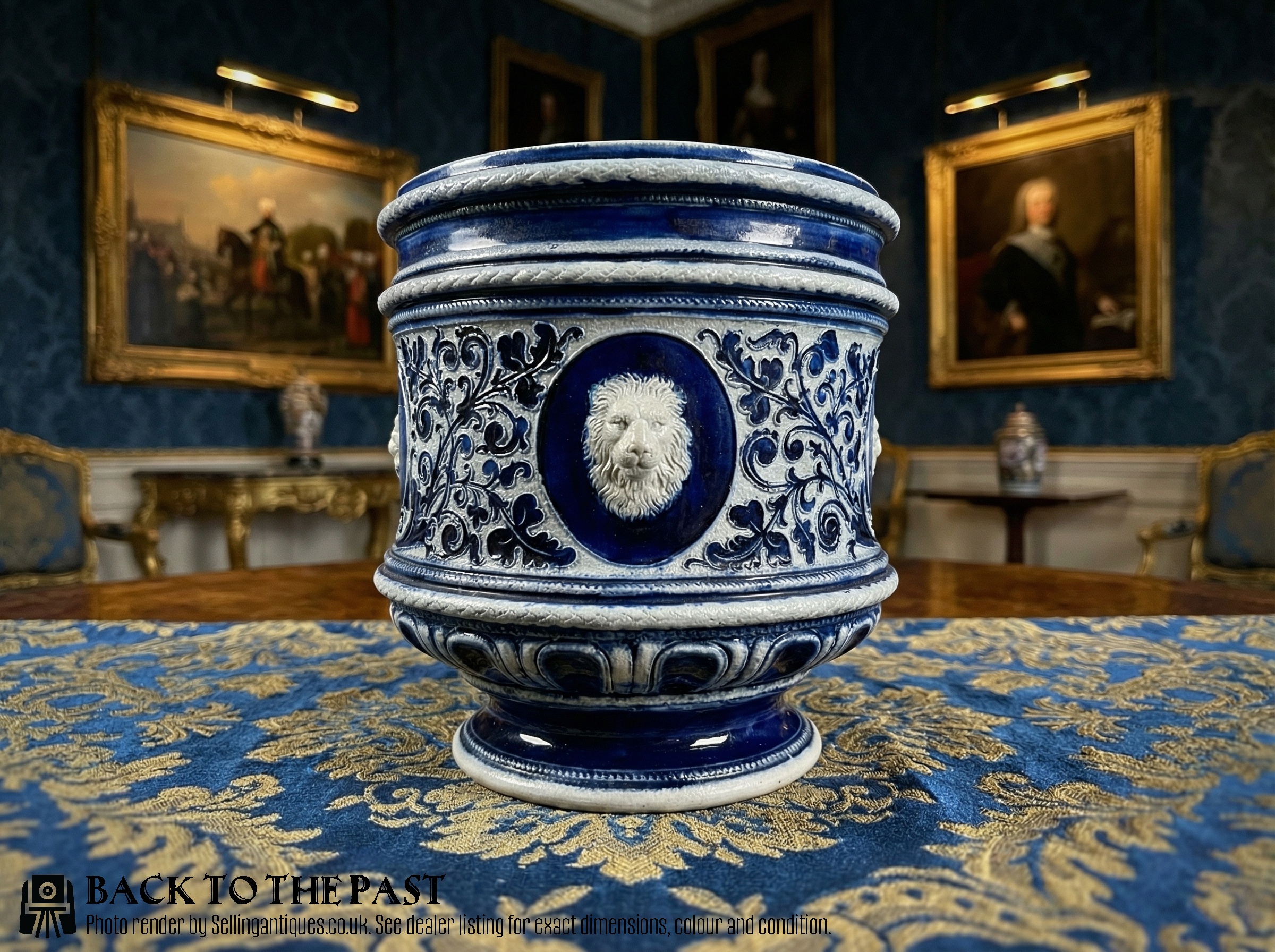
Materials and methods
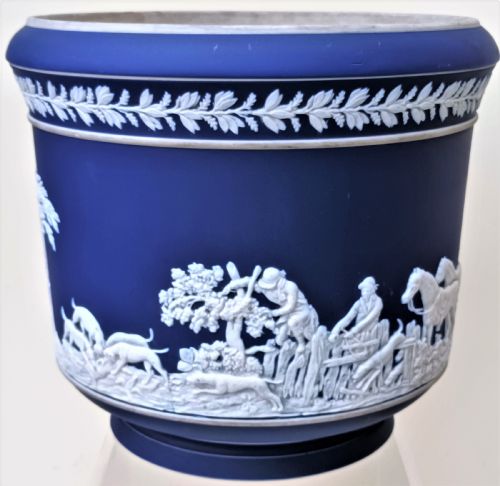
The pieces listed on this page rely heavily on traditional ceramic bodies such as porcelain, earthenware, and heavy stoneware. Potters applied rich cobalt blue glazes, sometimes incorporating enamel detailing or raised slip work to create texture.
Techniques range from salt-glazing and majolica moulding to the fine-grained relief work characteristic of jasperware. Certain items combine these ceramic bases with applied gold leaf accents for added visual weight.
Listings feature Victorian, Edwardian, and early twentieth-century pieces made from porcelain, stoneware, and glazed earthenware.
Assessing quality
Quality in these vessels rests upon the crispness of the moulding and the depth of the cobalt blue glaze. Finer examples display sharp relief details and even colour distribution without surface pooling or dull patches.
Maker attribution also drives distinction, with pieces bearing marks from established factories commanding greater attention. The weight of the ceramic body and the precision of any applied feet or decorative borders further separate standard production from superior work.
William Adams & Sons·Royal Doulton·Doulton Lambeth·Minton·Wedgwood·George Jones·Royal Crown Derby·Coalport
The Cobalt Blue Ceramic Jardiniere Glossary
- Jardiniere
- A large ornamental pot or stand used for holding indoor plants or flowers. It typically sits on a tabletop, sideboard, or directly on the floor.
- Jasperware
- A type of fine stoneware developed by Josiah Wedgwood, characterised by a matte unglazed surface and contrasting white relief ornaments. It is frequently produced in shades of blue.
- Majolica
- A heavy earthenware pottery coated in an opaque tin-glaze and painted with vibrant coloured enamels. It gained immense popularity during the Victorian period for ornate decorative wares.
- Slaterware
- A distinctive type of Victorian pottery featuring textured surfaces that imitate woven baskets or lace. Factories pressed actual fabrics into the wet clay before firing to capture the pattern.
- Salt Glaze
- A vitreous coating of glossy, slightly pitted texture formed by throwing common salt into the kiln during high-temperature firing. This creates a durable finish found on heavy stoneware.
Cobalt Blue Ceramic Jardiniere: Frequently Asked Questions
How were these jardiniere pieces used originally?
Victorian households utilised these vessels to hold large potted palms and ferns indoors, protecting furniture by placing them inside matching ceramic saucers or cachepots.
They often occupied prominent positions in drawing rooms, acting as dramatic focal points or table centrepieces during formal gatherings.
Can I plant directly into a vintage jardiniere?
Most antique pieces lack drainage holes because they were designed to hold nursery pots hidden inside rather than soil directly. Planting straight into the ceramic risks moisture retention and potential frost or mineral damage to the historic body.
Using a smaller plastic pot with a tray inside allows for proper watering while keeping the interior dry.
How do I identify a Victorian piece?
Victorian examples often display heavy moulded relief work, distinct factory stamps, or characteristic glaze types such as majolica and jasperware. The weight of the earthenware and specific stylistic motifs also point toward this nineteenth-century era.
Examining the unglazed base rim provides clues regarding age, wear patterns, and manufacturing origin.
What is the difference between a jardiniere and a cachepot?
A cachepot specifically translates to a pot hider, meant to conceal a plain plant pot placed within it. Jardinieres are often larger, heavier, and sometimes stand on their own feet or pedestals.
In modern listings, the terms frequently overlap as both describe decorative indoor plant holders.