


Victorian Coal Helmet
These Victorian coal helmet pieces bring working fireside history into the room, offering solid metal construction and distinctive sloped forms.
Victorian coal helmet types
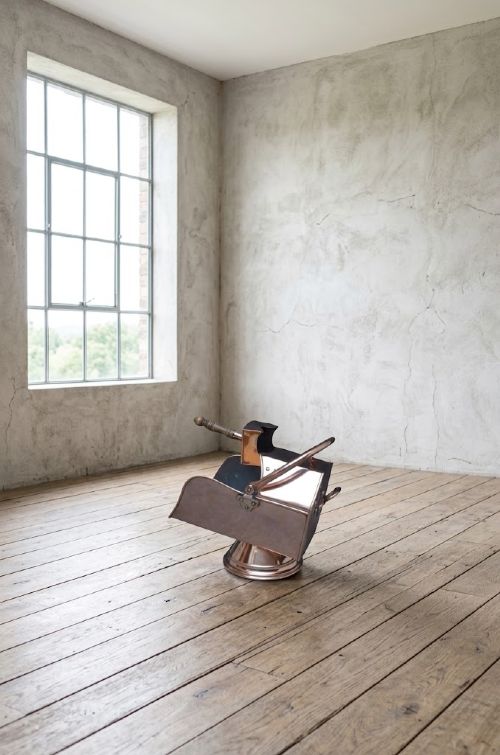
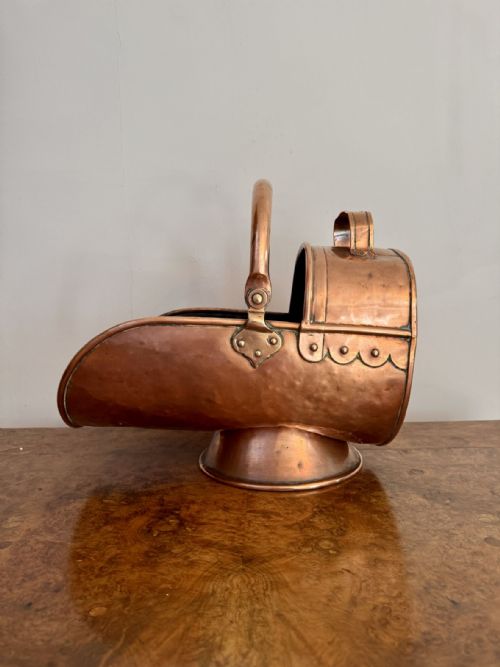
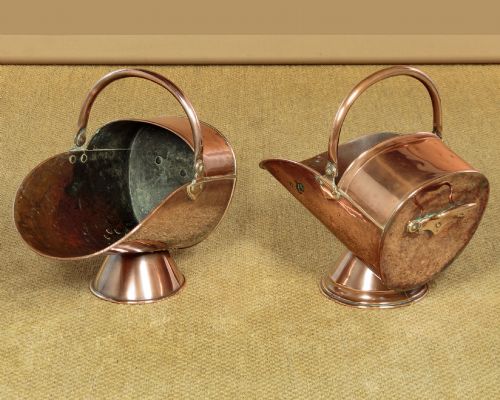
A victorian coal helmet is a fireside accessory designed for holding and carrying solid fuel to an open hearth. These items appear as coal scuttles, log bins, and fireside baskets shaped with high backs and sloping fronts resembling traditional headgear.
The pieces seen here date from the nineteenth century, specifically around eighteen eighty, and originate in England. Most examples take the form of standard helmets or curved buckets fitted with handles for daily utility beside the fireplace.
Materials and construction
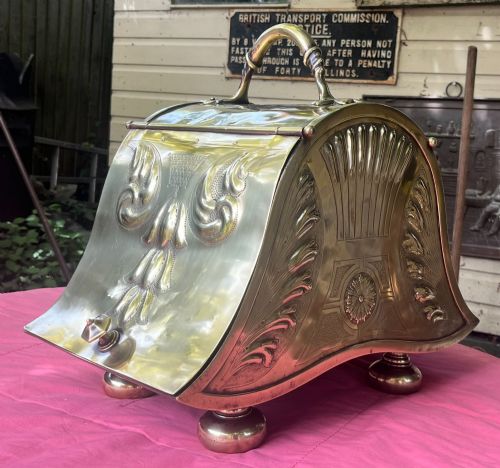
Makers utilised heavy sheet metals including copper and brass to form the body of each victorian coal helmet. Wrought iron and wood elements appear occasionally in handles and structural reinforcement, supporting the weight of heavy fuel loads.
Craftsmen shaped these metals through beating and joining techniques, sometimes incorporating decorative Arts and Crafts or Art Nouveau motifs into the surface. Many surviving examples include matching brass or copper shovels designed to sit within side brackets.
Retail Price Guide 2026
Typical UK retail prices for victorian coal helmet, calculated from the Sellingantiques database of over a million retail prices indexed since 2003. This retail price guide relies exclusively on Sellingantiques data; no external sources or auction records are used, so the figures do not describe the wider market.
Judging quality in metalwork
Superior examples of a victorian coal helmet display substantial metal thickness and weight rather than thin, pliable sheeting. Heavier gauge brass and copper withstand the physical demands of daily fireside use without buckling or denting.
Refined pieces demonstrate careful handling of seams, secure handle attachments, and well-integrated shovel holders. The presence of original matching scoops and subtle decorative detailing elevates the piece from basic utility to accomplished metalwork.
Henry Loveridge & Co
The Victorian Coal Helmet Glossary
- Coal helmet
- A fireside container featuring a high back and a sloping front profile that resembles a traditional helmet. This shape allows the user to tip fuel forward cleanly onto the hearth.
- Coal scuttle
- A general term for a bucket or box used to store coal near the fireplace. These vessels often include a fixed top handle and a smaller base handle for tilting.
- Log bin
- A larger fireside receptacle designed for storing firewood rather than small coal pieces. They share construction materials with helmet scuttles but lack the distinct sloped spout.
- Fireside basket
- An open metal or mixed-material container used for hearth storage. They reflect the period aesthetic while serving the same practical function as enclosed buckets.
- Art Nouveau
- A decorative style emerging in the late nineteenth century characterised by flowing, organic lines. This aesthetic appears on selected metalwork pieces alongside traditional Victorian designs.
Frequently Asked Questions
What is a victorian coal helmet used for?
A victorian coal helmet served as a practical container for holding and transporting coal to domestic hearths during the nineteenth century. The sloped front design allowed users to pour fuel directly onto the fire without spilling.
Today, these metal vessels function primarily as decorative fireside accessories or storage bins for logs and kindling in traditional and contemporary living spaces.
How do I tell copper from brass items?
Copper displays a warm, reddish-pink metallic hue, whereas brass has a brighter, more golden-yellow appearance. Both metals were widely used by nineteenth-century makers for fireside buckets and helmets.
Examining the metal under natural light reveals these distinct colour differences, helping collectors identify the primary material of each piece.
Are original shovels usually included?
Some surviving examples retain their original matching copper or brass shovels designed to fit into side brackets on the helmet. These matched accessories enhance the completeness and historical interest of the piece.
Many pieces, however, have lost their shovels over decades of domestic use, remaining as standalone scuttles or log bins.
How do I clean antique brass and copper?
Antique metalware benefits from gentle dusting and occasional cleaning with appropriate non-abrasive metal polishes. Preserving the natural aged patina is often preferred by collectors over achieving a mirror-bright shine.
Harsh chemical cleaners can strip away historical surface character, so mild soap and soft cloths remain the safest approach for nineteenth-century surfaces.