

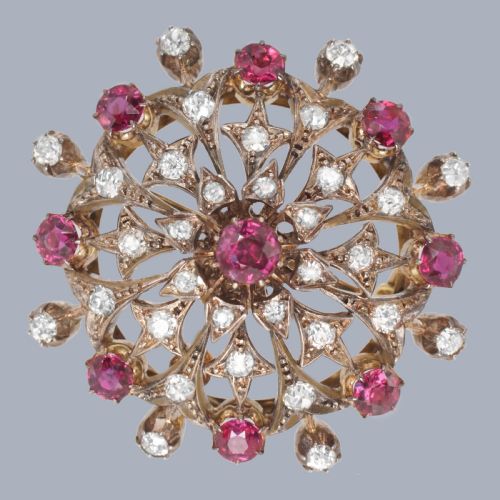


Victorian Cluster Pendant
These Victorian cluster pendant examples combine central stones with framing gemstones, offering a distinct nineteenth-century silhouette.
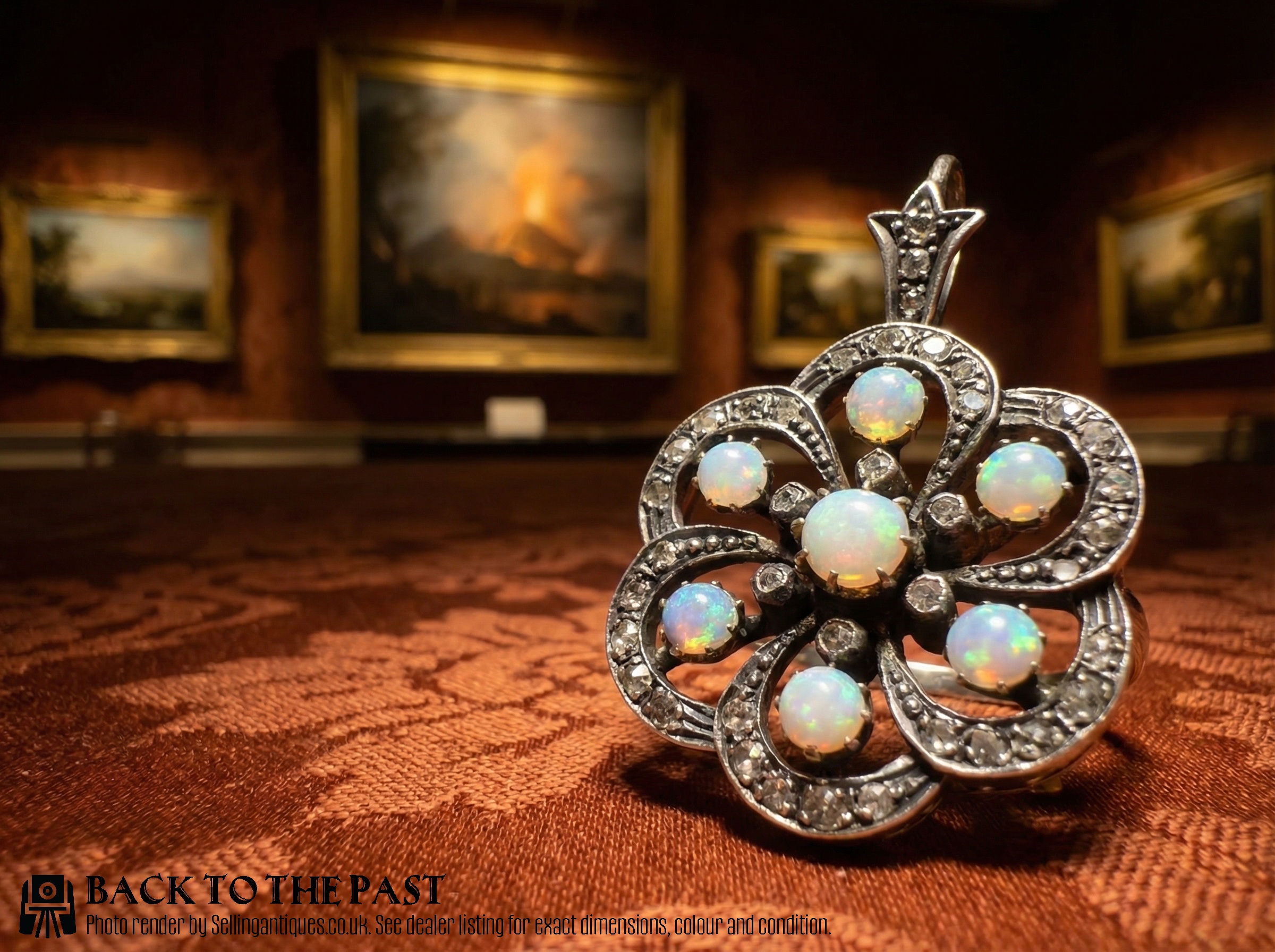
What a victorian cluster pendant is
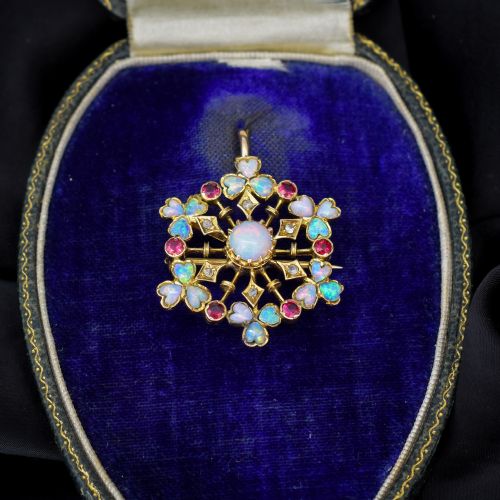
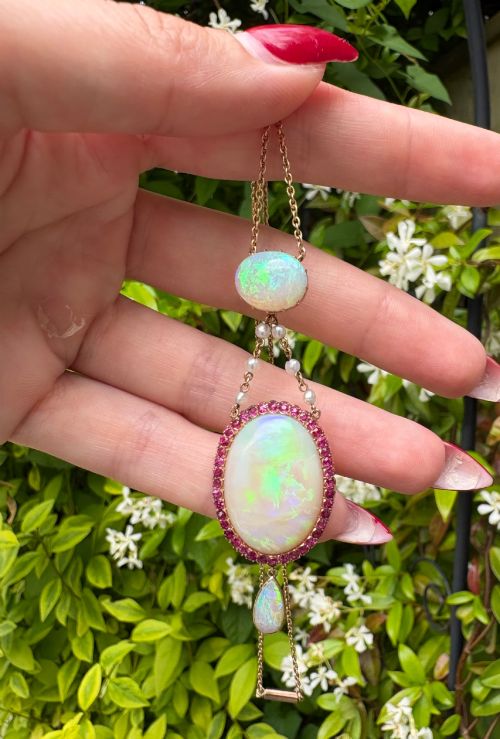
A victorian cluster pendant groups a central gemstone surrounded by a distinct border of smaller stones, creating a concentrated focal point suspended from a neck chain. These pieces appear in configurations designed to be worn around the neck or adapted as brooch pendants.
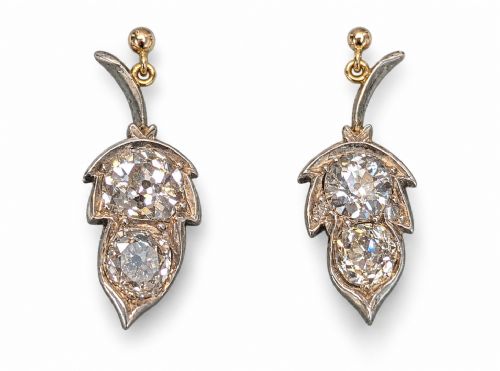
The materials recorded in the evidence encompass yellow gold, 15ct gold, 12ct yellow gold, and silver settings combined with central gems like diamond, ruby, emerald, sapphire, garnet, amethyst, and opal. Border stones frequently utilise seed pearls, natural pearls, rose-cut diamonds, and old-cut diamonds.
Most pieces seen originate from the Victorian era around 1880 to 1890, alongside examples associated with Edwardian periods. Forms include standard pendants, pendant brooches, and photo locket pendants featuring cluster borders.
How they were made
Craftsmen set diamonds and coloured gemstones into combinations of gold and silver, often mounting silver on gold fronts to enhance the brilliance of the stones. Metalwork techniques of the period produced secure bezel or claw settings suited to cluster arrangements.
Pendant backs frequently incorporated functional elements such as hidden loops, hinged bails, or detachable brooch fittings that allowed dual wear. Internal compartments in specific variants, such as photo locket pendants, required precise fabrication to house miniature portraits behind glass.
Retail Price Guide 2026
Typical UK retail prices for victorian cluster pendant, calculated from the Sellingantiques database of over a million retail prices indexed since 2003. This retail price guide relies exclusively on Sellingantiques data; no external sources or auction records are used, so the figures do not describe the wider market.
Listed examples combine gold, silver, diamond, ruby, emerald, sapphire, garnet, amethyst, opal, and seed pearl materials across Victorian and Edwardian periods.
What varies in quality
Quality rests on the selection and matching of central stones, such as natural unheated sapphires, Burma rubies, or opals, relative to their surrounding diamond or pearl borders. Proportion and balance between the central motif and the framing stones dictate the visual impact.
The refinement of the metalwork, whether executed in 15ct gold, 12ct yellow gold, or silver-topped gold, dictates the durability and finish of the mount. Superior execution ensures that settings hold each stone firmly while maintaining a delicate profile.
The Victorian Cluster Pendant Glossary
- Cluster pendant
- A jewellery piece featuring a central gemstone encircled by a border of smaller stones, suspended from a chain.
- Pendant brooch
- A convertible jewel equipped with both a suspension loop for a chain and a pin mechanism for wearing as a brooch.
- Rose-cut diamond
- An antique diamond cut characterised by a flat base and a domed crown faceted with triangular planes.
- Old-cut diamond
- A hand-faceted diamond cut common in the nineteenth century, featuring a small table, high crown, and open culet.
- Seed pearl
- A very small, naturally occurring pearl used in borders and decorative pavé settings.
Frequently Asked Questions
How do I wear a convertible pendant brooch?
These pieces feature a hidden loop or fold-down bail alongside a pin fastening on the reverse. You can thread a chain through the loop for neckwear or secure the pin to fabric.
The dual-purpose design allows the piece to transition between a traditional pendant and a chest ornament without altering the structural setting.
What metals are typical for nineteenth-century clusters?
Makers of this era utilised gold, 15ct gold, 12ct yellow gold, and silver. Silver was frequently layered over gold to provide a bright white surface for diamond settings while retaining gold strength underneath.
Such material combinations reflect the manufacturing priorities of workshops operating in the Victorian period.
How do I distinguish seed pearl borders from diamonds?
Seed pearls display a soft organic lustre with a smooth, rounded surface, whereas diamonds exhibit sharp facets and high refractive brilliance under light.
Examining the stones under magnification reveals the characteristic surface texture of natural pearls compared to the crystalline structure of cut gems.
Can I store photographs inside these pendants?
Certain variants incorporate hinged photo locket frames behind glass compartments designed to hold small paper portraits. You open the hinged casing carefully to access the interior recess.
This functional feature allowed wearers to keep miniature likenesses of family members close against the body.