


Antique Conversion Pendant
An antique conversion pendant transforms an older jewel, often a Victorian brooch, into a wearable neckpiece while keeping its historic craftsmanship intact.

What an antique conversion pendant is
The antique conversion pendant emerges from periods spanning 1880, 1890, and the wider Victorian era, turning secure chest ornaments into versatile neckpieces. These items typically arrive as pendant brooches or adaptable jewels that function in multiple ways.
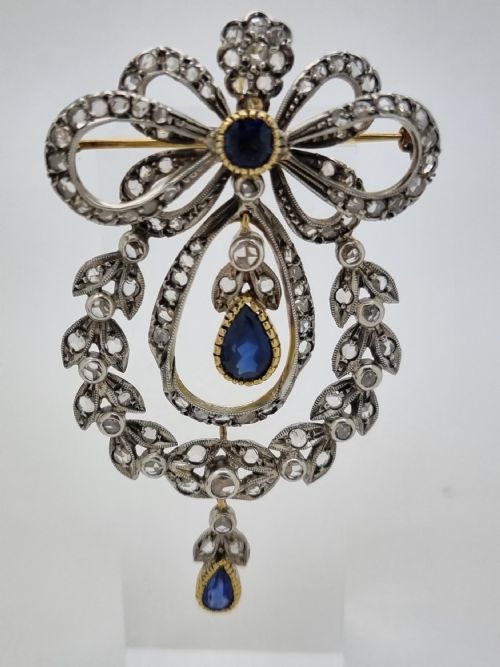
Buyers meet pieces created in styles like Renaissance Revival and Late Victorian, showcasing complex historic forms. The transition from brooch to pendant usually involves adding a subtle loop or bail to accommodate a chain.
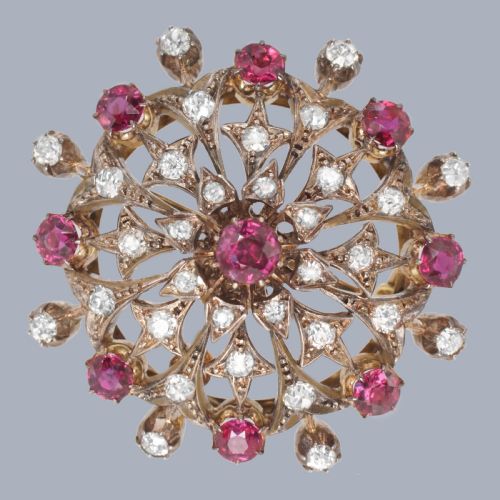
Makers from the nineteenth century originally fashioned these as high-status floral acanthus designs, ruby clusters, or peridot arrangements. Today, collectors value how these adaptations respect the integrity of the original gold, silver gilt, and silver settings.
Materials and construction
Craftsmen utilised yellow gold, 18ct gold, 9ct yellow gold, and silver gilt to build the foundational structures of these jewels. Enamel work and pearls frequently accent the precious metals, adding texture and colour contrast.
Gems such as diamonds, rubies, peridots, and sapphires sit within securely fashioned settings alongside glass elements. The construction relies on traditional hand-working methods typical of late nineteenth-century workshops.
Retail Price Guide 2026
Typical UK retail prices for conversion pendant, calculated from the Sellingantiques database of over a million retail prices indexed since 2003. This retail price guide relies exclusively on Sellingantiques data; no external sources or auction records are used, so the figures do not describe the wider market.
Current listings feature pieces exclusively from the Victorian period, including items dated to 1880 and 1890.
What separates the fine examples
Quality rests in the harmony between the original brooch body and the added suspension loop, where seamless integration preserves the balance of the design. Master jewellers from the Victorian period ensured that floral acanthus motifs and gemstone clusters maintained their structural rhythm.
The choice and treatment of the central stones, from natural untreated rubies to peridots and diamonds, dictate the upper tier of these pieces. Fine enamel work and matched pearls further separate standard adaptations from exceptional survivals.
The Antique Conversion Pendant Glossary
- Conversion pendant
- A historic jewel, frequently a brooch from the Victorian era, adapted with a loop to hang from a chain. This practice gives past ornaments a contemporary purpose.
- Brooch pendant
- A dual-purpose piece featuring both a pin mechanism on the reverse and a loop or bail for suspension. It represents the primary form found in these nineteenth-century items.
- Silver gilt
- Silver coated with a thin layer of gold, providing the warm hue of gold with the working properties of silver. Austro-Hungarian makers often utilised this technique.
- Acanthus design
- A decorative motif modelled after the leaves of the acanthus plant, appearing frequently in Victorian floral jewellery. It provides sculptural depth to gold mounts.
- Gem report
- An official document detailing the natural origin and treatment status of stones like Burma rubies. It authenticates the material value within historic settings.
Frequently Asked Questions
What is a conversion pendant?
A conversion pendant is a historic ornament, typically a Victorian brooch, that has been adapted to hang from a neck chain.
This allows centuries-old craftsmanship to be worn daily in a new format.
How do I wear a convertible brooch?
These pieces usually feature a hidden or removable bail alongside a traditional pin on the reverse.
You can thread a chain through the loop for the neck or secure the piece directly onto clothing as a brooch.
What materials are common in Victorian pendants?
Nineteenth-century pieces frequently combine yellow gold, silver, and silver gilt with diamonds, rubies, and pearls.
Enamel work and coloured gemstones such as peridot and sapphire also appear in these designs.
How can I tell the period of a conversion piece?
Dating relies on stylistic markers like Renaissance Revival motifs, floral acanthus patterns, and the specific fabrication of the gold or silver settings.
Characteristics from the 1880s and 1890s point directly to late Victorian craftsmanship.