
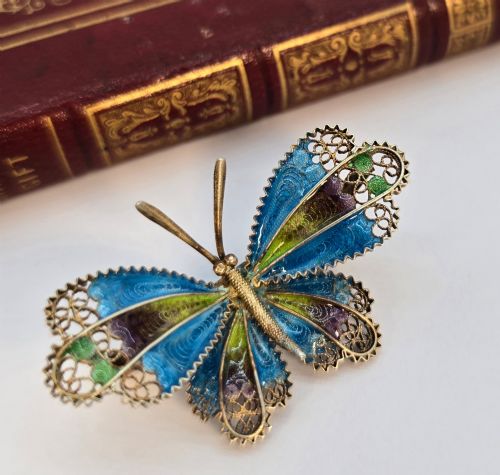
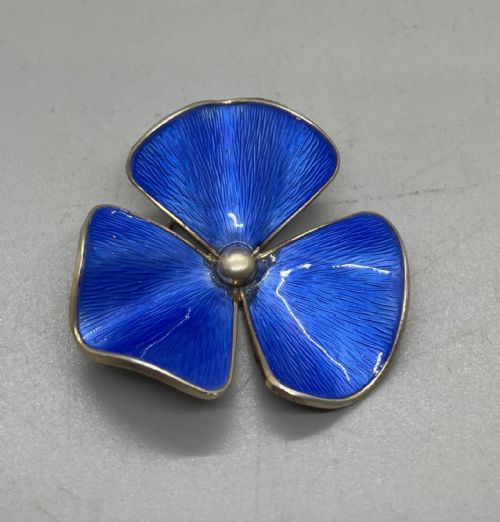
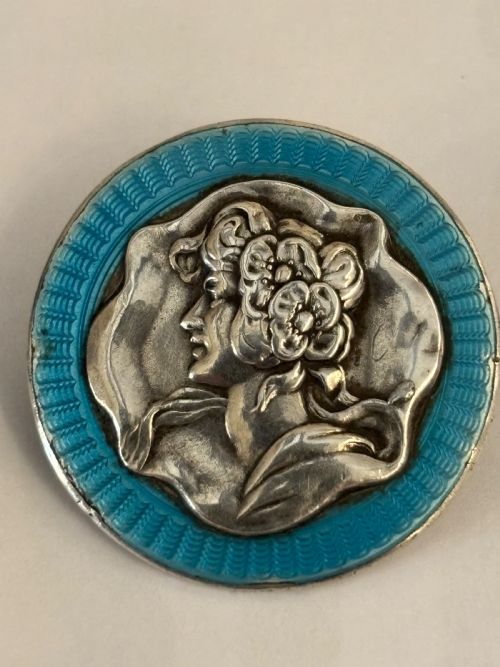


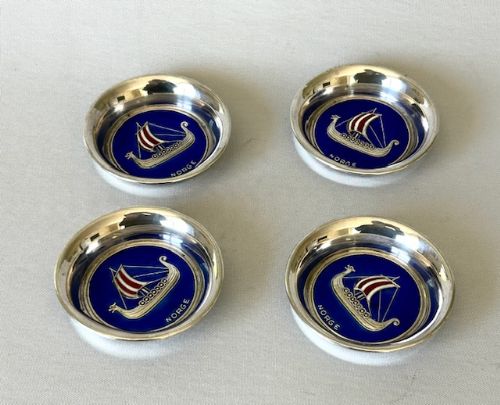


Blue Enamel Pin
A blue enamel pin brings together lustrous vitreous glass and precious metals, offering a wearable spark of rich colour.

What these pieces are
A blue enamel pin takes the form of a brooch or dress ornament, designed to fasten clothing or sit as a decorative accent. These pieces appear from the nineteenth century up to nineteen sixty, capturing periods such as the nineteenth century and mid-century modern alongside revivalist aesthetics.
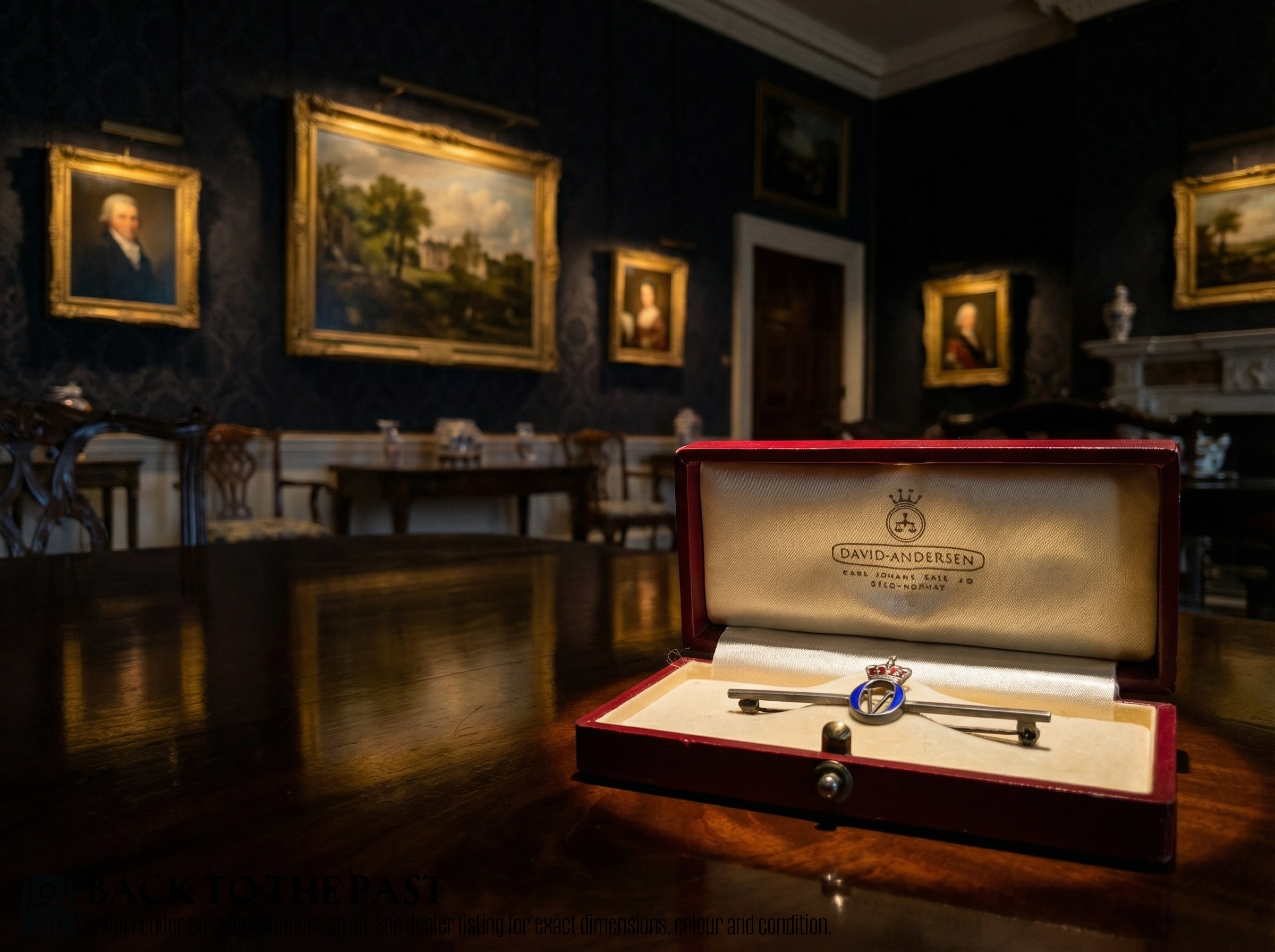
The common form on this page is the brooch, utilising materials like silver gilt, sterling silver, pearl, glass, and enamel. Designs range from royal crown motifs and starbursts to butterflies, swallow birds, and floral elements.
Originating from makers and workshops across different European centres, these pins reflect diverse regional tastes in metalwork and vitreous enamelling. Buyers find both antique nineteenth-century creations and mid-century modern pieces bearing distinct hallmarks and maker marks.
How they were made
The fabrication relies on precious metals including sterling silver, silver gilt, and high-carat gold, shaped into detailed frames for brooches and pins. Artisans soldered components together and mounted pearls, marcasite, or glass elements to enhance the metalwork.
Vitreous enamel was applied to the metallic surfaces in powdered form and fired at high temperatures to fuse the glass to the metal base. This technique produced smooth, durable coloured sections, sometimes incorporating engine-turned guilloche patterns beneath translucent blue layers.
The object forms recorded in the archive range from wearable brooches and stick pins to solid silver pin dishes.
What varies in quality
The distinction between tiers rests upon the precision of the metalwork and the clarity of the vitreous enamelling. Finer examples display even application of enamel without bubbling, alongside secure stone settings for pearls and marcasite.
Maker attribution and hallmark clarity elevate certain pieces, distinguishing standard workshop output from signed works by notable designers and silversmiths. The complexity of the design, such as Renaissance revival detailing or intricate guilloche engraving, further separates standard items from exceptional survivals.
Hroar Prydz·Henry James Hulbert·Mappin & Webb
The Blue Enamel Pin Glossary
- Silver gilt
- Sterling silver that has been coated with a thin layer of gold. This treatment provides the warm appearance of solid gold while utilising a silver base.
- Guilloche
- An ornamental technique where a precise mechanical pattern is engraved into a metal substrate. Translucent enamel is then applied over the top to allow the pattern to show through.
- Marcasite
- Polished iron pyrite crystals cut into facets and set into jewellery to simulate the sparkle of diamonds. These stones are typically secured in silver mounts.
- Brooch
- A decorative jewellery item designed to be attached to garments, frequently featuring a pin and catch mechanism on the reverse. They appear in numerous geometric and figurative shapes.
- Vitreous enamel
- A material made by fusing powdered glass to a substrate by firing, usually between seven hundred and nine hundred degrees Celsius. The powder melts, flows, and hardens to a smooth, durable coating.
Frequently Asked Questions
How do I wear a vintage blue enamel pin?
These pieces function traditionally as garment fastenings, securing lapels, scarves, or collars. Pin them firmly through heavy fabrics to prevent the weight of the brooch from pulling the material.
For delicate textiles, use an underlying reinforcement or anchor the pin through a structural seam. Storing them flat in dedicated boxes protects the enamel surface when not being worn.
Are these pins made of solid gold or silver?
The metals vary across the selection, encompassing sterling silver, silver gilt, and higher carat gold standards. Hallmarks and metal stamps on the reverse often indicate the specific alloy used.
Enamel sits atop these metal bases, meaning the structural integrity relies entirely on the underlying precious metal framework.
What is the difference between antique and mid-century pieces?
Nineteenth-century examples frequently exhibit revivalist styles, intricate granulation, and natural pearl accents. Their construction reflects Victorian or Austro-Hungarian hand-working methods.
Mid-century modern pieces, such as those from nineteen sixty, favour cleaner lines, stylised motifs, and modernist Scandinavian enamel techniques. The aesthetic shifts from ornate historical revival to streamlined geometric forms.
How should I clean my enamel brooch?
Clean vitreous enamel gently using a soft cloth dampened with lukewarm water and mild soap. Avoid harsh chemical dips or ultrasonic cleaners, which can damage pearls, glass settings, or delicate metal gilding.
Dry the piece thoroughly immediately after washing to prevent moisture from settling around the pin mechanism or stone settings.