
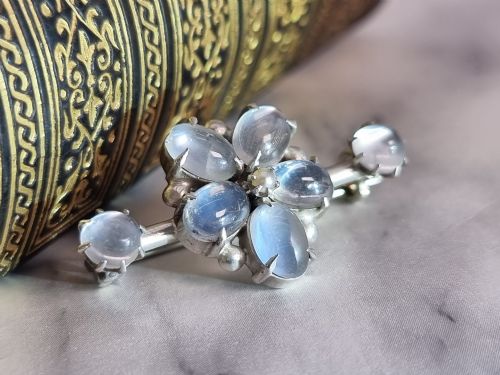


Silver Bar Brooch
A silver bar brooch is a linear fastening of precious metal that anchors lapels and scarves with clean period detail.
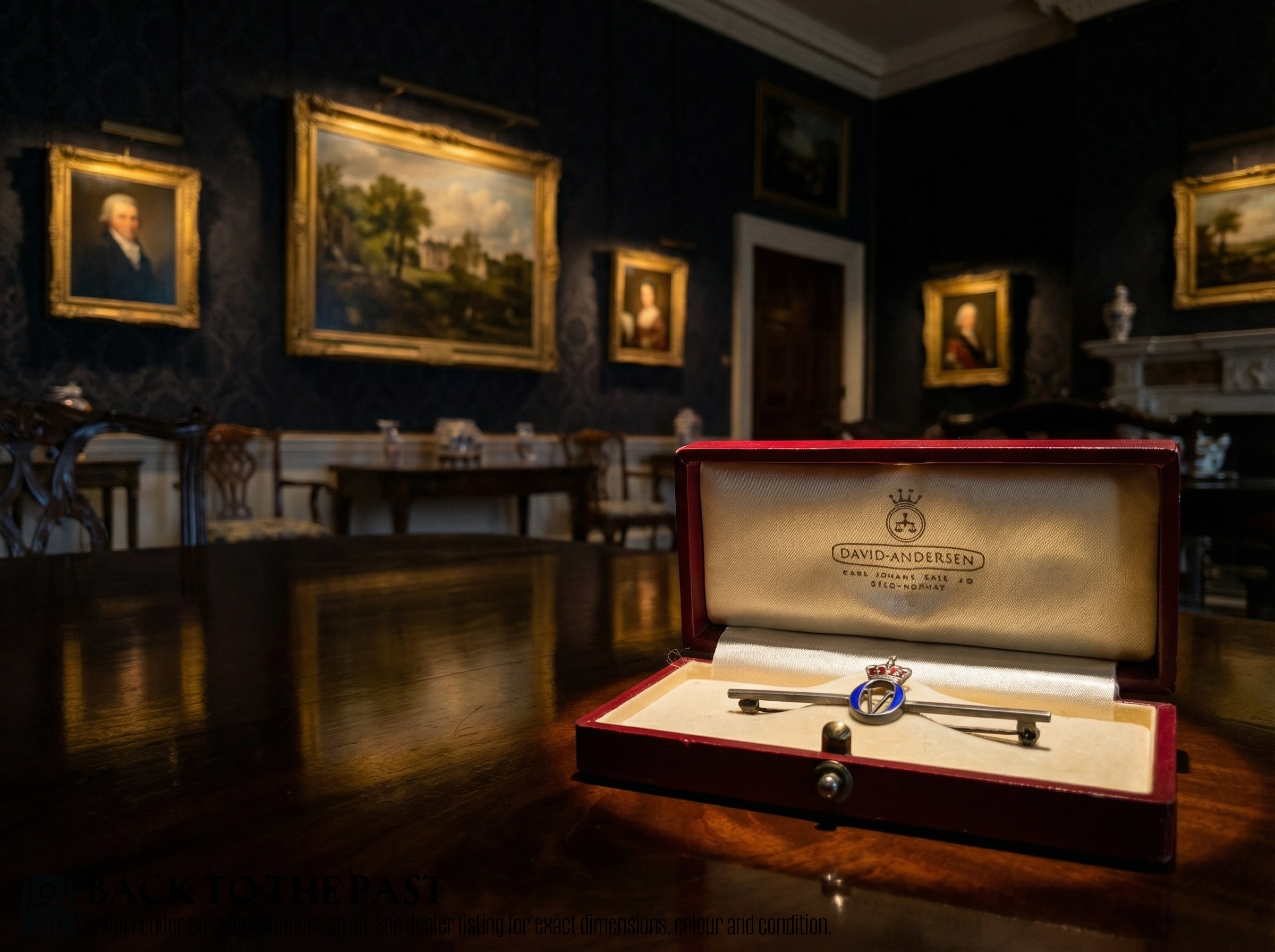
Silver Bar Brooch
A silver bar brooch presents a slender length of metal, often mounted with gemstones, enamel, or figurative motifs, designed to sit horizontally across fabric. These pieces span from the Georgian era through the Victorian, Edwardian, and Art Deco periods, reaching into mid-century modern designs.
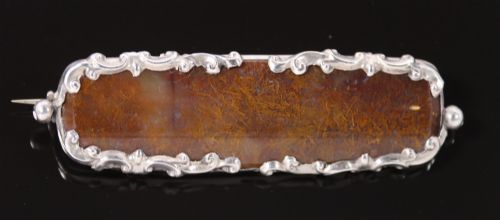
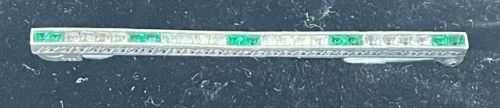
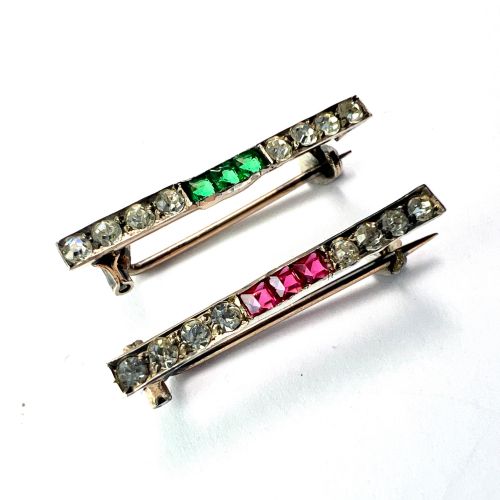
The versions most commonly met on this page combine sterling silver settings with paste stones, diamonds, rubies, or natural elements like moonstone and moss agate. Examples range from simple geometric Edwardian lines to whimsical animal subjects and brightly enamelled Scandinavian pieces.
Makers and workshops from Britain, France, Norway, and Germany contributed to this variety, working in styles that encompass Arts and Crafts, Art Deco, and vintage country sport. Each silver bar brooch carries the distinct aesthetic mark of its decade of origin, from nineteenth-century Scottish agate work to 1930s modernist chrome and silver.
How they were made
Silversmiths constructed these pins using sterling silver and occasionally mixed metals like gold and platinum, shaping the base bar through casting, wire-drawing, or sheet-piercing. Stones such as diamonds, rubies, emeralds, and paste were then collet-set, bezel-set, or foil-backed within the silver framework.
Enamelling techniques added vibrant colour to many designs, requiring finely applied vitreous glass fired onto recessed silver panels or geometric cells. Surface decoration frequently involved hand-engraving, millegrain edges, and pierced openwork to lighten the visual weight of the metal.
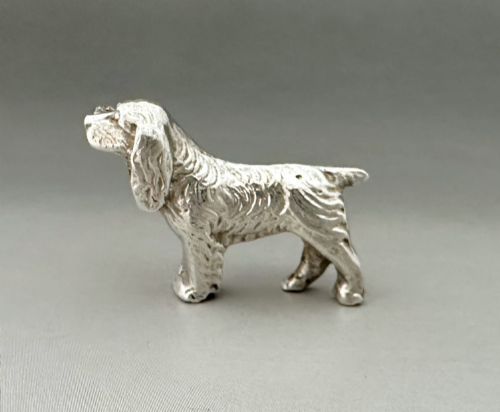
Several pieces feature small metal monkeys, dogs, and swallows perched permanently upon the silver bar, keeping watch over your lapel.
What varies in quality
Quality rests upon the crispness of the metalwork and the precision with which stones or enamel are secured into the silver mount. Finer examples display hand-cut stones, well-balanced proportions, and secure pin mechanisms that operate smoothly without slack.
The artistry of the design itself dictates value, separating mass-produced stamped components from hand-assembled pieces with detailed engraving, maker marks, or superior gem material. Original component integrity, such as undamaged enamel and secure catches, distinguishes the best survivors from heavily altered pieces.
Jakob Bengel·Georg Jensen
The Silver Bar Brooch Glossary
- Paste
- Hand-cut glass used as a gemstone substitute in antique jewellery. It was faceted and polished to imitate diamonds, rubies, and emeralds.
- Millegrain
- A decorative jewellery technique involving a line of tiny, raised metal beads along the edge of a setting. It softens the transition between metal and stone.
- Collet setting
- A collar of metal that encircles a gemstone to hold it in place. This method was widely used in Georgian and Victorian jewellery.
- Vitreous enamel
- A material made by fusing powdered glass to a metallic substrate by firing. It provides durable, glossy colour on Edwardian and Art Deco pieces.
- Rose-cut diamond
- An antique diamond cut featuring a flat base and a domed crown with triangular facets. It offers a subtle, soft reflection rather than modern brilliance.
Silver Bar Brooch: Frequently Asked Questions
How do I wear a silver bar brooch?
Pin the brooch horizontally or diagonally through heavy weaves like wool lapels, scarves, or thick knitwear. Ensure the fabric has enough substance to support the weight without sagging.
For delicate silks, use a backing disc or place the pin through an inner seam to protect the threads from strain.
Are these brooches made of solid silver?
Most pieces utilise sterling silver or continental silver standards for the primary structure. Some incorporate gold or platinum highlights for specific gem settings.
Hallmarks or metal tests confirm the composition, distinguishing solid silver from plated alternatives.
How do I date a bar brooch?
Examine the pin mechanism, the cut of the stones, and the overall design style. C-clasps and tubular hinges point to older Victorian and Edwardian origins, while geometric lines suggest the 1920s and 1930s.
Maker marks and silver hallmarks provide definitive dates when present on the reverse.
How should I clean my brooch?
Wipe silver gently with a soft microfibre cloth to remove surface tarnish without disturbing fragile stones or enamel. Avoid liquid dips if the piece contains paste, enamel, or porous gems like moonstone and agate.
Store the brooch dry in a lined box away from humidity to protect the metal.