


Silver Pearl Brooch
A silver pearl brooch brings together luminous pearls and gleaming silverwork, offering a wearable piece of history that suits both lapels and collars.
Silver Pearl Brooch
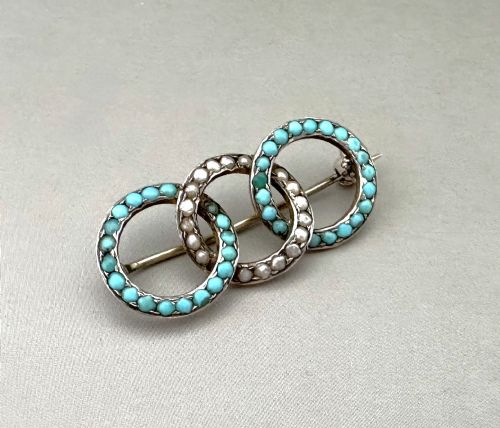
A silver pearl brooch is a historic piece of jewellery that combines lustrous pearls with silver settings, spanning periods from the Victorian era through the Edwardian years and into the mid-century. When searching for a silver pearl brooch, buyers encounter various forms including delicate bar brooches, heart and bow designs, and convertible pendant brooches. These items often incorporate supplementary materials like turquoise, enamel, and diamonds to enhance their decorative appeal.
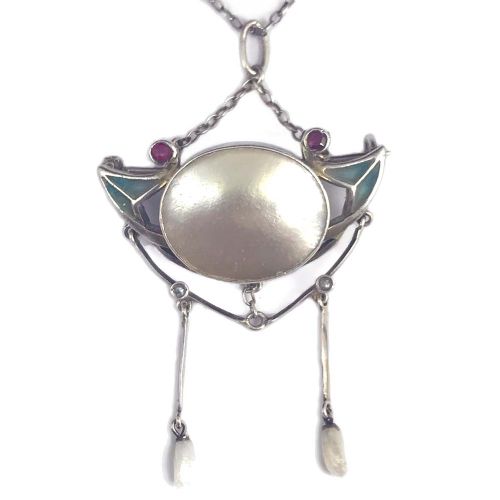
The pieces appearing on this page showcase distinct stylistic movements, most notably Art Nouveau, Jugendstil, and Renaissance Revival alongside classic Victorian and Edwardian aesthetics. Many examples feature delicate seed pearls, while others highlight larger pearls paired with silver gilt or sterling silver. This variety allows collectors to select pieces that reflect specific historical periods and design traditions.
Materials and Craftsmanship
Makers utilised silver and silver gilt as the primary structural metals for these brooches, occasionally combining them with gold for added contrast and strength in stone-setting. Pearls, particularly seed pearls, were carefully selected and secured within the metal framework, sometimes alongside rose-cut diamonds, turquoise, or tiger's eye. Enamel work, including translucent plique-à-jour, added vibrant colour to the metallic surfaces.
Craftsmen employed intricate techniques to shape the silver into figurative motifs such as insects, birds, hearts, and bows. Metal overlay and detailed bezel or prong settings kept the pearls and other gems firmly in place, demonstrating the high level of manual skill characteristic of nineteenth and early twentieth-century jewellery workshops.
Tiny silver insects set with pearls and rose-cut diamonds crawl across Victorian lapels, proving that historical jewellers loved a creeping garden.
Evaluating Quality and Execution
Quality in these pieces rests upon the precision of the metalwork and the harmonious integration of the pearls with surrounding stones like turquoise, enamel, or diamonds. Superior examples display refined hand-craftsmanship in complex settings such as plique-à-jour enamel or detailed floral and animal motifs, whereas simpler items rely on straightforward stamping and basic bezel work.
The condition and lustre of the pearls, alongside the preservation of delicate enamel and secure silver settings, distinguish finer specimens from standard production. Makers who paid close attention to the reverse of the brooch as well as the front created enduring items that retain their decorative integrity over generations.
Levinger and Bissinger·Meyle and Meyer·Mikimoto
The Silver Pearl Brooch Glossary
- Seed pearl
- A very small, naturally occurring or cultured pearl, typically less than two millimetres in diameter. These tiny gems were frequently used in clusters or delicate floral patterns during the Victorian and Edwardian periods.
- Silver gilt
- Silver that has been coated with a thin layer of gold, providing the warm tone of gold combined with the underlying weight and structure of silver. This technique appears often in antique brooches.
- Plique-à-jour
- An enamelling technique where the enamel is applied within a cellular framework without a backing, allowing light to shine through the transparent colour like stained glass. It is a hallmark of Art Nouveau and Jugendstil jewellery.
- Bar brooch
- A narrow, elongated pin format popular in the late nineteenth and early twentieth centuries. These pieces often feature a central motif, such as a bird, insect, or cluster of pearls.
- Renaissance Revival
- A nineteenth-century design style that drew inspiration from the art and ornamentation of the fifteenth and sixteenth centuries. Jewellery from this movement often incorporates rich enamels and clustered gemstones.
Silver Pearl Brooch: Frequently Asked Questions
How do I date a silver pearl brooch?
Dating relies heavily on the stylistic clues, such as the flowing organic lines typical of Art Nouveau pieces or the symmetrical motifs common in the Edwardian era. Material combinations, such as the use of seed pearls alongside platinum or specific gold alloys, also offer clear indications of the period of manufacture.
Examining the pin mechanism and catch can provide further context, as older pieces often feature C-clasps and longer pins that extend beyond the edge of the brooch frame.
Can a brooch be worn as a pendant?
Many historical brooches were designed with integrated loops or hinged Bails that allow them to be suspended from a chain as a pendant. This convertible functionality was especially popular during the Victorian and Edwardian periods.
Buyers should inspect the reverse of the piece to locate any hidden loops or alternative fittings that enable this dual use.
How do I care for antique pearls?
Pearls are organic gems that require gentle handling because they are sensitive to acids, cosmetics, and perfumes. Cleaning should be done with a soft, damp cloth rather than chemical dips or ultrasonic cleaners which can damage both the pearl nacre and the delicate silver settings.
Storing the brooch separately from other jewellery prevents the silver or harder gemstones from scratching the surface of the pearls.
What distinguishes Edwardian silver brooches?
Edwardian brooches are characterised by a light, airy aesthetic that often mimics lace or garland motifs. Makers frequently utilised silver paired with gold backings to showcase diamonds, seed pearls, and blue enamel.
This era favoured feminine and naturalistic subjects, including swallows, bows, and floral sprays rendered in delicate proportions.