



Floral Enamel Brooch
A floral enamel brooch brings together coloured glass and precious metals in wearable miniature gardens.
Floral Enamel Brooch
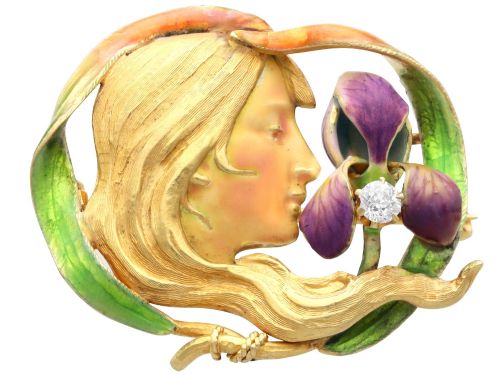
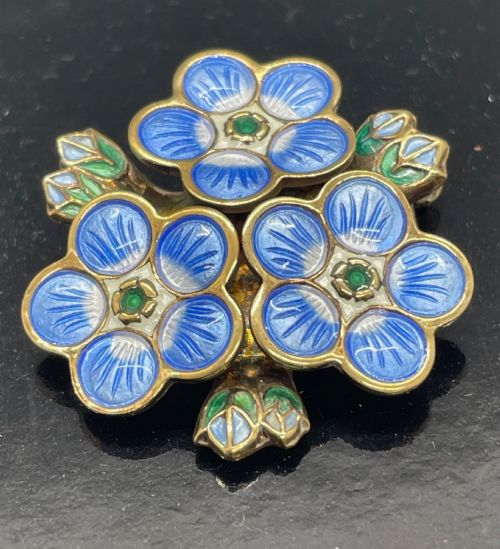
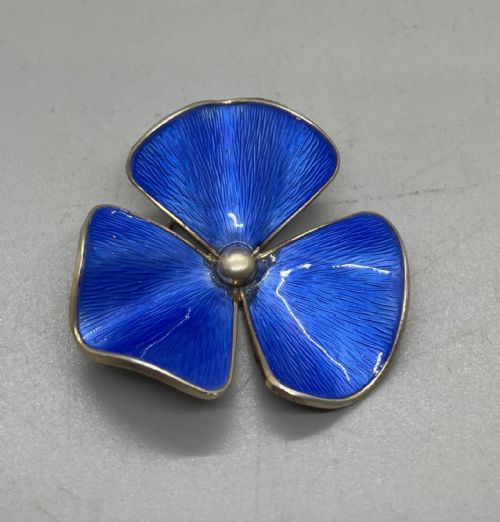
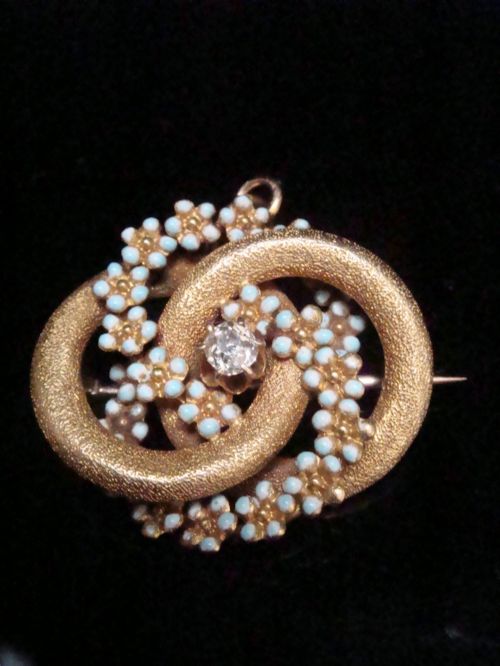
When you search for a floral enamel brooch, you look at pieces that span from the Victorian period through to the mid twentieth century. These jewels translate botanical subjects into metal and vitreous coatings, ranging from pansies and forget-me-knots to stylised Scandinavian blossoms.
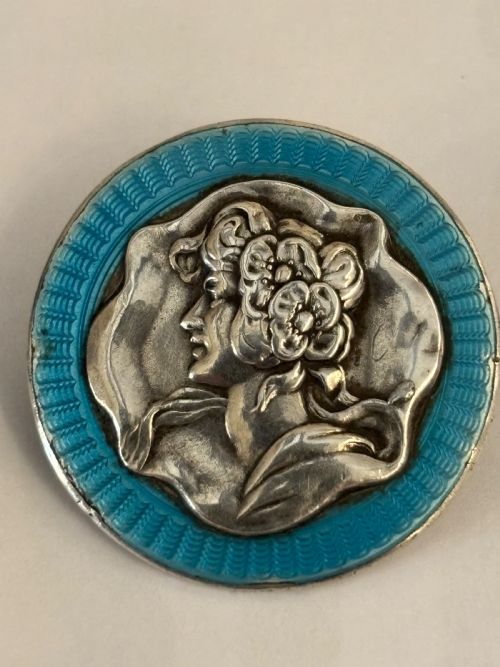
You meet examples influenced by Art Nouveau, Art Deco, and Arts and Crafts movements, alongside specific regional designs from Norway and Denmark. The construction varies from simple sterling silver pins to complex multi-coloured pieces incorporating gold and gemstones.
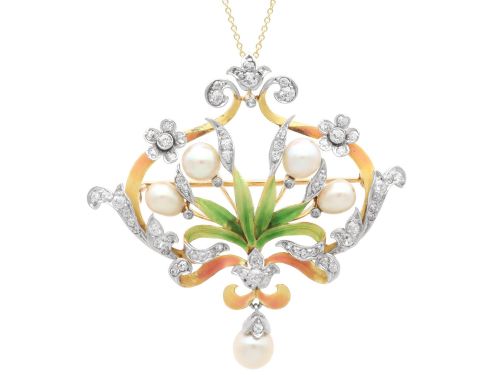
Victorian and Edwardian iterations often feature naturalistic floral forms set with diamonds, pearls, or moonstones. Later twentieth century examples lean towards guilloche enamel work on silver gilt grounds.
How they were made
Silversmiths and jewellers formed the base structures in sterling silver, silver gilt, and eighteen carat gold using casting and hand fabrication techniques. Makers then applied powdered glass to the metal surfaces and fired them in kilns to achieve a fused vitreous enamel finish.
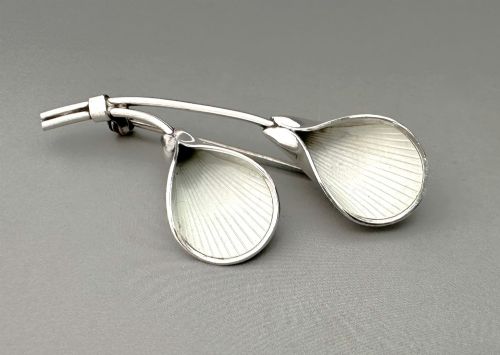
Techniques such as plique-à-jour suspended transparent enamel within wire frames to let light pass through the petals. Guilloche methods involved machining geometric patterns into the metal base before applying translucent enamel layers that revealed the underlying texture.
The listings span eight decades of production, moving from nineteenth century Victorian gold pieces to mid-century Scandinavian silver guilloche work.
What varies in quality
The sophistication of the enamel work dictates much of the distinction between pieces, particularly the depth of translucent colour and the precision of the metal cells holding the glass. Hand-applied shading on petals and leaves requires high skill compared to flat, opaque colour fills.
The choice of precious metals and supplementary stones elevates the work, as seen in examples combining enamel with diamonds, pearls, or moonstones rather than base sterling silver alone. Signed pieces by recognised workshops often demonstrate finer detailing in the chased metalwork and pin mechanisms.
David Andersen·A H Darby & Son·Marius Hammer·Clement Berg·W & Co
The Floral Enamel Brooch Glossary
- Guilloche enamel
- A decorative technique where metal is engraved with precise repetitive patterns beneath translucent enamel. This method creates shimmering effects that catch the light from different angles.
- Plique-a-jour
- An enamelling technique resembling miniature stained glass where enamel is applied without a backing metal. Light shines directly through the transparent coloured glass.
- Silver gilt
- Sterling silver that has been coated with a thin layer of gold. This treatment provides the warmth of gold combined with the structural properties of silver.
- Vitreous enamel
- A material made by fusing powdered glass to a metallic substrate by firing at high temperatures. The resulting coating is durable and holds rich colour over time.
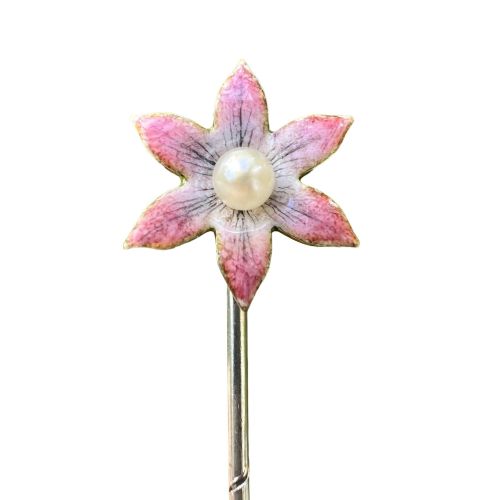
- Stick pin
- A long pin with a decorative head used to secure garments or ties. The evidence shows these adapted to floral enamel designs during the Edwardian era.
Floral Enamel Brooch: Frequently Asked Questions
How do I date a floral enamel brooch?
You date these pieces by examining the clasp style, the hallmarks, and the artistic movement influencing the design. Arts and Crafts and Art Nouveau pieces typically display organic, flowing lines from the late nineteenth and early twentieth centuries.
Mid twentieth century examples, particularly from Scandinavian makers, often utilise clean geometric guilloche patterns on silver gilt. Hallmarks and maker stamps provide precise confirmation of origin and year of manufacture.
What is guilloche enamel?
Guilloche enamel involves mechanical engraving of a metal substrate with precise geometric patterns prior to the application of translucent glass. The underlying pattern shows through the coloured enamel, creating depth and movement as the piece moves.
This technique appears frequently in Scandinavian designs from the mid twentieth century. The precision of the engine-turned engraving dictates the quality of the visual effect.
How should I care for an antique enamel brooch?
Enamel is essentially glass and requires gentle handling to prevent chipping or scratching against hard surfaces. Clean the pieces using a soft cloth and warm soapy water, avoiding harsh chemical dips or ultrasonic cleaners.
Store each brooch separately in a lined box to prevent metal pins from scratching the delicate enamel surfaces of adjacent items.