
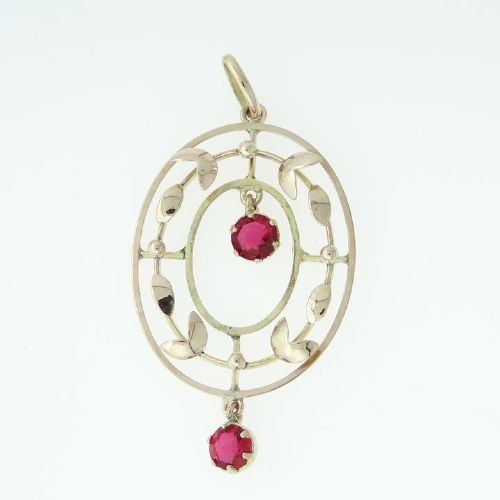
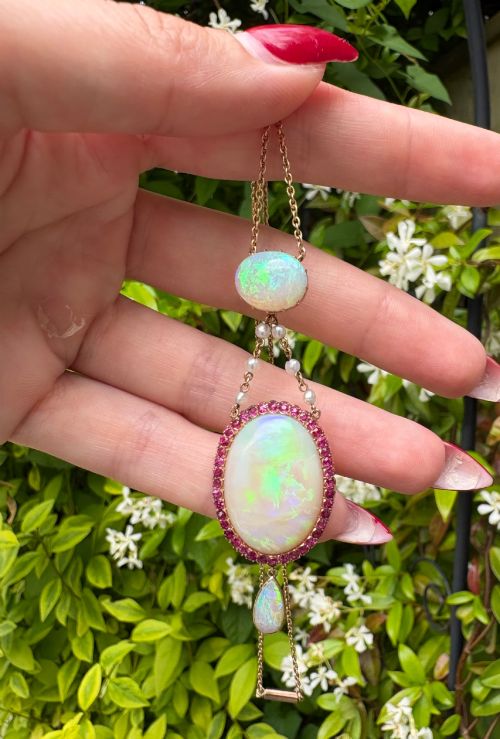


Victorian Ruby Necklace
A Victorian ruby necklace brings together rich red stones and period goldsmithing in a piece designed to catch the evening light.
Victorian Ruby Necklace
When you search for a victorian ruby necklace, you encounter items ranging from simple gold pendants to elaborate diamond and gemstone clusters spanning the decades from 1850 to 1900. The selection includes dedicated necklaces alongside convertible pendant brooches and riviere designs.
The materials paired with the rubies define the character of these pieces, utilising yellow gold, rose gold, silver, and platinum. Alongside the central gems, many items incorporate diamonds, pearls, opals, and paste to add contrast and texture.
Design motifs draw heavily on nature and symbolism, featuring snakes, stars, crescents, and foliate sprays. These forms reflect the sentimental tastes of the nineteenth century and the later Edwardian period.
Materials and Construction
Goldsmiths worked primarily in 9ct, 15ct, and 18ct gold, often combining yellow and rose tones within a single mount. Silver and platinum were frequently employed for settings to enhance the brightness of diamonds.
Stones were hand-cut in shapes including rose cuts and cabochons, then secured in closed or open-backed settings using traditional claw and collet techniques. Enamel work and seed pearls frequently supplemented the primary gems to complete intricate designs.
Victorian serpents coiled around necks with diamond eyes, offering eternal devotion wrapped in eighteen-carat scales.
Evaluating Quality
Quality rests on the origin and treatment of the gemstones, where natural unheated stones and well-matched diamonds elevate a piece significantly. The presence of documented origins, such as Burma, adds distinction to the design.
The finesse of the metalwork distinguishes superior examples from standard production, visible in the articulation of snake links and the precision of claw settings. Original elements remaining intact without later alterations preserve the integrity of the piece.
The Victorian Ruby Necklace Glossary
- Riviere necklace
- A strand of uniformly sized or graduated gemstones set individually in collets and linked together. This style sits closely on the collarbone and relies on the purity of the stones for its impact.
- Cabochon
- A gemstone shaped and polished with a smooth, rounded surface rather than faceted. This cut was favoured for displaying the deep red tones of rubies and the play of colour in opals.
- Rose cut
- A diamond or gemstone cut with a flat base and a domed crown consisting of triangular facets that culminate in a point. It offers a soft, candlelight shimmer rather than the sharp brilliance of modern cuts.
- Pendant brooch
- A versatile piece of jewellery fitted with both a loop for suspension on a chain and a pin finding on the reverse. This dual construction allowed owners to wear the item pinned to clothing or hung around the neck.
- Seed pearl
- A very small, naturally occurring pearl, often drilled and threaded onto horsehair or fine wire in clusters or floral arrangements. They were extensively utilised in nineteenth-century mourning and sentimental jewellery.
Victorian Ruby Necklace: Frequently Asked Questions
How do I care for a Victorian ruby necklace?
Clean these items gently using a soft brush and warm soapy water, avoiding harsh chemical dips that can damage delicate pearls or historic settings. Store each piece separately in a lined box to prevent scratching between the gold and softer gems.
Take off your jewellery before swimming, gardening, or applying cosmetics to protect the antique claws and delicate seed pearls. Periodic checks by a specialist ensure the stones remain secure in their settings.
Are these necklaces made of solid gold?
Gold standards from this era commonly include 9ct, 15ct, and 18ct alloys, each offering a distinct warm hue and durability level. Some pieces also feature silver or platinum top-mounts designed to showcase diamonds to best effect.
Assay marks and acid testing help confirm the metal purity of individual components. Makers often matched the gold colour to the prevailing fashion of the decade.
How can I tell the difference between periods?
Mid-century pieces often showcase heavy goldwork and romantic motifs like serpents and foliate clusters set with rose-cut diamonds. Towards the end of the century and into the Edwardian era, designs frequently turned lighter, incorporating platinum and pearls.
Examining the construction techniques on the reverse of the piece reveals clues about its manufacturing date. Tool marks and closure types provide further context for dating.
Can I wear a pendant brooch as a necklace?
Many items from this period were designed specifically to function as both a brooch and a pendant. The integrated loop folds down or remains discreetly hidden when the piece is worn pinned to clothing.
Suspending the item from a compatible antique chain allows you to wear it safely around the neck. Ensure the safety catch and loop are secure before wearing.