


Diamond Crescent Moon
A diamond crescent moon captures the sky in precious metal and stones, offering a wearable piece of celestial history.
Diamond Crescent Moon
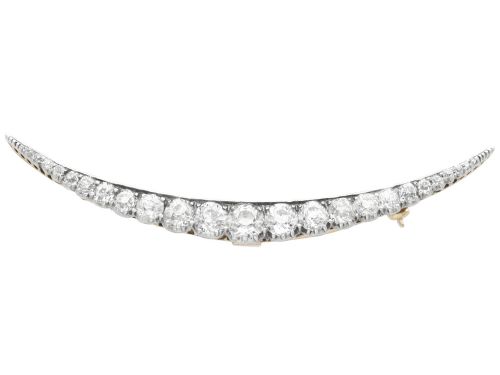
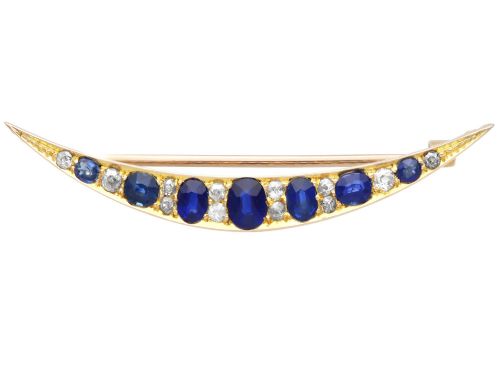
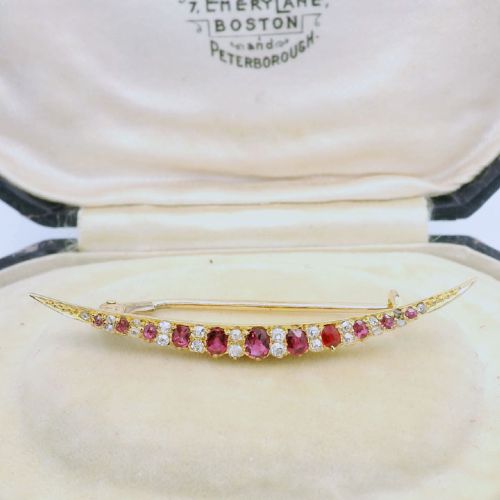
A diamond crescent moon represents a distinct category of antique jewellery, most commonly appearing as a brooch or pendant. These pieces draw their form from the night sky, capturing the romantic sentiment common in late nineteenth and early twentieth century design.
The versions most likely to be met on this page span the Victorian, Edwardian, and Art Deco periods. They typically combine diamonds with rubies, sapphires, turquoises, or pearls, set against backgrounds of yellow gold, rose gold, 15ct gold, 18ct gold, or platinum.
How they were made
Goldsmiths constructed these jewels using metals such as 15ct gold, 18ct gold, 9ct rose gold, and yellow gold alongside platinum. These varied metals provided both the structural strength needed for delicate curved pins and the colour contrast favoured by period jewellers.
Gemstones including diamonds, rubies, sapphires, turquoises, and pearls were hand-set into the metal framework. The combination of these specific stones created the characteristic sparkle and colourful accents associated with Victorian and Edwardian craftsmanship.
Listings feature pieces spanning the Victorian, Edwardian, and Art Deco periods, utilising platinum and various purities of gold.
What varies in quality
Quality rests upon the selection and matching of the gemstones within the crescent frame. Superior examples display carefully proportioned diamonds and coloured stones, such as natural rubies or sapphires, chosen for consistent colour and clarity.
The fineness of the metalwork and setting techniques also distinguish the range. Finer pieces demonstrate precise stone setting and considered integration of platinum with yellow or rose gold, showing the maker's hand in every curve.
The Diamond Crescent Moon Glossary
- Crescent brooch
- An ornamental clasp formed in the shape of a waxing or waning moon. This shape was exceptionally popular during the late Victorian and Edwardian eras.
- Platinum
- A dense, ductile, malleable silver-white precious metal. It gained widespread use in fine jewellery during the Edwardian period to hold diamonds securely.
- 15ct gold
- An alloy of gold containing 62.5 percent pure gold, commonly utilised in British jewellery during the Victorian period before the introduction of 9ct and 18ct standards.
- Old cut diamond
- A precursor to the modern brilliant cut diamond, shaped by hand with a smaller table and a higher crown. These stones exhibit a distinctive, softer candlelight gleam.
Diamond Crescent Moon: Frequently Asked Questions
How do I wear a crescent brooch?
Crescent brooches attach easily to lapels, scarves, collars, or hats using the pin mechanism on the reverse. Their curved shape allows them to follow the natural lines of garments.
Some collectors also suspend these brooches from chains to wear them as pendants, mirroring historic versatility.
How do I date a crescent moon brooch?
Dating relies on examining the materials, gemstone cuts, and metal hallmarks present on the piece. Victorian examples often feature 15ct gold or silver-topped gold, while Edwardian pieces frequently incorporate platinum.
Stylistic cues, such as the use of natural rubies alongside old cut diamonds, further narrow down the decade of production between eighteen eighty and nineteen twenty.
Were these pieces worn as mourning jewellery?
While some crescent jewellery incorporated pearls to symbolise tears, the crescent moon motif itself primarily represented female empowerment, new beginnings, and romantic devotion.
Victorian and Edwardian wearers embraced these celestial designs for their aesthetic beauty and optimistic symbolism rather than as tokens of grief.