
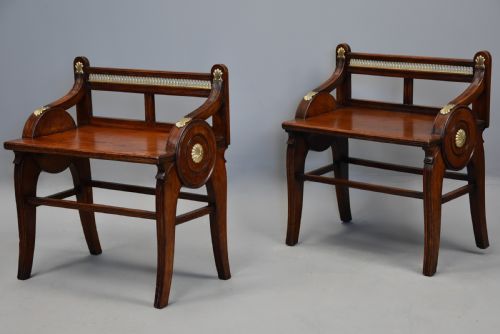


Victorian Classical Revival
Victorian classical revival pieces bring ancient architectural motifs and mythological figures into nineteenth-century interiors through bronze, marble, and brass.

Victorian Classical Revival
Victorian classical revival objects draw heavily from ancient Greek and Roman forms, translating architectural orders and sculptural subjects into domestic furnishings. A buyer searching this phrase encounters items ranging from grand tour bronzes and cast brass table lamps to satinwood side cabinets and marble mantel clocks.
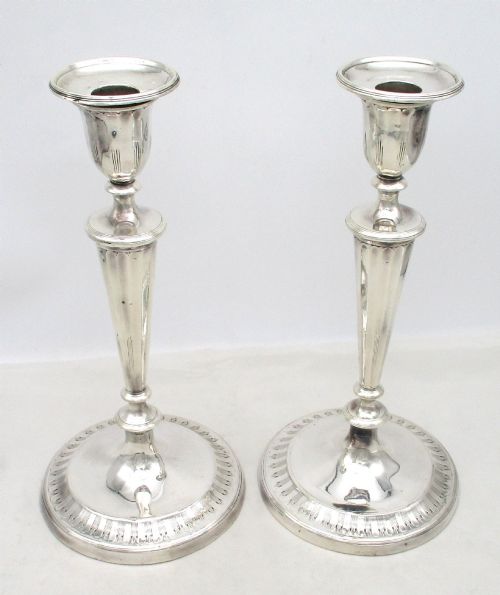
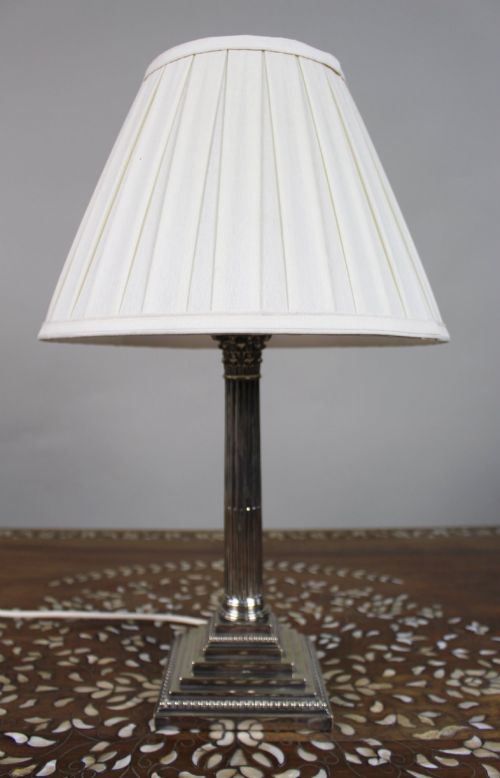
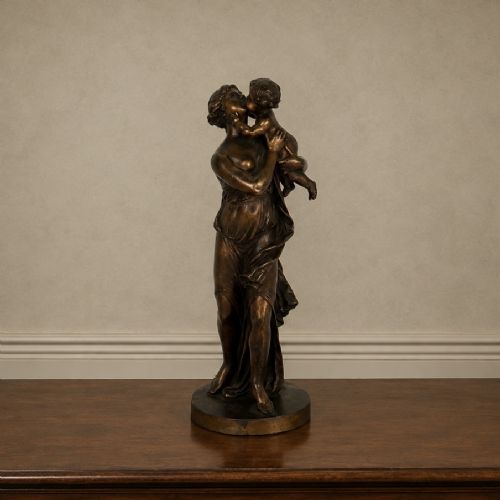
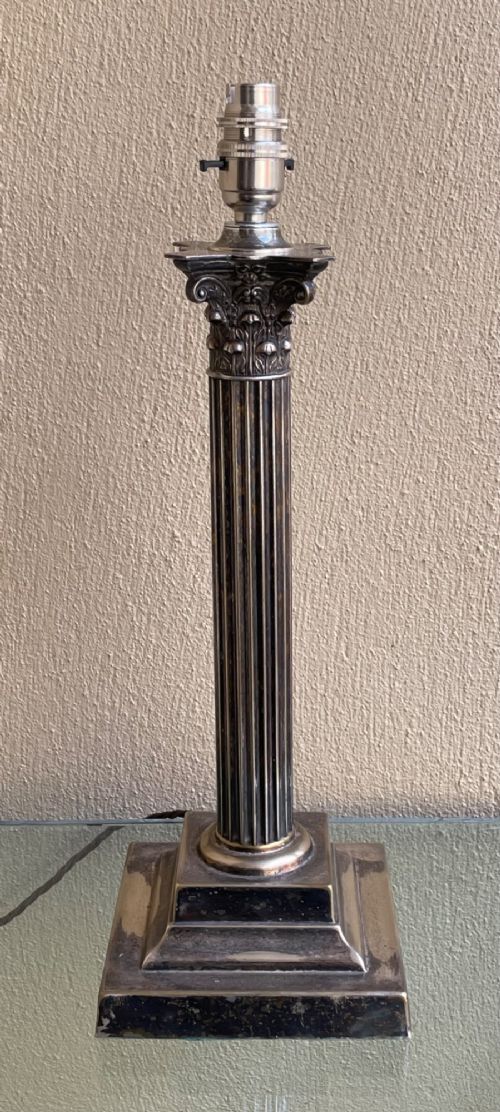
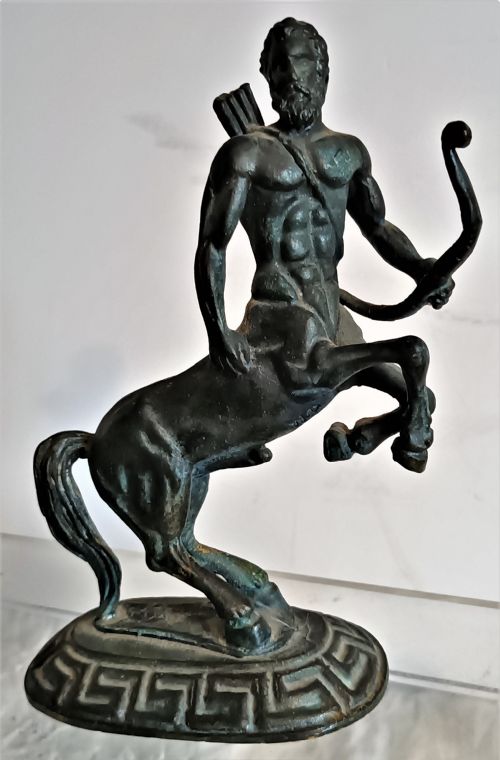
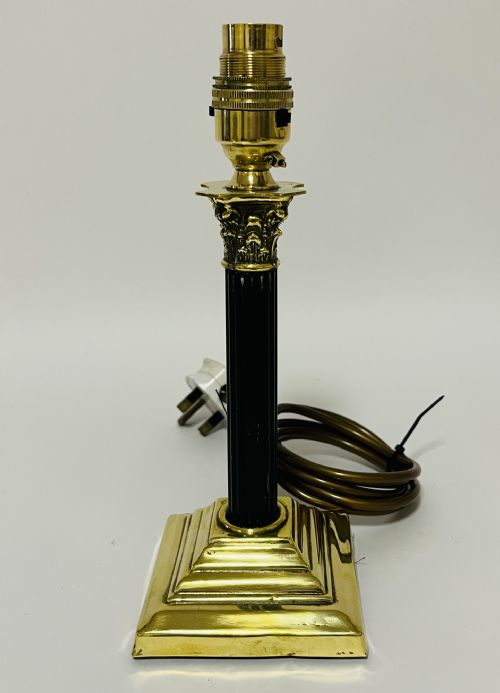
The most common versions met on this page are metal lighting and decorative display pieces, particularly silver-plated corinthian column table lamps and cast bronze figures. These domestic adaptations reflect a period obsession with classical antiquity, often channelled through grand tour souvenirs and architectural revivals.
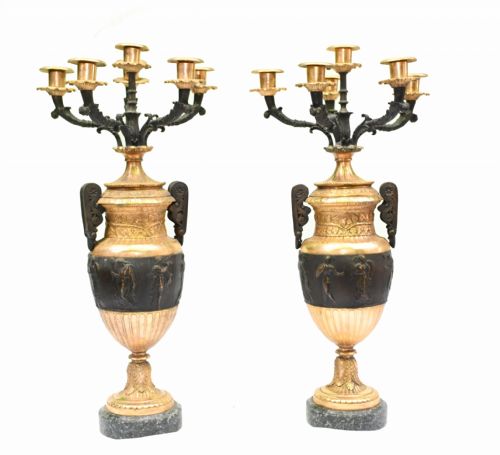
Beyond lighting, the selection includes wall mirrors, candelabras, and occasional furniture decorated with painted panels or classical motifs. Such works combine utilitarian household functions with scholarly references to antiquity, satisfying nineteenth-century tastes for academic interior decoration.
Materials and technique
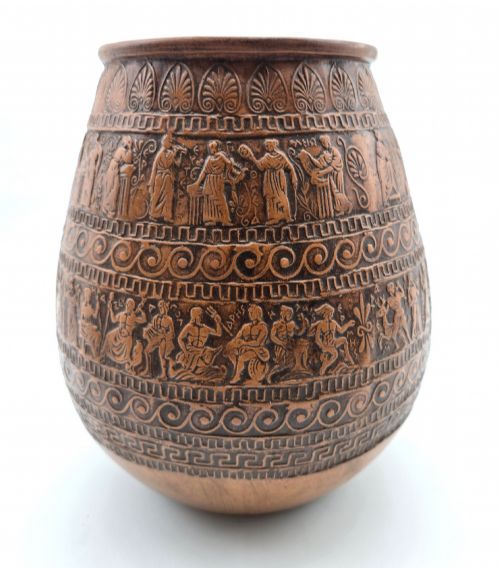
Makers utilised metalcasting techniques to produce bronze figures, brass lamps, and silver-plated copper wares with crisp architectural detailing. Foundries shaped these metals into complex forms such as fluted columns, ewers, and figural sculptures.
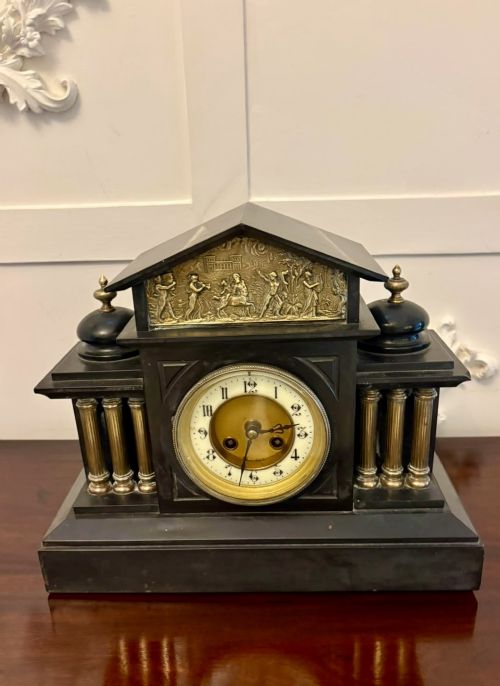
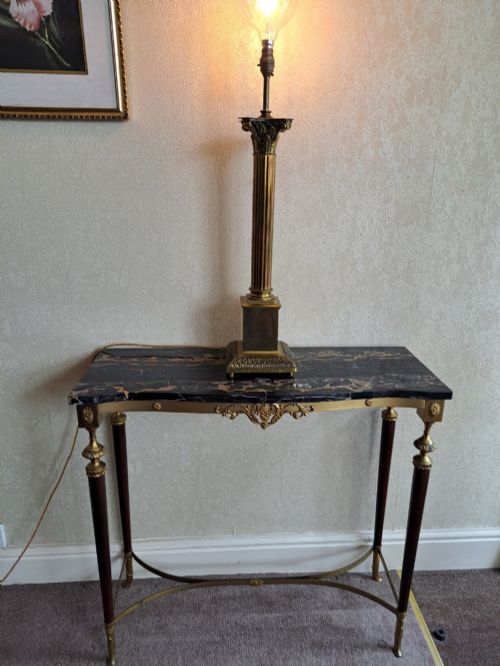
Stonework and cabinetmaking relied on contrasting media, pairing black marble or terracotta with gilt brass mounts and painted satinwood. Carvers and joiners constructed display cabinets, hall benches, and clock cases using dense hardwoods decorated with gesso or hand-painted classical scenes.
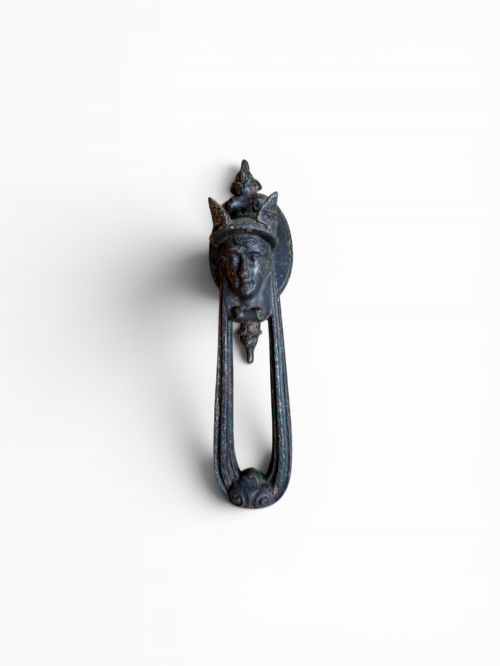
Cast iron door knockers shaped like Hermes heads greeted nineteenth-century callers with a gaze straight from Mount Olympus.
Quality variations
In cabinetwork and clocks, merit lies in the selection of timber veneers, the precision of painted panels, and the robustness of internal mechanical movements. Superior examples demonstrate harmonious proportions and unblemished gilding rather than superficial surface ornament.
James Shoolbred and Co·Harrison Brothers and Howson
The Victorian Classical Revival Glossary
- Grand tour
- A cultural journey of Europe undertaken by wealthy young men to study antiquity, yielding portable sculptures, bronzes, and terracottas.
- Corinthian column
- An architectural order marked by an ornate capital decorated with acanthus leaves, frequently adapted for table lamp bases.
- Repoussé
- A metalworking technique where a design is hammered into relief from the reverse side of a sheet of metal.
- Gesso
- A plaster-like mixture applied to wood or metal to serve as a base for painting or gilding, common on wall mirrors.
- Demi-lune
- A half-moon shape used for console tables and side cabinets designed to sit flat against a wall.
Victorian Classical Revival: Frequently Asked Questions
What is a grand tour bronze?
Grand tour bronzes are small-scale sculptures and architectural models purchased by travellers visiting European historical sites during the nineteenth century. They served as scholarly ornaments for libraries and studies.
These pieces reproduced famous classical statues, ruins, and mythological figures. Their presence indicated the owner's education and refined taste in classical art.
Where were mantel clocks placed?
Mantel clocks occupied prominent positions on drawing room fireplaces, often flanked by matching candelabras or urns. They anchored the mantelpiece arrangement during the Victorian era.
Their heavy marble, bronze, or gilt brass construction provided a stable base for mechanical movements. These clocks functioned as both timekeepers and sculptural centerpieces.
How do I care for satinwood furniture?
Satinwood furniture requires gentle dusting with a dry lint-free cloth and protection from direct sunlight to prevent fading. Avoid using silicone-based polishes on antique polished surfaces.
Maintaining stable room humidity preserves the delicate painted panels and timber veneers. Proper placement prevents the wood from drying out or cracking over time.