


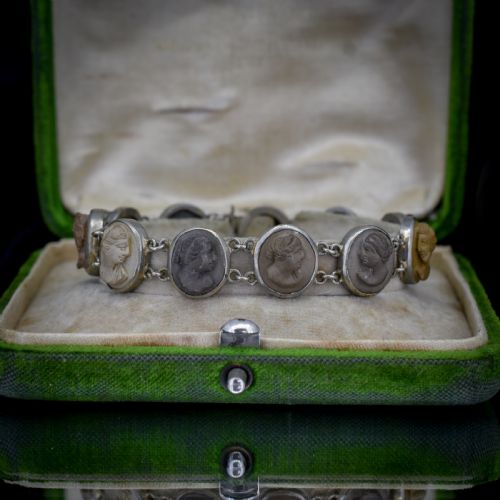


Classical Profile Cameo
A classical profile cameo captures the timeless dignity of ancient rulers and mythological figures carved in miniature relief for personal adornment and display.

Classical Profile Cameo
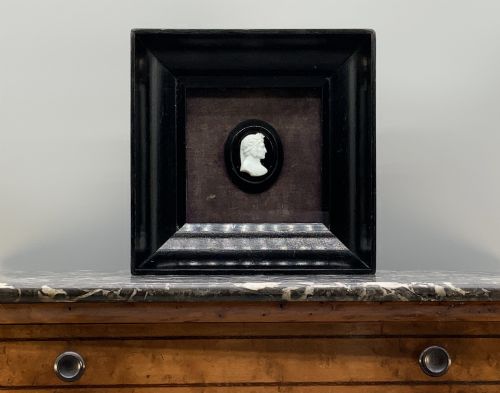
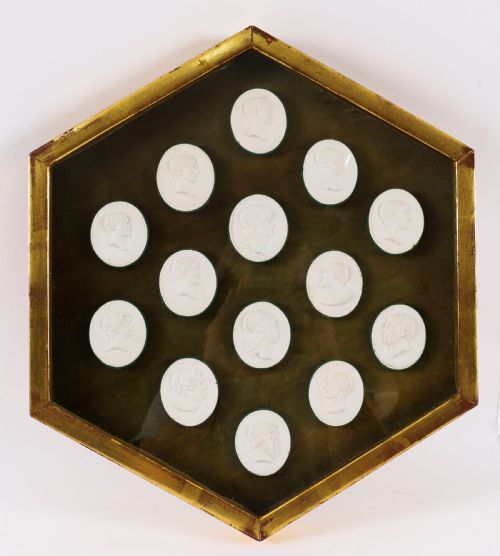
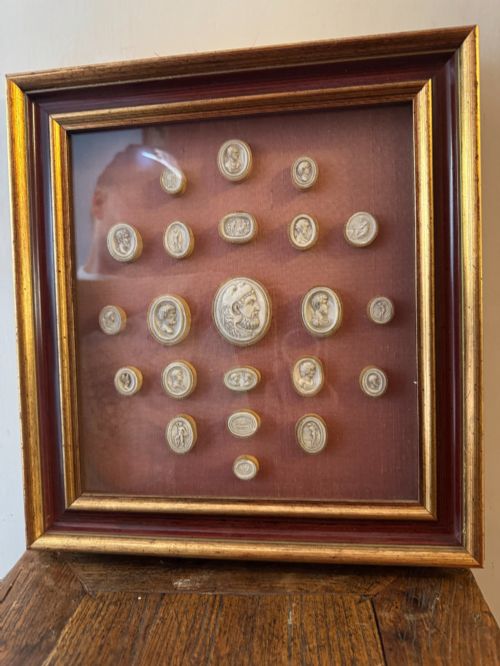
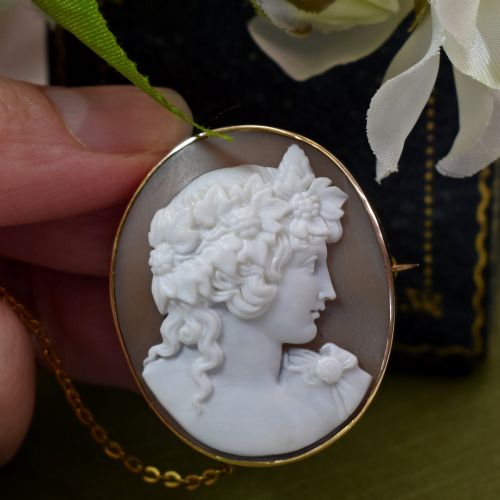
A classical profile cameo presents a distinct portrait bust carved in relief, drawing heavily on ancient Greek and Roman iconography. These pieces emerge predominantly from the Victorian and Georgian periods, alongside Grand Tour souvenirs collected by travellers on European journeys. Buyers encounter wearable forms such as brooches, rings, and earrings, as well as wall plaques and framed art.
The aesthetic leans heavily into Neoclassical and Victorian Classical Revival styles, celebrating mythological deities, Roman emperors, and literary figures. Subjects range from named figures such as Dante, Virgil, and Byron to goddesses like Flora and Demeter. Each piece serves as a miniature sculpture, prioritising profile clarity and classical proportion.

Materials and Carving Techniques
Carvers selected layered organic and mineral materials to create natural contrast between the carved figure and the background. Shell, particularly conch and helmet shell, provided varied colour strata, while hardstones like carnelian and agate offered durable precision. Softer volcanic lava and carved marble also served as principal media for both jewellery and framed wall plaques.
Artisans utilised fine hand tools to cut away the upper strata of the material, leaving the raised profile standing proud against a darker backing. In metalwork, goldsmiths framed these carved reliefs in settings of nine-carat gold, eighteen-carat gold, silver, or pinchbeck, often employing detailed wirework and foxtail tassels to complete the mount.
Listings feature periods spanning the eighteenth, nineteenth, and twentieth centuries, with Victorian and Grand Tour items appearing most frequently.
Distinctions in Quality
The choice of medium and the integrity of the mount further divide the range. Superior pieces utilise high-grade hardstone or flawless shell paired with substantial gold frames, while ordinary examples rely on simpler materials and lighter base metal settings.
Pietro Bracci·Thorvalsen Workshop
The Classical Profile Cameo Glossary
- Cameo
- A method of carving an object such as a gemstone, shell, or piece of stone where the design is raised in relief above the background. This technique relies on contrasting colour layers within the material to make the subject stand out clearly.
- Intaglio
- A gem or stone carved inversely so that the design sinks below the surface, acting as a seal. Impressions taken from these carvings produce miniature reliefs known as sulphur or plaster proofs.
- Grand Tour
- A cultural itinerary of Europe undertaken by wealthy young men and scholars during the eighteenth and nineteenth centuries. Travellers collected carved plaques, intaglios, and micro-mosaics as tangible proof of their classical education.
- Hardstone
- A semi-precious gemstone such as agate, onyx, or carnelian used for intricate carving. These stones offer superior durability and fine colour banding compared to shell.
- Pinchbeck
- An alloy of copper and zinc developed in the eighteenth century to imitate gold. It provides a warm, durable yellow tone frequently found in antique jewellery mounts.
Classical Profile Cameo: Frequently Asked Questions
How were antique cameos worn?
Victorians wore cameo brooches pinned centrally at the neck of high-collared dresses or used them to secure shawls and sashes. Rings and earrings were worn as matched suites to display personal taste and classical learning.
Larger plaques and framed intaglios were not worn, instead serving as cabinet pieces or wall decorations in studies and drawing rooms.
What is the difference between shell and hardstone?
Shell cameos are carved from the layered outer structure of marine molluscs, offering softer textures and warm natural colour contrasts. They are lighter and frequently mounted as brooches or pendants.
Hardstone cameos utilise dense minerals like agate or carnelian, demanding greater skill from the carver and offering exceptional longevity. These gems typically appear in rings and high-value precious metal settings.
How do I date a classical cameo?
Dating relies heavily on the style of the metal mount, the clothing and hairstyle of the profiled figure, and the fastening mechanisms on the reverse. Georgian and early nineteenth-century pieces often feature closed-back settings and heavy hand-carved frames.
Later Victorian and Edwardian examples introduce tubular hinges, safety catches, and machine-stamped gold mounts alongside changing stylistic revivals.
What subjects appear on these carvings?
Carvings frequently depict figures from Greek and Roman mythology, including Olympian deities, muses, and allegorical representations. Historical emperors, philosophers, and poets also feature prominently, reflecting the era's fascination with classical antiquity.
Profiles of fictional heroines and idealized classical youths round out the common repertoire found in both jewellery and framed plaques.