

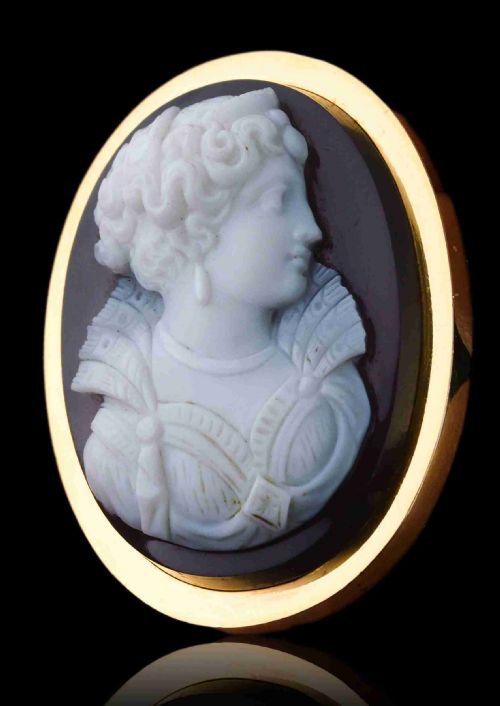


18ct Gold Cameo
An 18ct gold cameo combines high-karat precious metal with classical carving, offering collectors portable miniature sculpture set into wearable jewellery.

18ct Gold Cameo
When you search for an 18ct gold cameo, you examine miniature relief carvings mounted in high-karat yellow gold settings. The selection on this page centres primarily on Victorian and 19th-century examples alongside mid-20th-century Italian pieces.
The forms span brooches, rings, pendants, and drop earrings. Many pieces take the form of substantial brooches that double as pendants, alongside cluster rings and detailed drop earrings.
Subjects draw heavily from classical mythology and portraiture, featuring Greek mythological figures, cherubs, and classical female profiles. Materials range from shell and carnelian to hardstone, agate, onyx, and sardonyx.
Materials and carving techniques
Carvers work by hand through distinct colour strata within shells or layered hardstones such as agate, onyx, and sardonyx. This subtractive method reveals a pale portrait or motif against a darker contrasting background.
Frames utilise 18ct gold and 18ct yellow gold, shaped into ornate mountings or polished bezels. Selected pieces incorporate additional gemstones, including diamonds, pearls, emeralds, and crystal.
18ct Gold Cameo Retail Price Guide 2026
Typical asking prices for 18ct gold cameo among the pieces listed under this phrase on Sellingantiques today, from the lower quarter to the upper quarter. They describe what is for sale here now, not the wider market.
Several Victorian pieces capture unexpected company, including a snake coiling deliberately upon a Greek woman's breast.
Distinguishing quality in cameos
The weight and elaboration of the 18ct gold setting also influence distinction. Elaborate chased frames, ornate wirework, and the integration of supporting diamonds or pearls elevate the status of the piece.
The 18ct Gold Cameo Glossary
- Cameo
- A method of carving where a design is raised in relief against a contrasting background. This technique utilises layered materials such as hardstone or shell.
- Hardstone
- A collective term for semi-precious stones used in glyptic art, including agate, onyx, and carnelian. These durable minerals allow for extremely fine detail.
- Intaglio
- A design incised or sunken beneath the surface of the stone rather than carved in relief. Examples in this category include classical portraits set into rings.
- Sardonyx
- A variety of onyx featuring alternating parallel strata of sard and white chalcedony. Carvers prize this material for achieving sharp chromatic contrast.
18ct Gold Cameo: Frequently Asked Questions
How do I date an 18ct gold cameo?
Dating relies on the style of the carving, the mount construction, and the overall period characteristics. Victorian pieces frequently feature ornate closed-back gold frames or distinct mythological motifs.
Later mid-century Italian works often display different bezel treatments and lighter mountings. Hallmarks, where present, provide further chronological markers.
Are all cameos made from shell?
Shell represents only one medium used by artisans, alongside various hardstones. The evidence includes pieces carved from agate, carnelian, onyx, sardonyx, and coral.
Hardstone cameos generally offer greater durability and sharper colour separation than shell equivalents.
Can cameo brooches be worn as pendants?
Many Victorian brooch mountings include integrated folding bails or loops specifically designed for suspension on a chain. This dual functionality allowed 19th-century wearers to alternate between pinning the jewel and hanging it as a pendant necklace.
Examining the reverse of the frame reveals whether a hinged loop or safety chain ring is present.
What subjects appear on these cameos?
Classical mythology and classical female profiles dominate the carved imagery. Common depictions include figures such as Goddess Flora, Maenads, Bacchantes, and Cupid.
Portrait busts of Greek women and cherubs also appear frequently across rings and brooches.