






Victorian Cigar Lighter
These Victorian cigar lighter items are tactile tabletop brass and silver conversation pieces designed to ignite smokes in nineteenth-century smoking rooms.
Victorian Cigar Lighter
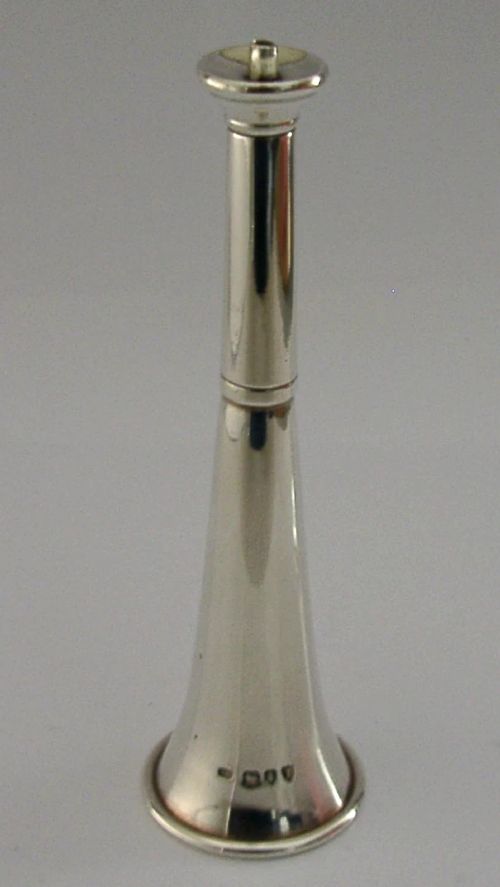
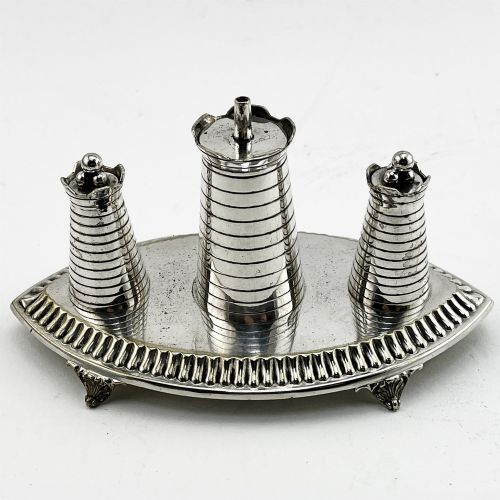
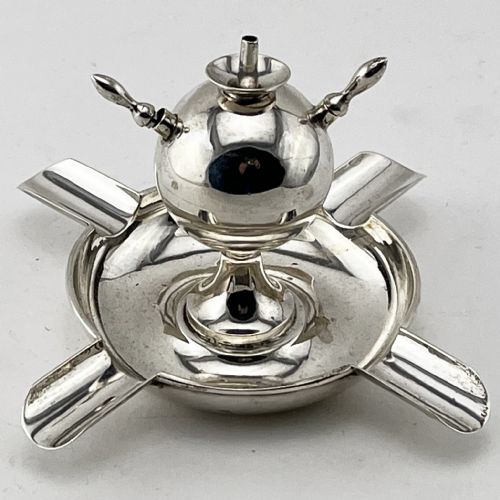
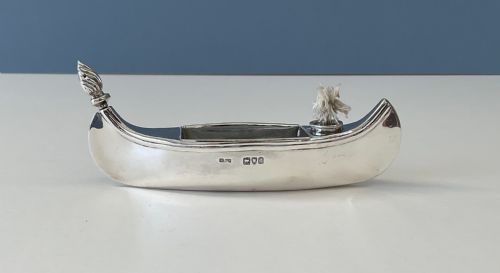
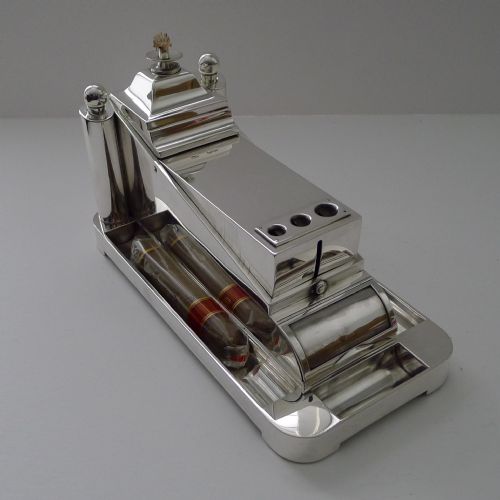
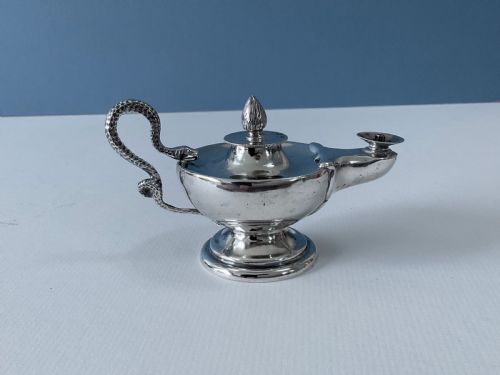
When you search for a victorian cigar lighter, you encounter functional smoking equipment designed to sit permanently on a table or desk. These objects range from standard table lighters to elaborate novelty forms shaped like hunting horns, canoes, and Aladdin's lamps.
The versions most commonly met on this page include sterling silver and silver-plated pieces created during the nineteenth century. Makers applied styles spanning from classical revival to Victorian novelty, resulting in items that double as decorative ornaments for the home.
Materials and construction
Silversmiths utilised sterling silver and silver plate over base metals, shaping the housings through casting and smithing techniques. Components frequently incorporated fabric wicks to sustain the flame, alongside cut glass reservoirs and horn details.
Makers integrated complex mechanisms into smoking compendiums, cigar boxes, and wheeled fire carriage novelties. These constructions required precise metalworking to form lidded compartments and functional tabletop vessels.
Victorian Cigar Lighter Retail Price Guide 2026
Typical asking prices for victorian cigar lighter among the pieces listed under this phrase on Sellingantiques today, from the lower quarter to the upper quarter. They describe what is for sale here now, not the wider market.
The listings exclusively feature nineteenth-century pieces, spanning the Victorian and Edwardian periods with materials including sterling silver, horn, and cut glass.
Quality and execution
The distinction between standard production and top-tier execution rests on the ambition of the silver design and the precision of the novelty form. Pieces modeled as distinct objects like hunting horns or canoes demonstrate greater sculptural investment than simple receptacles.
Maker attribution elevates the standing of a piece, with documented workshops displaying superior chasing and structural integrity. Material choice also divides the range, where heavy gauge sterling silver outpaces silver plate in durability and substance.
Braham·Goldsmith & Silversmith·Wright & Davies London·Elkington
The Victorian Cigar Lighter Glossary
- Sterling silver
- A silver alloy containing 92.5 percent pure silver by mass, frequently encountered in these table pieces. It provides a durable and lustrous surface for intricate maker marks and decoration.
- Silver plate
- A layer of silver applied to a base metal core, such as nickel silver. This technique allowed manufacturers to produce decorative items at a lower cost.
- Smoking compendium
- A multi-functional tabletop set that houses smoking accessories together in one unified design. These often combine lighters with cigar boxes or storage compartments.
- Fabric wick
- The fibrous cord drawn through the fuel reservoir to sustain a steady flame. It forms the essential operational element of the lighter.
- Novelty table lighter
- A lighter fashioned into a playful or specific representational shape, such as an animal, vehicle, or mythological lamp. These pieces served as visual talking points in gentleman's smoking rooms.
Victorian Cigar Lighter: Frequently Asked Questions
How were these lighters used?
They sat permanently on desks, smoking tables, or sideboards within drawing rooms and libraries for guests and owners to utilise. A fabric wick drew fuel from an internal reservoir to maintain a ready flame.
Many designs formed part of larger smoking compendiums that held cigars and matches alongside the lighting mechanism.
How do you style them today?
You can display these items on coffee tables, bookshelves, or bar carts as sculptural metalwork objects. Their distinct novelty shapes make them effective focal points among modern interior decor.
They pair well with other antique smoking accessories, trays, or glassware to create curated tabletop arrangements.
How can you tell periods apart?
Dating relies on maker marks, hallmarks, and stylistic indicators associated with the nineteenth century. Victorian designs often incorporate classical revival motifs alongside elaborate novelty forms.
Later Edwardian examples introduce subtle shifts in proportion and decorative tastes compared to mid-Victorian productions.