





Bronze Putto Statuette
A bronze putto statuette brings classical charm to a room, capturing winged mythological children in solid bronze, marble, and ormolu.
Bronze Putto Statuette
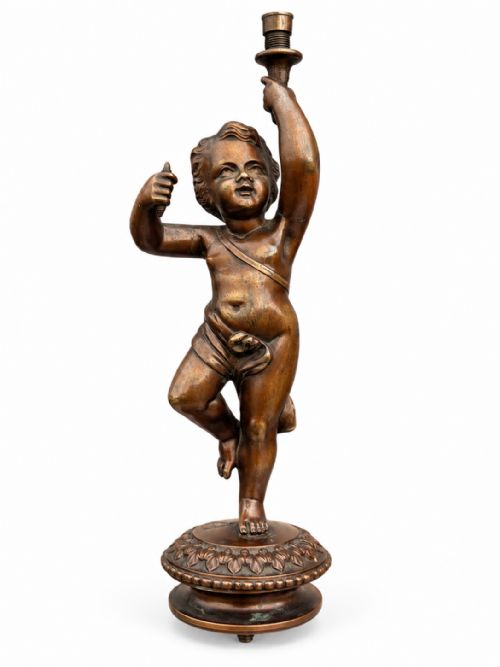
A bronze putto statuette is a small figurative sculpture depicting a winged child, cherub, or amorino, frequently associated with classical mythology, harvest allegories, or romantic themes. These pieces take the form of standalone figures, companion pairs, or functional items such as table lamps and cigar lighters.
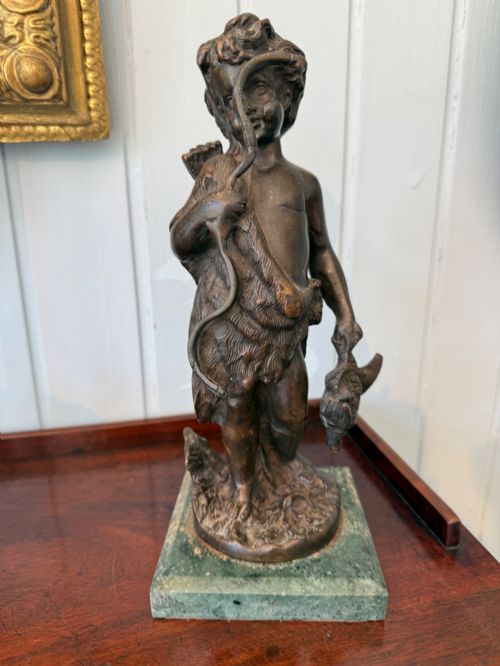
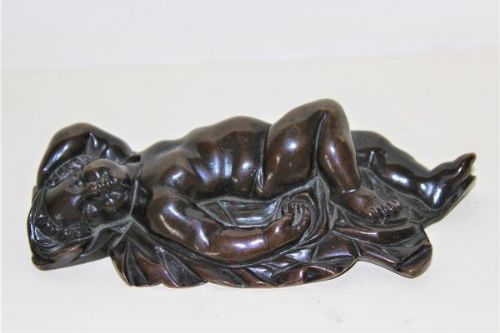
The versions most commonly met on this page originate from nineteenth-century France, Victorian Britain, and the Italian Grand Tour, reflecting revivalist tastes of the 1860s to the 1890s. They appear modelled in various poses, including hunters, resting children, or figures accompanied by animals.
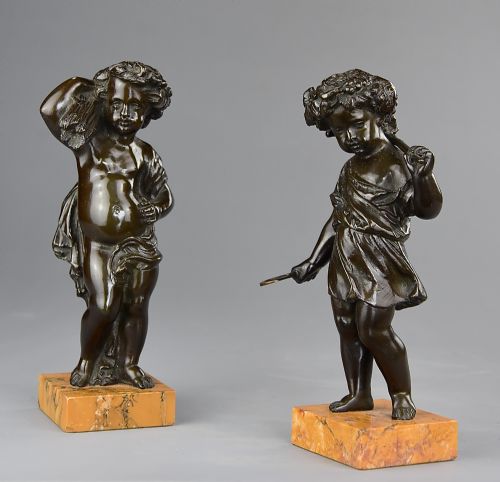
Many of these bronze putto statuettes sit upon mounted bases of marble or inlaid wood, adding weight and architectural presence to the small figures. Their styling draws heavily on Neoclassical and Rococo Revival idioms, often echoing the spirited handling of eighteenth-century French sculptors.
How they were made
These statuettes are produced using traditional casting methods in solid bronze or patinated bronze, frequently enhanced with fire-gilding known as ormolu. Artisans chased and detailed the metal surfaces by hand after casting to define hair, wings, and facial expressions.
Many nineteenth-century examples incorporate contrasting materials, pairing dark patinated or gilt bronze figures with polished marble plinths. Later adaptations into table lamps involve wiring through the bronze figure or base, altering the original sculptural intent for domestic utility.
Bronze Putto Statuette Retail Price Guide 2026
Typical asking prices for bronze putto statuette among the pieces listed under this phrase on Sellingantiques today, from the lower quarter to the upper quarter. They describe what is for sale here now, not the wider market.
One cherub holds a bow while others wrestle with cats and dogs or nap peacefully.
What varies in quality
The refinement of the chasing work and the clarity of the cast details separate simpler studio output from finer sculptural studies. Superior pieces exhibit lively anatomical modeling, crisp feather work on the wings, and subtle variations in the surface patina.
The quality of the secondary materials, such as heavy veined marble bases and intricate ormolu mounts, dictates the overall ambition of the piece. Grand Tour and French revival bronzes often display greater sculptural depth and artistic ambition compared to utilitarian items like cigar lighters.
Dumond·Claude Michael Clodion
The Bronze Putto Statuette Glossary
- Putto
- A chubby, naked male child figure found in classical art, often winged and sometimes confused with cherubs or amorini. They frequently appear in sixteenth-century and later revival works as playful mythological attendants.
- Ormolu
- Finely ground high-carat gold applied to a bronze object using a mercury amalgamation technique, yielding a rich golden finish. This decorative treatment is typical of French decorative arts.
- Patinated bronze
- Bronze that has been chemically treated to alter its surface colour from bright metallic brown to darker, greenish, or black tones. This treatment protects the metal and accentuates sculptural contours.
- Grand Tour
- A traditional trip through Europe, chiefly Italy, undertaken by wealthy young men in the eighteenth and nineteenth centuries to study classical art. Souvenirs included small bronzes modeled after antique statuary.
- Neoclassical
- A style spanning the mid-eighteenth and nineteenth centuries that drew inspiration from the classical art and culture of ancient Greece and Rome. It emphasises proportion, restraint, and classical motifs.
Bronze Putto Statuette: Frequently Asked Questions
What is a bronze putto statuette?
A bronze putto statuette is a small metal sculpture representing a winged child or cherub, popular during the nineteenth century in various European workshops.
These figures often draw on classical mythology and French revival styles, serving as decorative ornaments or functional desk items.
Where were these bronze puttos made?
The pieces available typically originate from France, Britain, and Italy during the Victorian period and the late nineteenth century.
Many reflect the influence of French sculpture or are produced as souvenirs for travellers on the Grand Tour.
How do I identify a nineteenth-century piece?
Nineteenth-century pieces often display specific casting textures, natural patination, and mounting styles characteristic of Victorian or French foundry work.
Examinations of the base materials, such as heavy marble plinths or inlaid wood, provide additional clues to the era of production.
Can these statuettes be used as lamps?
Some nineteenth-century bronze putto figures were later converted into table lamps or fitted with electrical components for domestic use.
These conversions integrate functional lighting into the antique bronze structure, altering the original statuette form.