






Vintage Oil Lighter
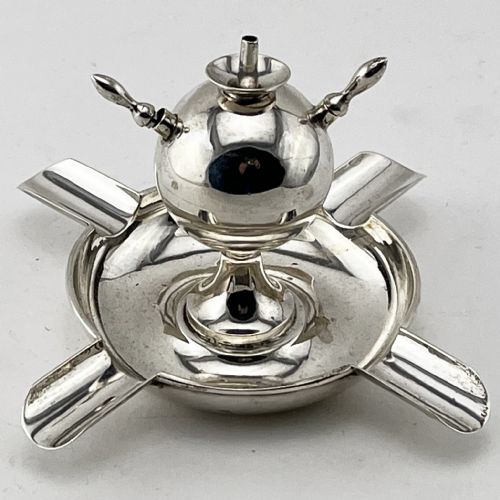
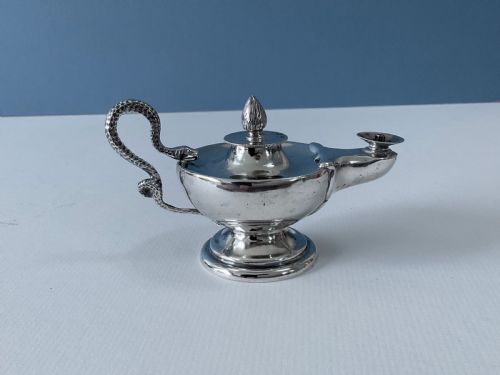
These vintage oil lighter examples range from Victorian novelty pieces to Art Nouveau lamps, built to sit on a table and burn fuel with a wick.
Vintage Oil Lighter
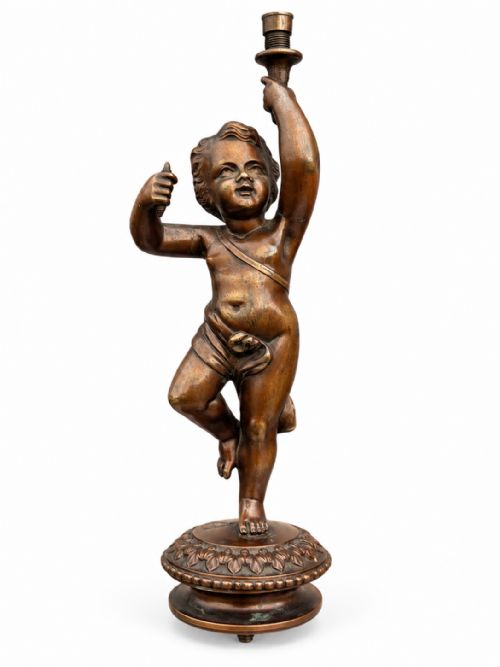
When someone searches for a vintage oil lighter, they find smoking accessories designed for tabletop use rather than pocket carry. These substantial objects date across the Victorian, Edwardian, and later periods, taking forms that range from classical oil lamps to novelty shapes.
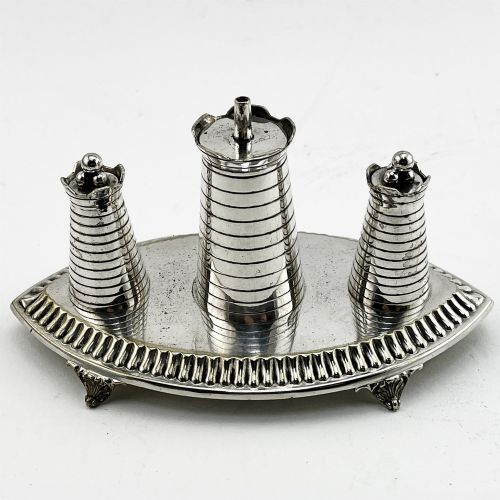
Stylistically, these pieces mirror the broader design movements of their decades, moving from Classical Revival and Victorian Novelty through Art Nouveau to Art Deco. Buyers encounter everything from simple trefoil vessels to architectural castle designs.
How they were made
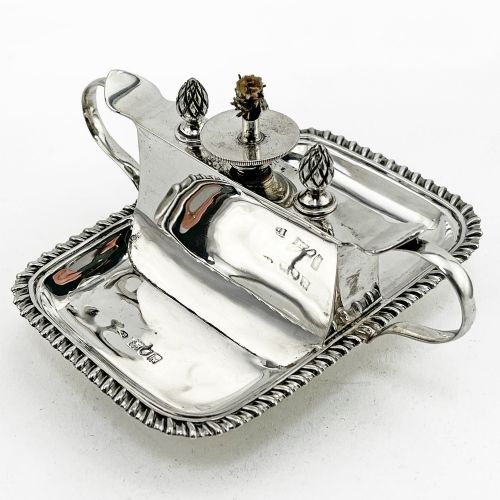
Silversmiths and metalworkers shaped these table lighters using sterling silver, silver plate, and solid bronze, often incorporating cotton wicks to draw the fuel. The metal body holds the oil reservoir, with a burner mechanism mounted on top.
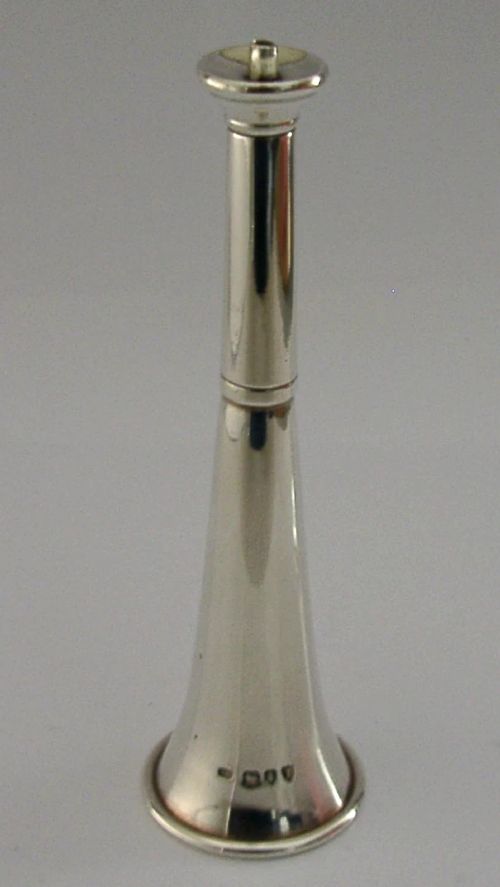
Foundries and workshops employed casting and silversmithing techniques to produce decorative novelty shapes such as hunting horns, foxes, and miniature oil lamps. Surface decoration relies on classical embossing, chased detailing, and smooth polished metal finishes.
Vintage Oil Lighter Retail Price Guide 2026
Typical asking prices for vintage oil lighter among the pieces listed under this phrase on Sellingantiques today, from the lower quarter to the upper quarter. They describe what is for sale here now, not the wider market.
Some Victorian smokers clearly enjoyed setting fire to a brass fox hunting horn when all they actually wanted was a light for a cigar.
What varies in quality
The distinction between ordinary and superior examples lies in the crispness of the casting and the weight of the metal used in construction. Substantial pieces with heavy gauge silver or solid bronze retain their structural integrity and detail much better over time.
Artistic attribution and novelty execution also separate basic items from high-end pieces, particularly when a recognised maker or specific design movement is involved. Sculptural fidelity in figural items and the balance of the overall form dictate the upper tier of quality.
BRAHAM·Goldsmith & Silversmith·Jan Eisenlöffel·WMF·Comyns·Elkington
The Vintage Oil Lighter Glossary
- Table lighter
- A stationary smoking accessory designed to sit on a desk, dining table, or smoking stand. Unlike pocket versions, these require both hands to operate and often hold significantly more fuel.
- Sterling silver
- An alloy containing a high proportion of pure silver, widely used by British silversmiths for domestic and luxury goods. It carries hallmarks to indicate the standard, maker, and assay office.
- Silver plate
- A base metal such as copper or nickel silver coated with a thin layer of pure silver. This technique allowed makers to offer larger decorative items at a lower cost than solid silver.
- Novelty
- An object shaped to resemble something entirely unrelated to its actual function, such as a hunting horn, animal, or classical lamp. These playful designs were popular conversation pieces in Victorian and Edwardian interiors.
- Trefoil
- A three-lobed decorative shape often seen in the footprint or rim of tableware and lighting accessories. The motif appears frequently in gothic and classical revival designs.
Vintage Oil Lighter: Frequently Asked Questions
How do vintage table lighters work?
These pieces contain an internal reservoir filled with oil, which feeds a cotton wick held in a burner at the top. A separate cap on a small chain is usually lifted off to expose the wick for lighting.
Once lit, the flame stays burning until the snuffer cap is placed back over the wick to extinguish it. They function similarly to small spirit lamps rather than modern butane mechanisms.
Were these used for cigars?
Many larger tabletop models were specifically designed for lighting cigars and pipes after dinner in formal rooms. The stable base allowed them to sit safely on a table while guests reached over to light up.
Their substantial fuel capacity meant they could burn for longer periods during gatherings without needing constant refilling.
How do I date a silver table lighter?
British pieces in silver usually carry hallmarks stamped directly into the metal, indicating the assay office, standard, and date letter. These marks provide an exact year of manufacture for the body of the lighter.
Items without hallmarks are dated by their style, material, and construction methods, comparing them against known design periods like Art Nouveau or Victorian revival.
How should I display a table lighter?
These decorative objects work well placed on sideboards, coffee tables, or desk surfaces where their sculptural forms can be appreciated. Their novelty shapes and polished metal surfaces make them natural focal points in a room.
Keep them away from direct sunlight and damp conditions to protect the metal finish and any internal cotton wicks.