

Victorian Chesterfield Settee
When you search for a victorian chesterfield settee, you are looking at deep-buttoned English seating built for long hours of comfortable repose.
Victorian Chesterfield Settee
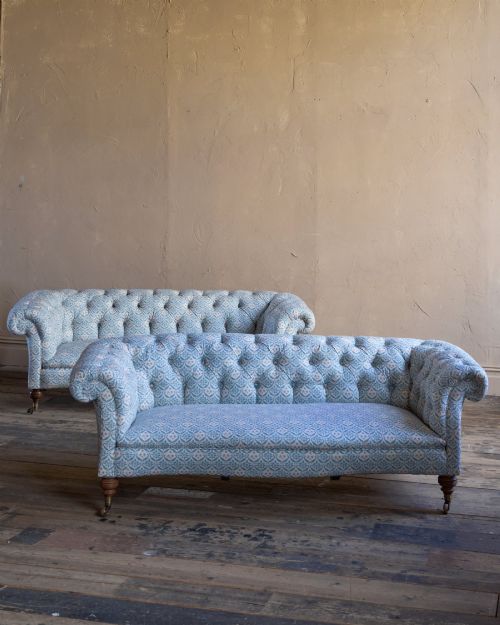
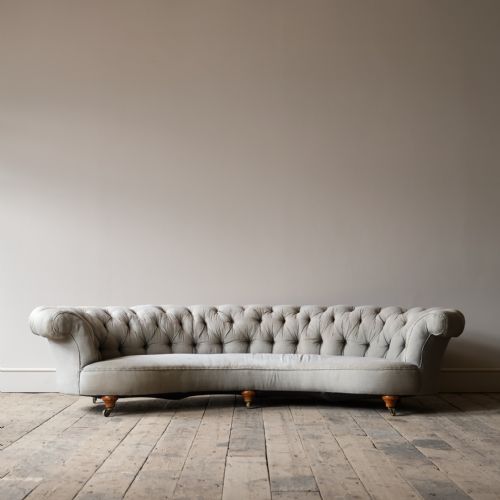
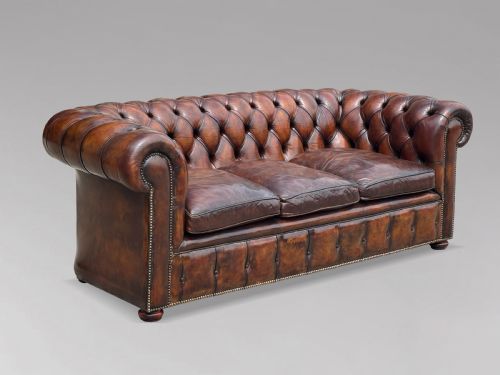
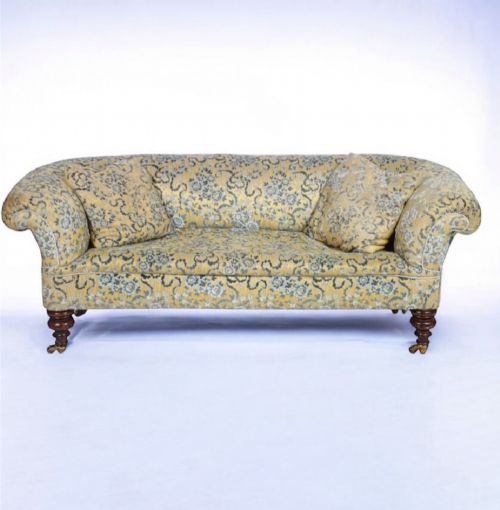
The victorian chesterfield settee is a traditional upholstered seating form originating in the nineteenth century, most commonly encountered as a deep-buttoned leather or fabric sofa. These pieces appear in forms ranging from standard two and three-seater models to drop-end versions and corner arrangements.
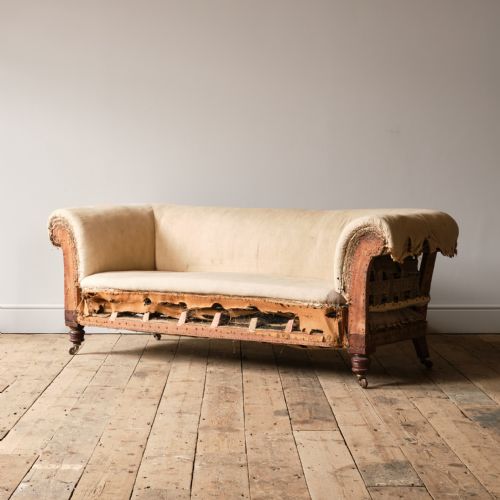
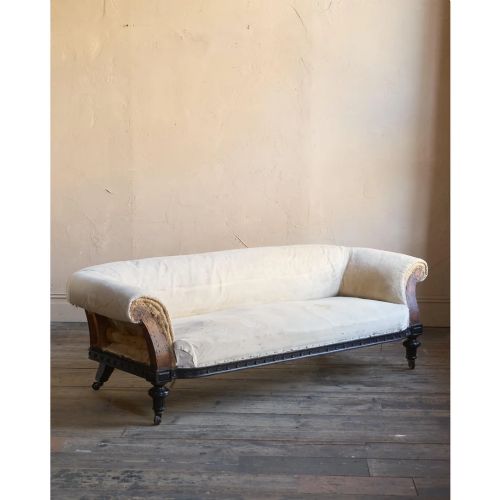
Makers and workshops constructed these settees with generous proportions and low backs, frequently designed for country houses, drawing rooms, and club environments. Examples survive with both wood show frames and fully upholstered profiles.
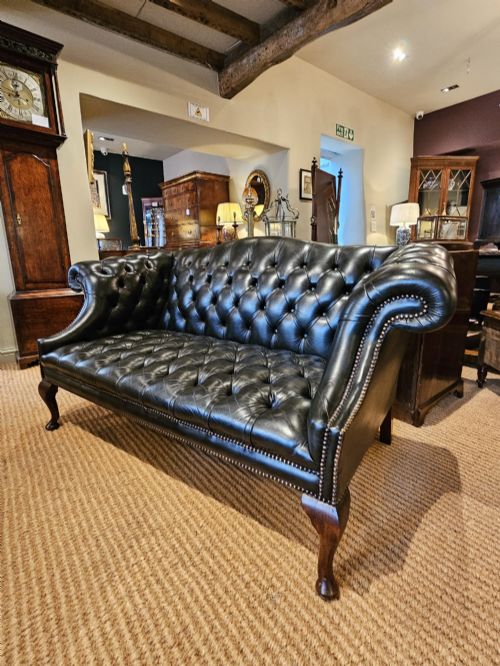
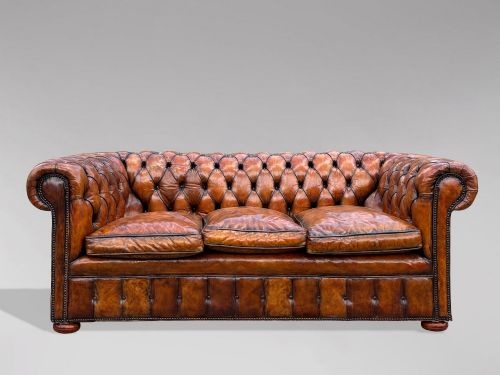
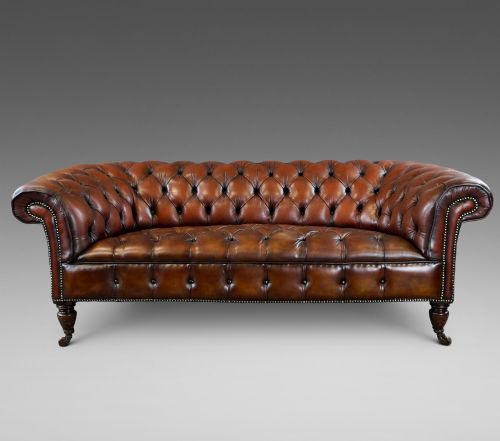
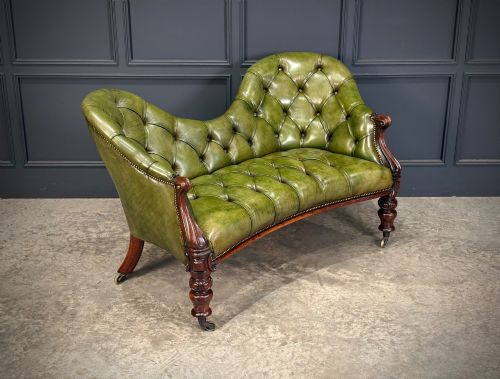
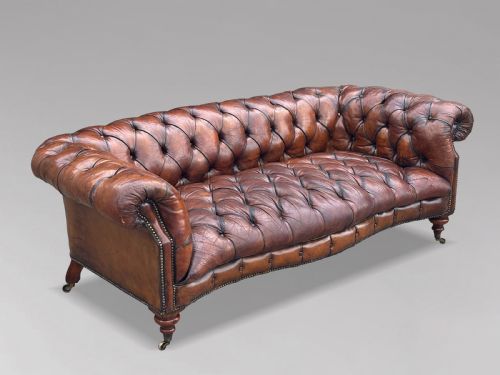
The prevailing format on this page is the nineteenth-century Victorian leather couch, often featuring buttoned upholstery and turned wooden supports.
What varies in quality
The distinction between standard workshop production and superior output rests in the integrity of the timber frame and the depth of the hand-carved details. Pieces associated with noted makers exhibit finer proportions and superior joinery in the hidden structural elements.
Leather quality and the execution of the deep buttoning dictate the visual impact of the upholstery. Original un-restored surfaces and hand-dyed finishes retain a greater integrity than later replacements.
Listings feature 19th Century, Victorian, Edwardian, and 1930s periods, utilising materials including mahogany, walnut, brass, leather, and velvet.
Howard and Sons·Hampton and Sons·Jas Shoolbred·Gillows
The Victorian Chesterfield Settee Glossary
- Chesterfield
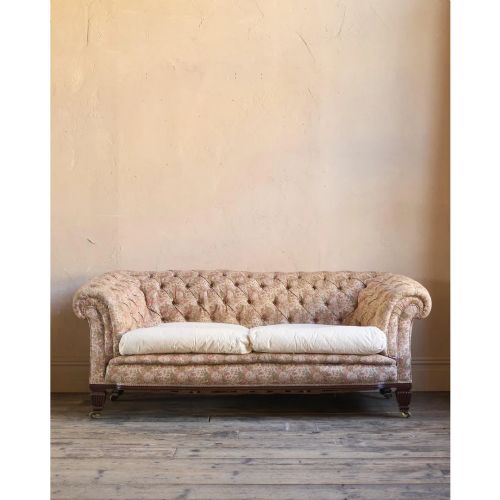
- A traditional style of upholstered sofa or settee characterised by arms and back of the same height and deep buttoning. This form has remained a staple of English interior seating since the nineteenth century.
- Drop End
- A movable or hinged arm mechanism that allows one side of the settee to be lowered into a daybed position. These mechanical variations provide versatility in nineteenth-century seating layouts.
- Button-Back
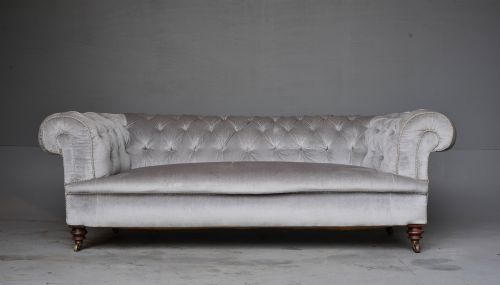
- An upholstery method where tufts or buttons are pulled deep into the padding to create a diamond pattern. This technique secures the internal stuffing while providing structural support.
- Show Frame
- An exposed wooden structural frame, often carved from walnut or mahogany, that surrounds the upholstered body. It distinguishes decorative timber-framed settees from fully covered upholstered examples.
Victorian Chesterfield Settee: Frequently Asked Questions
How do I date a victorian chesterfield settee?
Dating relies on examining the framing timbers, secondary woods, and the style of the turned feet or castors. Mid-nineteenth-century examples often display denser mahogany frames, whereas later pieces shift towards lighter hardwoods.
The upholstery technique and webbing also offer clues, though many pieces have undergone re-covering over the decades to maintain their utility.
Are all chesterfield settees made of leather?
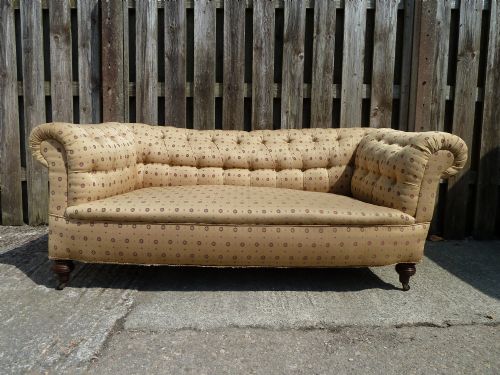
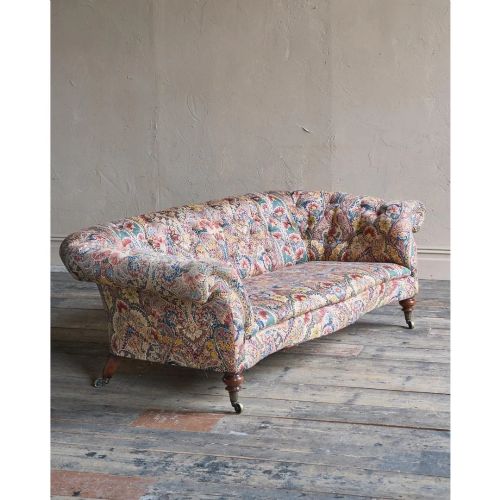
While leather is the material most frequently associated with these pieces, original examples frequently utilised velvet, calico linen, and heavy woven fabrics. Country house interiors often specified fabric upholstery to match specific drawing room schemes.
Leather versions survived heavily in public houses, snooker halls, and gentlemen's clubs due to their durable nature.
How do I care for antique leather upholstery?
Preserving antique leather involves maintaining ambient humidity levels away from direct heat sources to prevent the hide from drying out. Gentle cleaning with appropriate conservation waxes helps sustain the hand-dyed finish.
Avoid modern chemical detergents that can strip the original patina accumulated over the nineteenth and twentieth centuries.