


Victorian Champleve Enamel
Victorian champleve enamel brings together cast metal and fused glass to create heavy, decorative mantel clocks, mirrors, and desk pieces.
Victorian Champleve Enamel
When searching for victorian champleve enamel, buyers encounter heavy ornamental objects produced in France during the nineteenth century. These items combine metal foundations with coloured glass pastes fired into recessed channels.
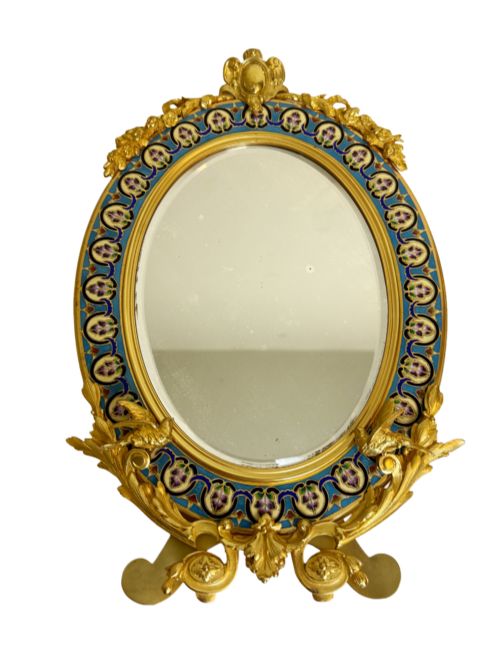
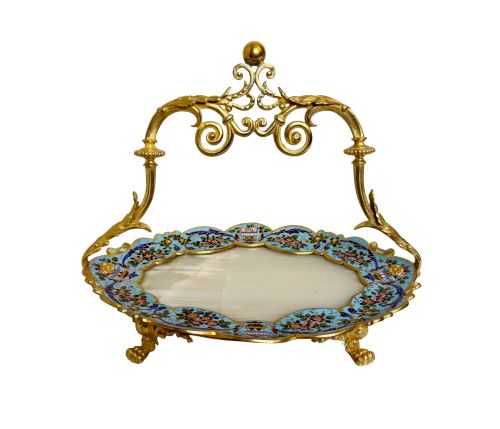
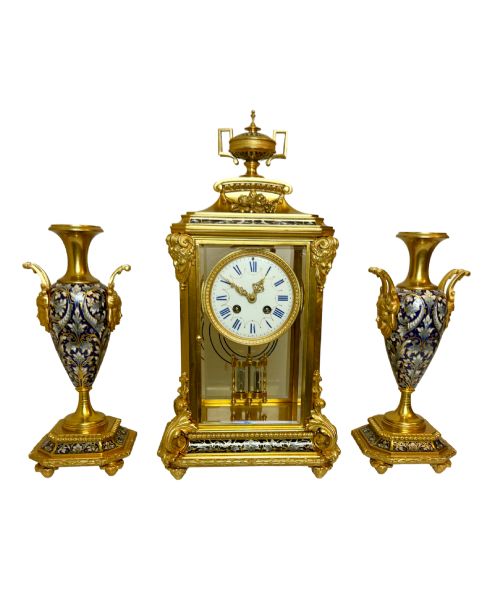
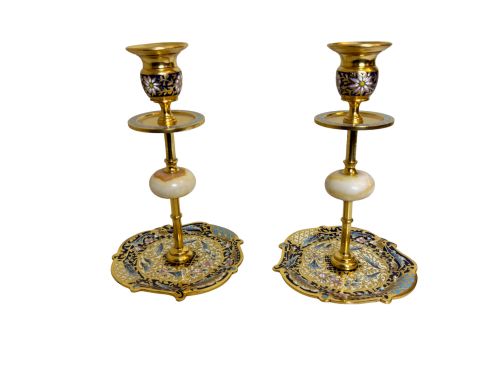
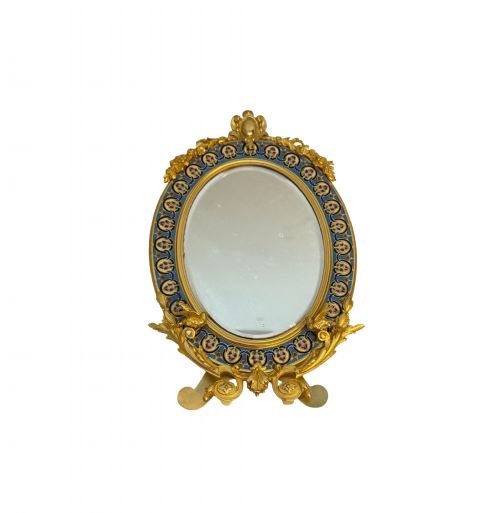
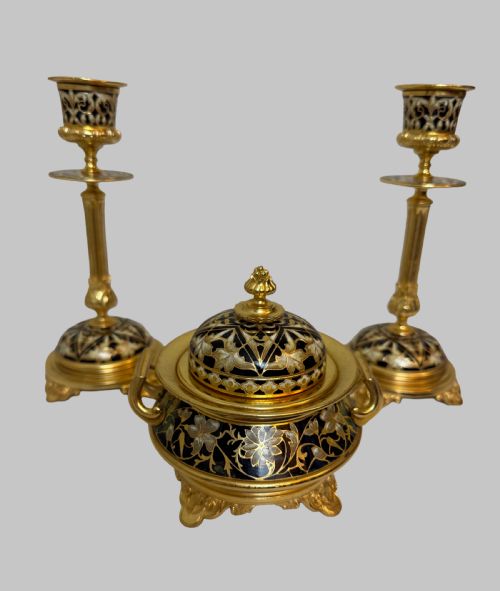
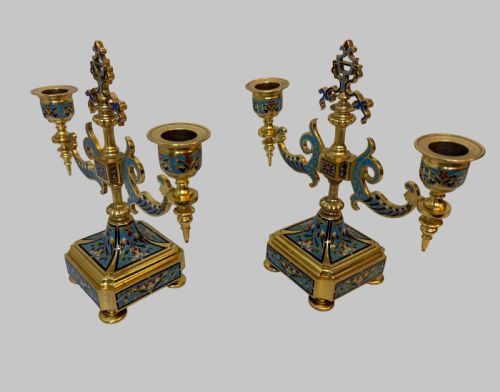
The version most commonly met on this page is the French mantel clock or clock garniture, frequently accompanied by matching candelabra, desk inkwells, and tabletop mirrors. These domestic accessories reflect nineteenth century revival styles, drawing on Rococo, Second Empire, and architectural motifs.
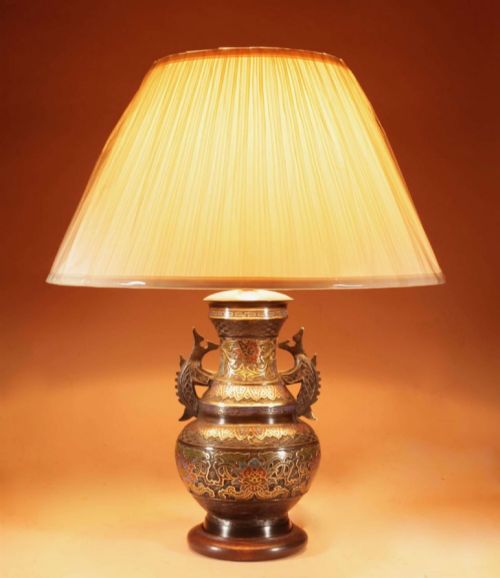
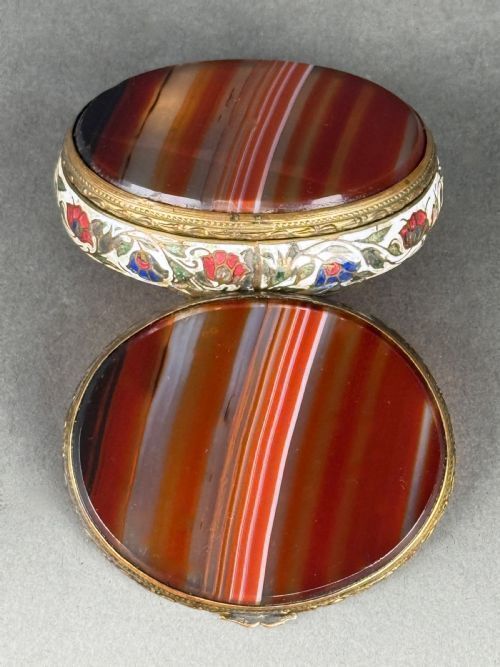
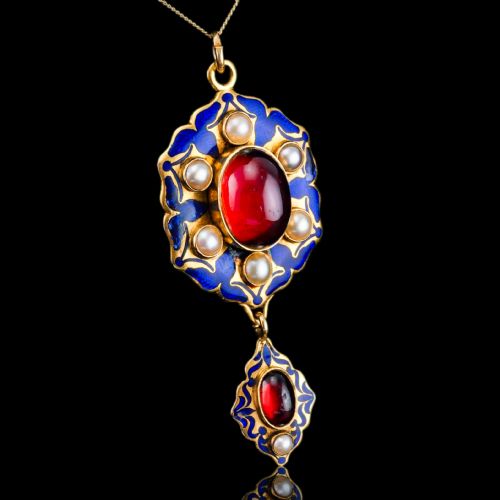
Beyond clocks and furnishings, the material appears in smaller personal items such as pill boxes, picture frames, and pendant necklaces. The underlying forms rely on cast bronze, brass, and gilt metals to support intricate patterned compartments.
How they were made
The manufacture of these objects starts with a foundation of cast bronze, brass, or gilt metal, often referred to as ormolu. Artisans carve or cast depressed cells directly into the metal surface to receive powdered glass compositions.
Coloured glass enamels are packed into these prepared channels and fired in a kiln until the paste melts and fuses to the metal walls. Subsequent grinding and polishing bring the cooled enamel surface flush with the surrounding metal mountings.
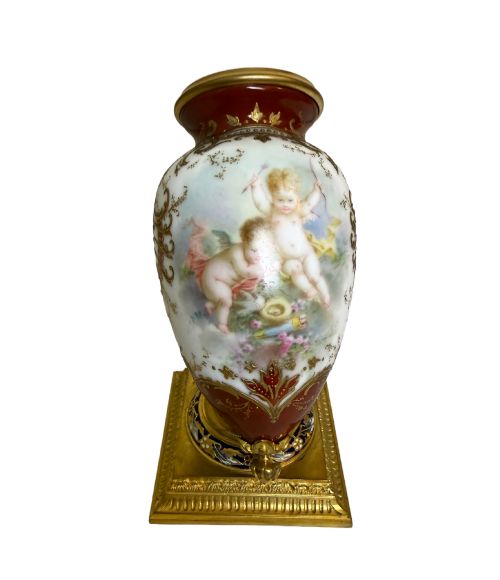
Many of these decorative pieces incorporate secondary materials alongside the enamelled panels. Onyx bases, banded agate, hand-painted porcelain plaques, and set gemstones frequently complement the champleve surfaces.
Listings feature items dated from 1870 to 1910, incorporating materials such as gilt bronze, onyx, porcelain, and glass.
What varies in quality
Quality in these pieces rests upon the precision of the metal casting and the depth of the enamel work. Finer examples display crisp, deeply chased bronze mounts with securely fitted glass panels that sit evenly within their designated compartments.
The intricacy of the colour palette and the complexity of the geometric or floral patterns also separate standard items from superior works. Pieces created by established makers exhibit meticulous finishing on hidden undersides and integrated movement mechanisms.
Le Roy and Fils·Samson
The Victorian Champleve Enamel Glossary
- Champleve enamel
- A technique where troughs or cells are hollowed out of a metal surface and filled with vitreous enamel before firing. This method creates flat or slightly raised patterns defined by thin metal lines.
- Gilt bronze
- Bronze metal that has been coated with a thin layer of gold using fire gilding or electroplating methods. It provides a durable, lustrous golden finish to decorative frames and clock mounts.
- Ormolu
- A term applied to gilded bronze furniture mounts and decorative objects produced in France. The word derives from the French for milled or ground gold.
- Clock garniture
- A set consisting of a mantel clock accompanied by matching side ornaments such as candelabra, vases, or urns. These matched groupings were designed to decorate a fireplace mantelpiece.
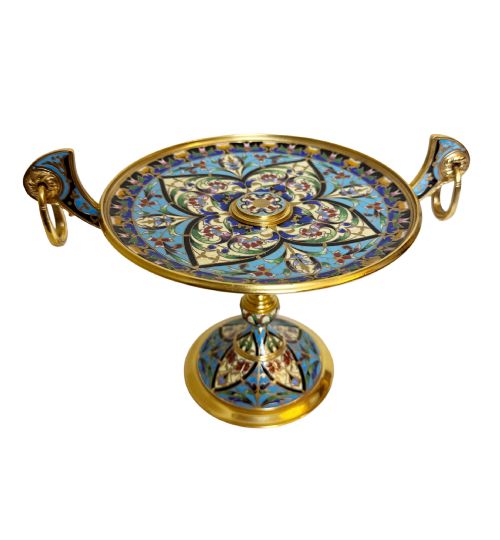
- Tazza
- A shallow ornamental cup or saucer mounted upon a stem and foot. They are typically cast in bronze or brass and decorated with enamel panels.
Victorian Champleve Enamel: Frequently Asked Questions
What is champleve enamel?
Champleve enamel is a decorative technique where channels are carved into a metal base like bronze or brass. Coloured glass paste is packed into these depressions and fired until it fuses firmly with the metal.
Once cooled, the surface is ground smooth so the metal outlines form a crisp pattern around the coloured glass. This method creates durable, richly patterned surfaces found on nineteenth-century clocks and desk accessories.
How do you date these pieces?
Dating these decorative items relies on stylistic clues, mechanical signatures, and manufacturing methods associated with the nineteenth century. Many French pieces carry maker stamps or movement numbers on the interior brass clockworks.
Stylistic shifts from Rococo revival designs to later Belle Epoque or architectural motifs help narrow down the production decade. Comparing the mounting styles and secondary materials like onyx or porcelain provides further chronological context.
Where were they made?
The majority of these enamelled objects originated in France, particularly around Paris, which served as a major centre for luxury metalwork and clockmaking. Workshops produced extensive ranges of domestic garnitures for export and domestic markets.
Japanese and oriental influences also appear in select bronze and enamel designs from the late nineteenth century. These pieces reflect the period's widespread interest in international decorative arts.
How do I care for champleve enamel?
Caring for these items involves protecting both the fragile glass enamel and the underlying metal mounts from moisture and harsh cleaning agents. Dusting gently with a dry, soft cloth is usually sufficient for routine maintenance.
Avoid using liquid polishes on the enamelled sections, as abrasives can scratch the glass or degrade the metal partitions. For mechanical clocks, professional servicing ensures the internal gears continue running accurately.