




Gilded Metal Candelabra
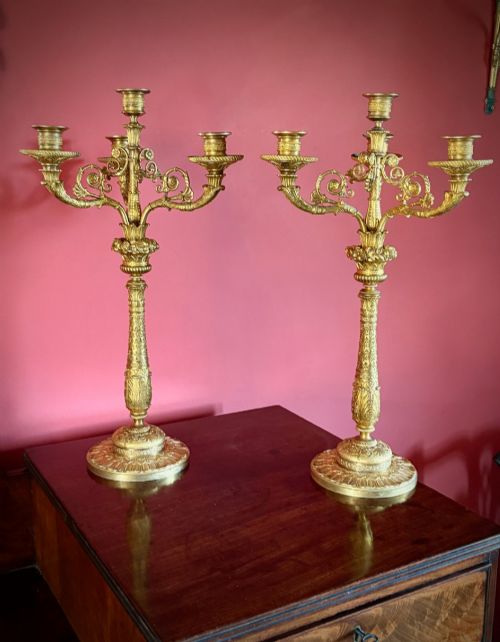
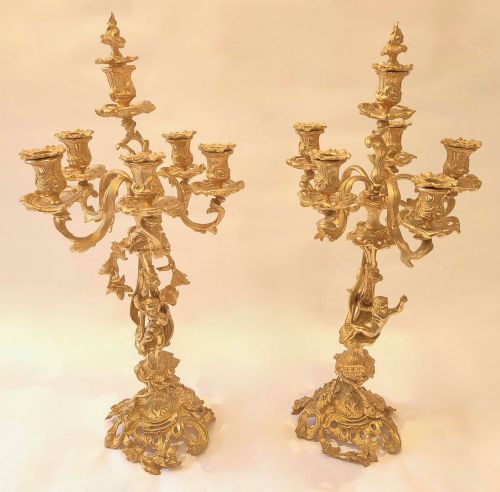
These gilded metal candelabra are nineteenth-century multi-light candleholders in ormolu and gilt bronze, prized for their decorative presence on mantels and sideboards.
Gilded Metal Candelabra
Gilded metal candelabra encompass nineteenth-century multi-light candleholders designed for formal domestic interiors and altar use. Buyers searching for gilded metal candelabra encounter matched pairs alongside larger clock garniture sets and wall sconces.
The selections span French Rococo Revival, Louis XVI style, Victorian, and Charles X aesthetics. Many examples combine cast gilt bronze and ormolu with contrasting materials such as white marble or porcelain.
Forms range from two-light wall lights to substantial six-candle table candelabra. French workshops dominate the available groupings, frequently employing Arabic or Moorish revival decorative motifs alongside traditional neoclassical themes.
Materials and Construction
Construction relies on cast bronze, brass, and mixed gilded metals finished with mercury gilding or modern electroplating methods known as ormolu. These metal foundations are frequently mounted on bases carved from white marble or alabaster.
Divergent elements incorporate hand-painted porcelain components and intricate champlievé enamel detailing. Chased surface enrichment defines the better pieces, adding crisp relief to scrolling foliage and figural motifs.
Several pairs boast six candle branches, ensuring your dining table enjoys adequate nineteenth-century illumination.
Assessing Quality and Execution
Quality rests primarily in the crispness of the metal chasing and the depth of the original gilding. Finer specimens display sharply rendered foliage and smooth, hand-finished surfaces rather than soft, mass-produced contours.
The integration of secondary materials such as marble and porcelain influences the overall dignity of the object. Heavy, stable casting and cohesive design across matched pairs distinguish superior examples from standard production.
The Gilded Metal Candelabra Glossary
- Ormolu
- Gilded bronze produced through an mercury amalgamation process or later electroplating techniques. This finish imparts a brilliant golden lustre to the cast metal.
- Gilt Bronze
- Bronze metal treated with a thin layer of gold applied by fire gilding or chemical means. It forms the primary structural body for many nineteenth-century lighting pieces.
- Clock Garniture
- A decorative set comprising a mantel clock flanked by matching candelabra or urns. These ensembles formed the visual centrepiece of Victorian and continental mantelpieces.
- Champlievé
- An enamelling technique where troughs are dug into the metal surface and filled with vitreous enamel before firing. It appears on revival pieces from the later nineteenth century.
- Candelabra
- A branched candlestick designed to hold multiple tapers simultaneously. They are typically symmetrical and stand on an articulated base.
Gilded Metal Candelabra: Frequently Asked Questions
What periods do these candelabra date from?
The available pieces date entirely from the nineteenth century, with specific examples recorded from the eighteen-sixties, seventies, and eighties.
Stylistic markers such as Charles X, Louis XVI revival, and Victorian design help anchor the exact decade of manufacture.
How were gilded candelabra used originally?
Owners placed them on dining tables, sideboards, and mantelpieces to provide both illumination and decorative splendour during evening gatherings.
Larger multi-light versions and clock sets anchored the focal points of formal nineteenth-century reception rooms.
What materials are combined with the gilding?
Gilt bronze and ormolu frequently appear paired with contrasting elements like white marble, alabaster, and painted porcelain.
Some specialised nineteenth-century items also integrate champlievé enamel details within the metal arms and bases.
How do I identify French pieces?
French origin is indicated by distinct stylistic vocabularies, including Rococo Revival curves and precise Louis XVI neoclassical symmetry.
Many of these objects originate from continental workshops influenced by Arabic revival and nineteenth-century Parisian decorative arts.