
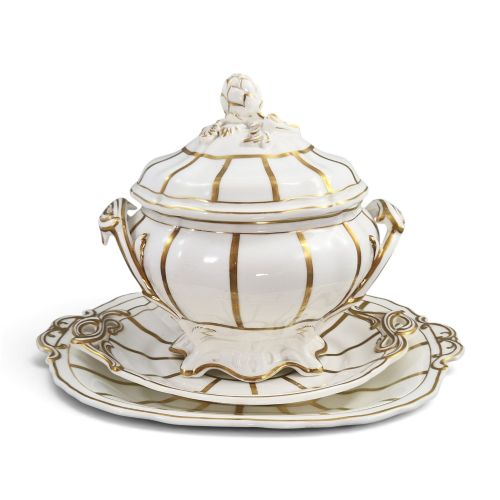
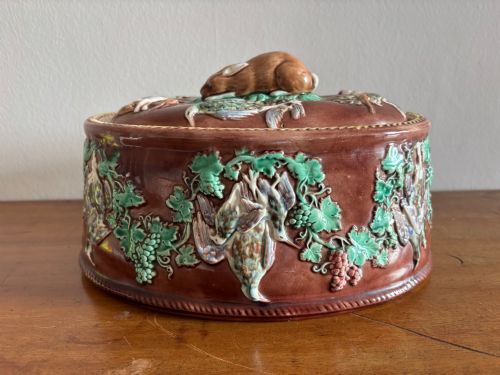
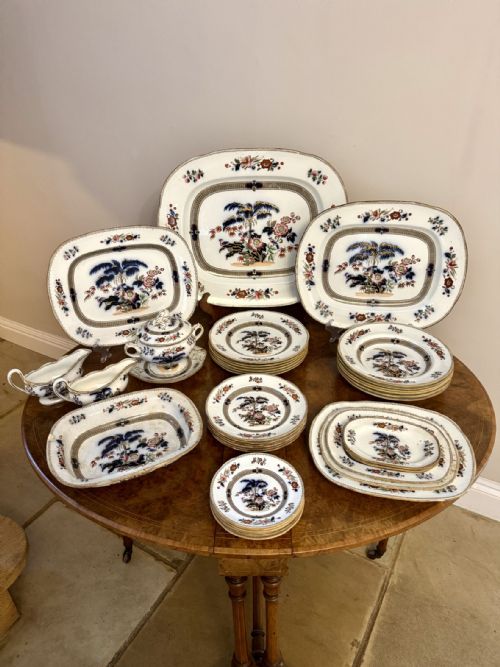
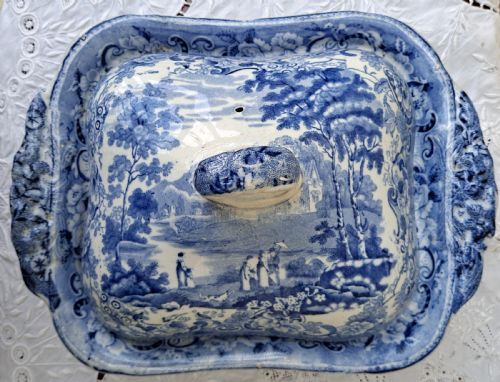
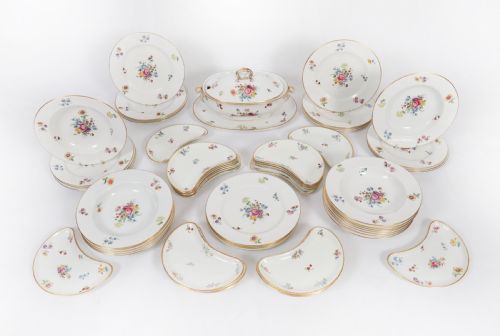
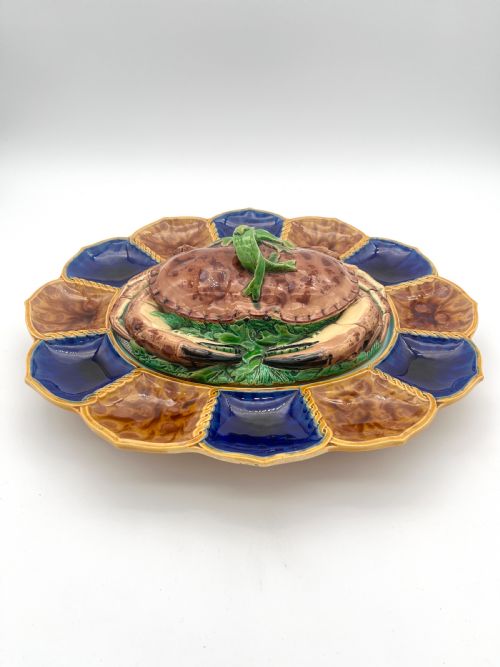


Victorian Ceramic Tureen
A victorian ceramic tureen brings heavy earthenware and intricate transfer print to the dining table, offering robust utility wrapped in nineteenth-century charm.
Victorian Ceramic Tureen
Buyers seeking a victorian ceramic tureen encounter diverse table vessels ranging from large soup servers and lidded vegetable dishes down to individual sauce tureens with matching stands. Game pie dishes and novelty animal egg crocks also appear among the domestic serving ware of the period.
The pieces originate predominantly from nineteenth-century English potteries, spanning earthenware bodies decorated with blue and white transfer print or majolica glazes. Makers from Staffordshire and major factories produced these items for formal dining as well as everyday household service.
Most examples date between the mid and late nineteenth century, reflecting the shifting tastes from rococo revival curves to structured ironstone bodies. Child toy services and miniature tureens demonstrate how domestic dining habits filtered down to smaller scales during the reign.
Materials and Technique
Potters built these vessels using dense earthenware, ironstone, and bone china, applying white glazes that provided smooth surfaces for intricate transfer printing. Flow blue and polychrome enamels added rich colour beneath protective glossy coats.
Moulded details shaped vegetable and animal forms, particularly in majolica and caneware pieces where cabbage leaves and nesting hens required sculptural relief. Gilt highlights and gold leaf often finished the handles and rims of fine dessert and soup tureens.
Listings feature earthenware, ironstone, and porcelain across the nineteenth century, dominated by blue and white transfer print and majolica glazes.
Judging the Standard
Quality rests on the crispness of the moulded relief and the clarity of the transfer print, where blurred lines and smudged blue pigment indicate hurried production. Weight and body density also separate standard ironstone from refined bone china and porcelain.
The preservation of delicate details, such as matching ladles, stands, and original covers, distinguishes complete service pieces from isolated vessels. Hand-painted enamels and well-applied gold leaf remain sharper on better-executed factory pieces.
Davenport Bone China·Wedgwood·James Wallace and Co·Spode·Mintons·Mason·Doulton Burslem·Copeland and Garrett·Turner
The Victorian Ceramic Tureen Glossary
- Ironstone
- A dense, durable type of earthenware patented to resist chipping and heavy kitchen use. It formed the body of many nineteenth-century service dishes.
- Transfer print
- A decorative technique where an engraved copper plate applied ink to tissue paper, which then transferred the pattern onto the ceramic body before firing.
- Majolica
- A colourful lead-glazed earthenware style popular during the Victorian era, known for vibrant tones and naturalistic plant or animal motifs.
- Flow blue
- A cobalt printing style where lime or ammonia vapours caused the blue pigment to blur slightly into the white glaze during the kiln firing.
- Caneware
- A fine stoneware body with a warm, buff-coloured tone resembling the shade of bamboo or unbleached biscuit.
Victorian Ceramic Tureen: Frequently Asked Questions
What is a victorian ceramic tureen used for?
These vessels held hot soups, gravies, vegetables, and game pies at the nineteenth-century dining table, keeping food warm with fitted lids.
They served communal portions during large family dinners before modern individual plating became standard practice.
Can I use these tureens for serving food?
Many ironstone and earthenware vessels remain structurally sound for serving dry foods or warmed dishes during special occasions.
Older glazes containing lead or vulnerable enamels require caution, so many collectors prefer to use them strictly for display.
How do I date a nineteenth-century tureen?
Examine the pottery marks on the base, registration diamonds, and the style of the transfer print to narrow down the decade of manufacture.
Body weight, glaze colour, and whether the piece uses ironstone or softer earthenware also provide strong clues to its age.