


Victorian Dining Tableware
Victorian dining tableware brings together silver, glass and ceramics to set a formal table with nineteenth-century style.
Victorian Dining Tableware
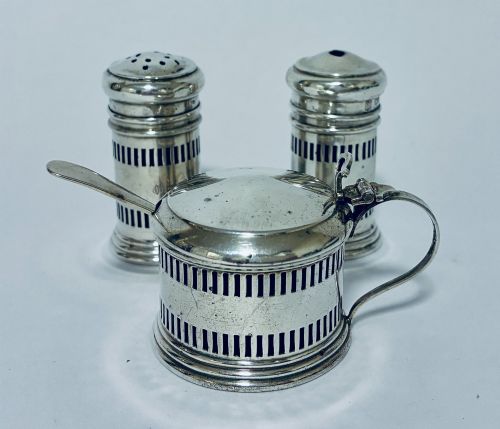
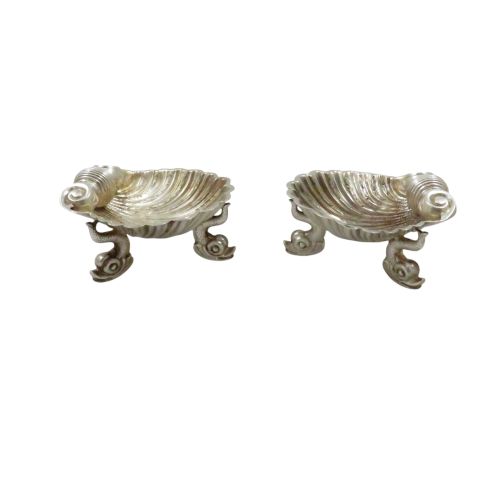
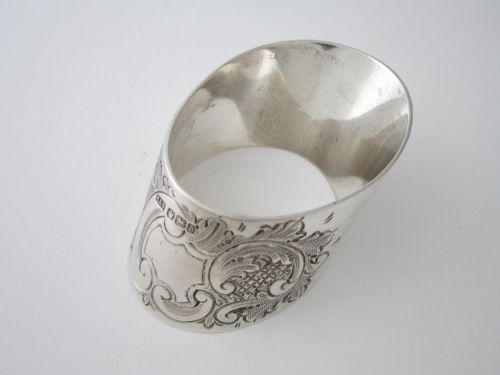
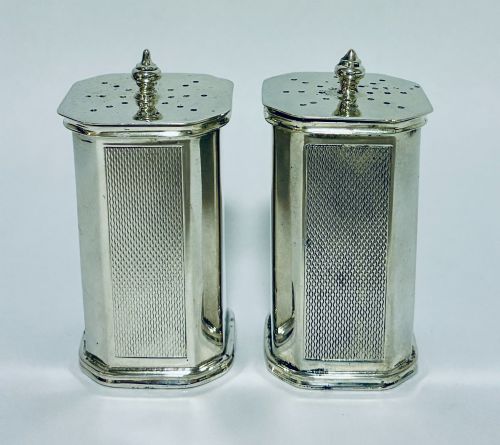
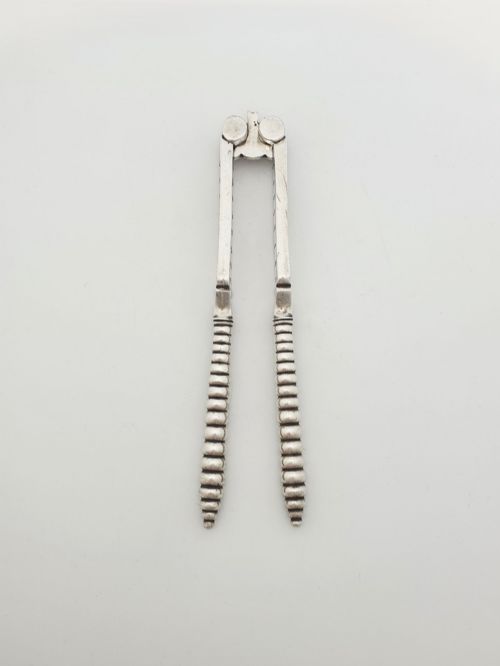
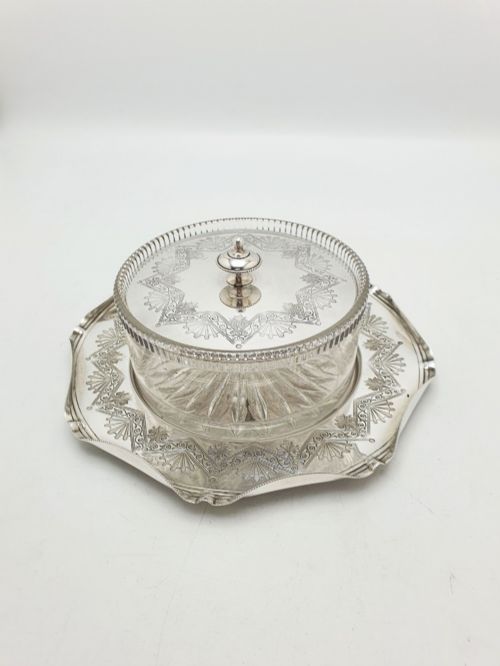
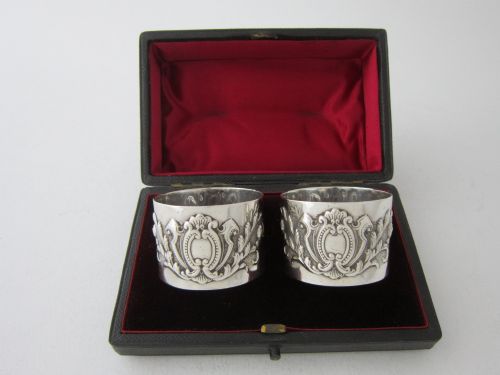
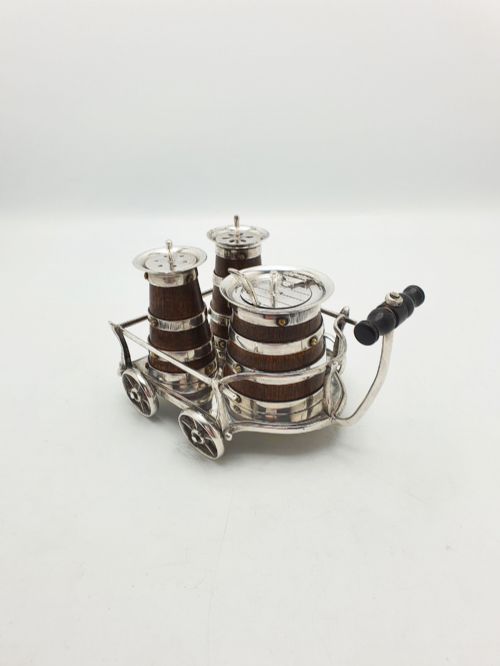
Victorian dining tableware encompasses the salt cellars, cruet sets, napkin rings and grape scissors used during formal nineteenth-century meals. The items span napkin rings, cruet sets, salt cellars, grape scissors, knife rests, menu holders, serveware and condiment sets.
Most pieces seen here belong to the Victorian and Edwardian periods, alongside a few Georgian and early twentieth-century examples. Forms range from practical meat skewers and marrow scoops to decorative spoon warmers and claret jugs.
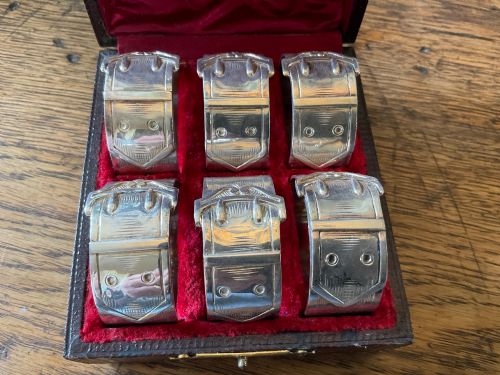
Makers utilise materials such as sterling silver, silver plate, cut glass, ceramic and turned hardwood to create functional dining accessories. Novelty designs shaped like shells, animals and belt buckles appear frequently across the selection.
Materials and construction
Silversmiths shaped sterling silver and silver plate through casting, hammering and chasing to form mustard pots, toast racks and sauce boats. Parcel gilding added contrasting gold tones to the interior of goblets and salts.
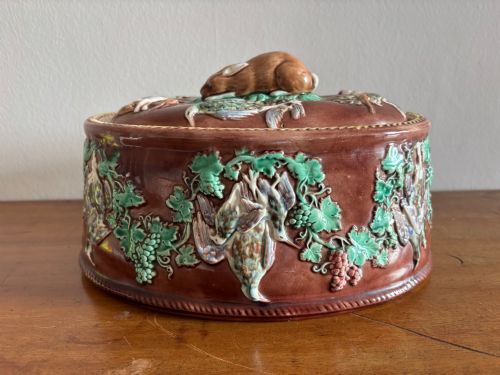
Glassmakers blew and cut crystal for claret jugs, pepper grinders and insert liners, often pairing the glass with silver mounts. Ceramic factories produced game pie dishes and spoon warmers in moulded china and earthenware.
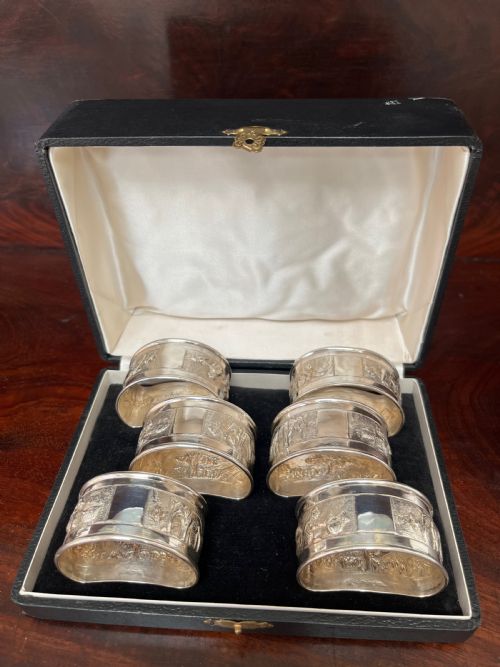
Specialised items incorporate organic elements such as oak barrels, velvet, silk and leatherette within fitted presentation cases. Detail work includes cast dolphin feet, snake handles and engraved monograms on napkin rings.
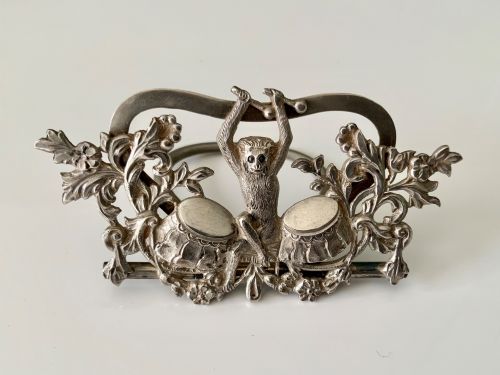
Dining tables once featured miniature silver monkeys playing drums just to hold place cards.
Factors of quality
The integrity of the glass liners and the preservation of original fitted presentation cases influence the desirability of cruet sets and napkin rings. Plated items retain their finish best when the underlying base metal shows no wear through the silver layer.
Elkington & Co·Wedgwood·Ridgways China
The Victorian Dining Tableware Glossary
- Cruet set
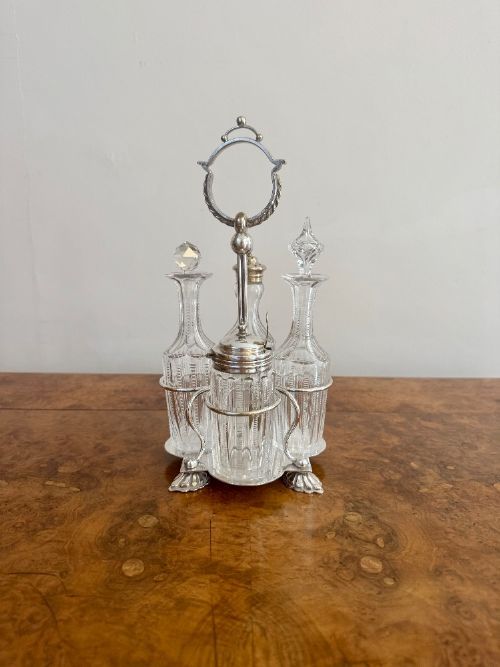
- A matched collection of bottles or pots for holding condiments like oil, vinegar, salt and pepper. These sets usually sit in a metal frame with a central handle for the dining table.
- Marrow scoop
- A long, narrow silver spoon with a small bowl at each end designed for extracting bone marrow. The double-ended design accommodated different sizes of animal bones during formal dinners.
- Spoon warmer
- A ceramic or silver vessel shaped like a nautilus shell or barrel filled with hot water to warm dining spoons. Warm spoons prevented congealed fat when serving rich gravies and sauces.
- Claret jug
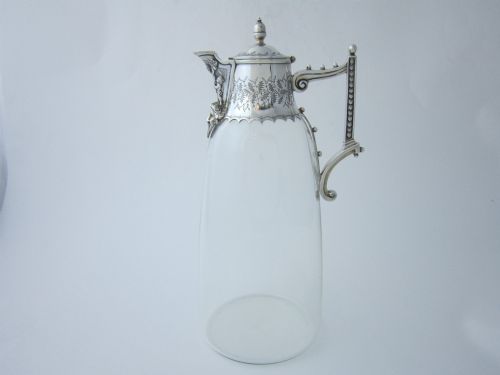
- A table pitcher featuring a glass body with a sterling silver handle, collar and hinged lid. They were utilised for serving red wine at the conclusion of a meal.
- Napkin ring
- A small ring of silver, wood or bone assigned to individual diners to hold their table linen between meals. Cased sets often contain six matching rings.
Victorian Dining Tableware: Frequently Asked Questions
How were grape scissors used?
Grape scissors were specialised dining implements designed to cut small clusters of fruit from a larger bunch at the table. They prevented diners from having to handle the fruit directly.
Victorian examples often feature decorative handles shaped like snakes or gilded silver finishes. They formed part of the dessert service ritual.
What is mauchline ware?
Mauchline ware refers to small wooden items decorated with photographic transfers or tartan patterns, originating in Scotland. Turned hardwood napkin rings are a common form.
These pieces were popular as souvenirs and practical household accessories during the late nineteenth and early Edwardian eras. They showcase distinctive woodworking techniques.
How do I clean antique silver tableware?
Antique silver tableware requires gentle cleaning with a specialised silver polish and a soft cloth to protect the metal. Avoid abrasive materials that can wear away thin plating or delicate chasing.
Items with glass liners or velvet cases should be kept dry and stored away from direct sunlight. Regular dusting preserves the surface finish without damaging the patina.