
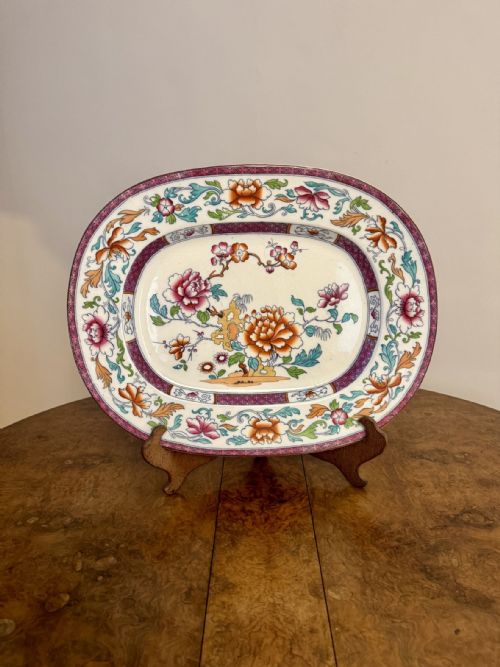


Victorian Ceramic Meat Platter
A Victorian ceramic meat platter brings large-scale 19th-century blue and white transfer printing directly to the dining table.
Victorian Ceramic Meat Platter
A victorian ceramic meat platter is a substantial serving dish designed for joint presentation at nineteenth-century feasts. The pieces met here span the nineteenth century, including early examples in pearlware and heavy ironstone as well as later transfer-printed earthenwares.
Most items on this page take the form of large rectangular or oval serving dishes, occasionally accompanied by internal drainers or reservoirs to catch juices. The decoration draws heavily on English country scenes, castle views, and exotic Chinoiserie or Imari palettes.
Makers such as Copeland and Garrett, Minton, and Mason's dominate the sturdiest ironstone and earthenware productions. Buyers encounter everything from simple blue and white landscape plates to massive well and tree platters intended for heavy carving.
Materials and technique
Potters relied upon earthenware, pearlware, and dense ironstone bodies to withstand the weight of heavy roasted joints. These heavy ceramic bases received tin or lead-based glazes that provided a smooth, impermeable surface for food service.
Decoration was predominantly applied via transfer printing, a technique where engraved copper plates transferred intricate blue and white patterns onto the damp clay body before firing. Hand-painted enamel highlights and touches of gold leaf occasionally supplemented the printed designs on higher-end wares.
Early Victorian dining tables demanded ceramic drainers pierced with enough holes to drain a Sunday roast without hesitation.
Judging quality
Quality rests upon the crispness of the transfer print and the stability of the heavy ceramic body. Superior platters display sharp, deep blue lines without blurring or smudging across the glazed surface.
The presence of specialised functional elements such as well and tree channels, separate ceramic drainers, or integrated reservoirs elevates a piece. Heavier ironstone bodies generally indicate superior durability compared to softer earthenwares.
Copeland and Garrett·Minton·Elkin Knight and Bridgwood
The Victorian Ceramic Meat Platter Glossary
- Ironstone
- A dense, highly durable type of semi-vitrified earthenware developed in the nineteenth century. It resists chipping far better than standard pottery bodies.
- Transfer print
- A decoration method using an engraved copper plate to press ink onto tissue paper, which is then transferred onto the unglazed ceramic body.
- Pearlware
- An refined earthenware featuring a faint bluish glaze that pooled in crevices, developed by Staffordshire potters in the late eighteenth and early nineteenth centuries.
- Well and tree
- A platter design featuring a recessed channel system carved into the ceramic surface to drain meat juices into a central reservoir.
- Ashet
- A regional Scottish and Northern English term for a large serving plate or platter used at the dining table.
Victorian Ceramic Meat Platter: Frequently Asked Questions
What is a well and tree platter?
A well and tree platter is a heavy serving dish featuring an integrated system of carved channels and a central reservoir. These grooves directed juices away from the carved meat during service.
Such vessels were essential centerpieces for nineteenth-century feasts involving large roasted joints of beef or game.
How do I use a meat drainer?
A meat drainer sits loosely inside the recessed well of a larger serving platter to elevate joint cuts above accumulated pan juices. This prevented the meat from sitting in liquid while resting on the dining table.
Many nineteenth-century households utilised these perforated ceramic inserts specifically for poultry and large roasts.
How do I clean a Victorian platter?
These ceramic platters require careful hand washing using warm water and mild detergent rather than mechanical dishwashing. Harsh cycles and abrasive pads will dull the historic glaze and delicate transfer printing.
Gentle maintenance preserves the nineteenth-century enamel colours and protects the heavy earthenware body from thermal shock.
Can I use these for serving food?
These durable ironstone and earthenware dishes remain fully functional for serving dry foods and cold meats at the modern table. Many collectors prefer to utilise them for festive dining rather than keeping them strictly on display.
Care should be taken with older pearlware bodies that feature historic glaze crazing.
What is the difference between ironstone and earthenware?
Ironstone is a much denser, heavier, and harder ceramic body patented to resist chipping and heavy kitchen use. Standard earthenware is more porous and lighter in weight.
Nineteenth-century manufacturers relied upon ironstone for massive meat dishes that required superior structural strength.