
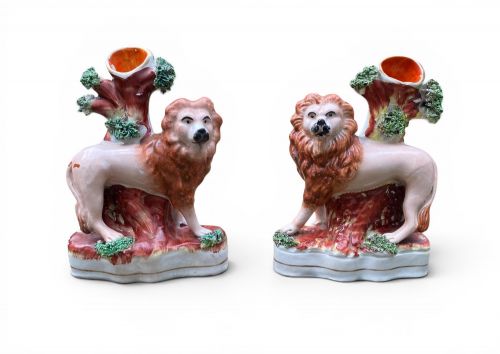


Victorian Ceramic Mantel Ornament
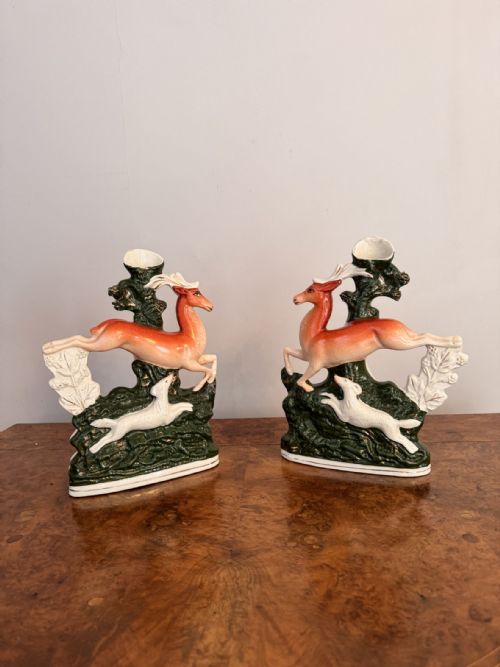
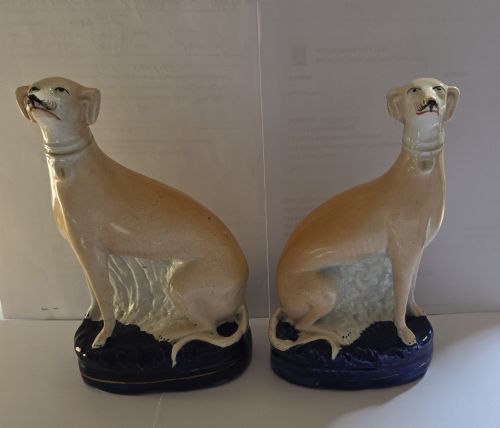
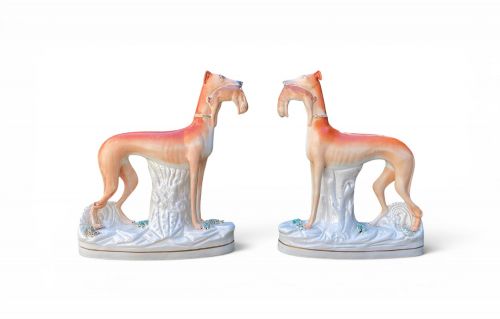
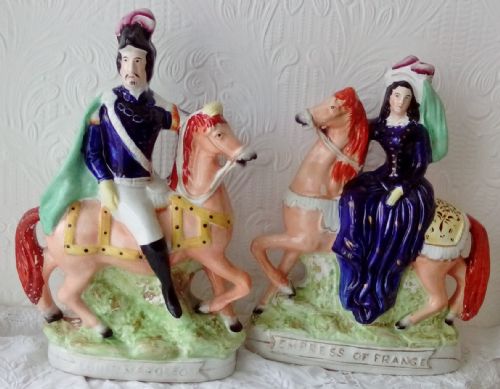
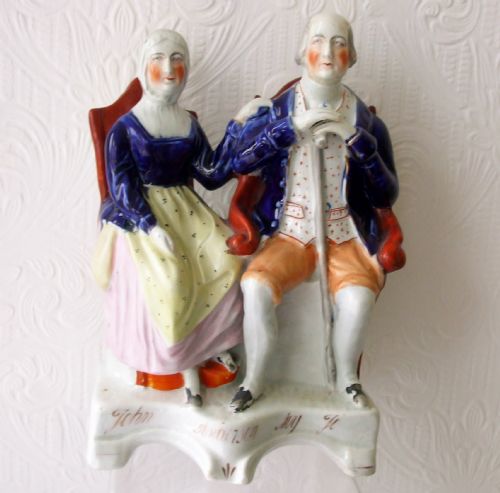
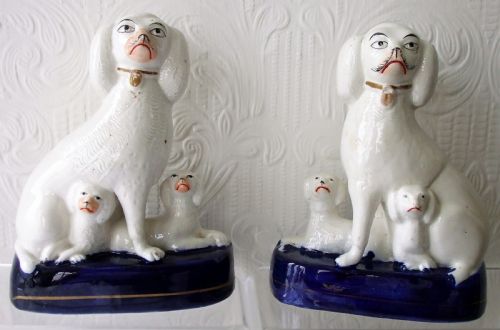
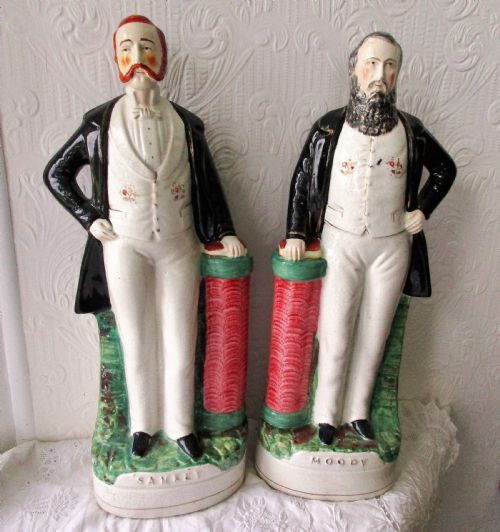
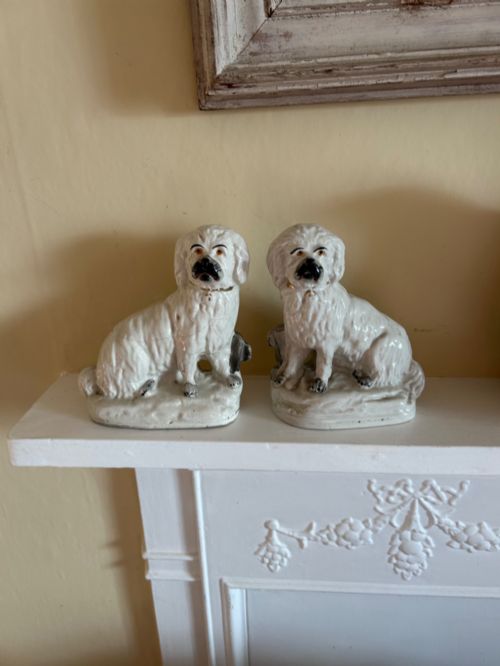
These robust victorian ceramic mantel ornament examples bring nineteenth-century shelf presence into a room, offering enduring character through animal pairs and portrait figures.
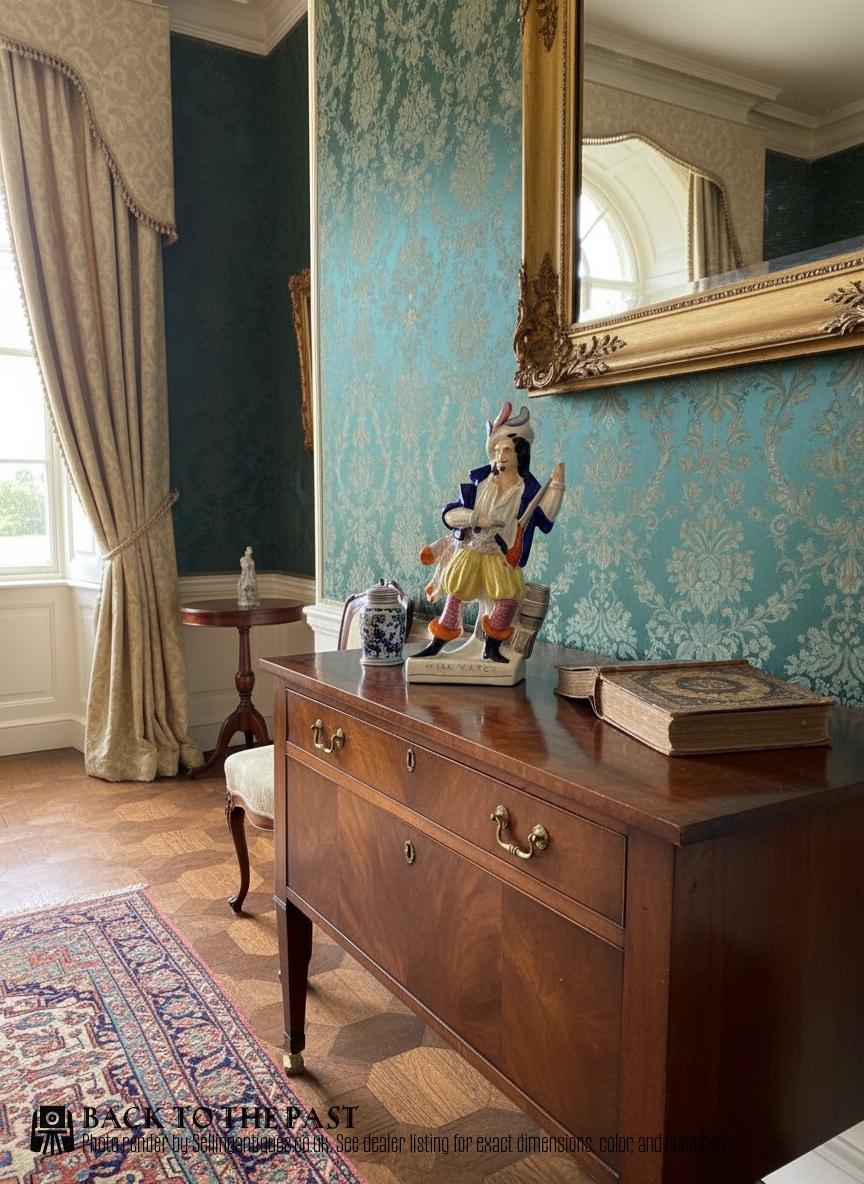
Victorian Ceramic Mantel Ornament
A victorian ceramic mantel ornament typically takes the form of a pottery figure, pair of dogs, or spill vase designed to sit on a fireplace ledge. The pieces found here span the nineteenth century, with strong representation from the eighteen-fifties through to the turn of the century.
Buyers will most frequently encounter earthenware figures from Staffordshire potteries, often modelled as spaniels, greyhounds, lions, or historical figures. Continental porcelain figures from German factories also appear, alongside flatback castles and literary subjects.
These items served as domestic decoration for middle-class parlours, intended to display animal companionship or moral themes rather than to hold flowers or water. Pairs predominate, meant to sit symmetrically at either end of a mantelpiece.
How They Were Made
Potters shaped these objects using earthenware and porcelain, applying lead glazes and enamel colours by hand before firing. Many Staffordshire pieces feature a flat back because they stood against a wall, saving labour and materials during production.
Makers added detail through gold leaf accents, copper lustre, and delicate modelling. Figures were cast in moulds, assembled from multiple parts, and hand-painted with pigments that vitrified in the kiln.
Listings feature earthenware and porcelain materials spanning the nineteenth century, including lead glaze, enamel, and gold leaf.
What Varies in Quality
The sophistication of the modelling separates standard production wares from superior sculptural pieces. Well-defined paws, fur texture, and balanced proportions distinguish finer figures from hasty factory output.
Thomas Parr·Volkstedt Triebner Ens Eckert
The Victorian Ceramic Mantel Ornament Glossary
- Flatback
- A pottery figure with an unglazed or simply painted flat rear surface intended to be viewed only from the front. This construction method saved clay and time for nineteenth-century manufacturers.
- Spill vase
- A hollow cylindrical holder attached to a figure, designed to hold wooden splinters used for lighting fires or pipes. These dual-purpose objects combine decorative modelling with practical utility.
- Earthenware
- A porous, opaque pottery body fired at lower temperatures than stoneware or porcelain. It requires a glaze to become impermeable to liquids.
- Copper lustre
- A metallic glaze finish that produces a reflective, coppery sheen on pottery surfaces. Potters achieved this effect by introducing metallic salts into the kiln atmosphere.
Victorian Ceramic Mantel Ornament: Frequently Asked Questions
Where did these ornaments sit?
These decorative objects lived on the mantelpiece above the fireplace in nineteenth-century homes, arranged to catch the eye of visitors entering the parlour.
Pairs were positioned symmetrically at either end of the shelf to create a balanced display.
What are spill vases used for?
The attached cylindrical tube held thin wooden spills, which were slender sticks used to transfer a flame from the coal fire to candles or tobacco pipes.
This practical household accessory was integrated directly into the pottery sculpture.
How do I date a flatback figure?
Dating relies on stylistic clues, costume details, and the characteristics of the glaze and clay body used by nineteenth-century potteries.
Most pieces date from the mid to late Victorian era, between eighteen-fifty and nineteen-hundred.
Are these figures solid ceramic?
Most Staffordshire pottery figures are hollow, formed from moulds to keep the weight manageable and ensure even drying and firing in the kiln.
This hollow construction also prevented the clay from cracking during high-temperature heating.