
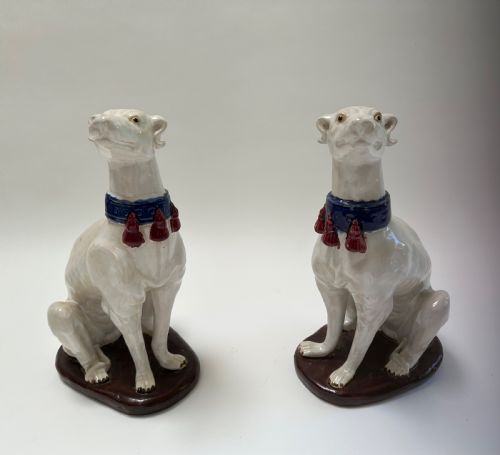


Victorian Ceramic Greyhounds
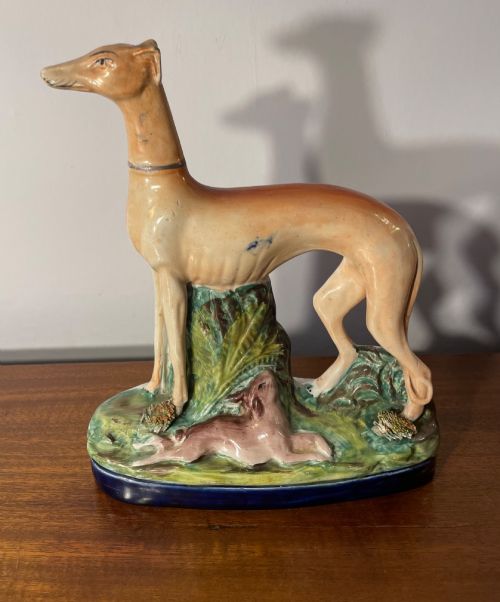
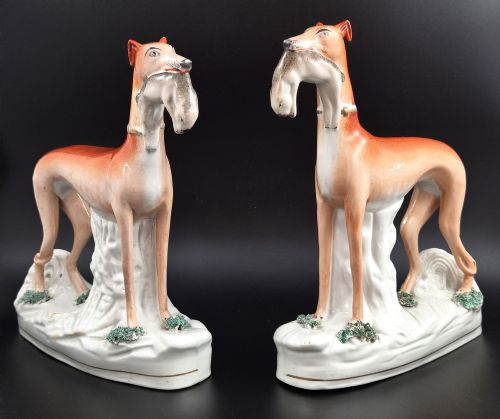
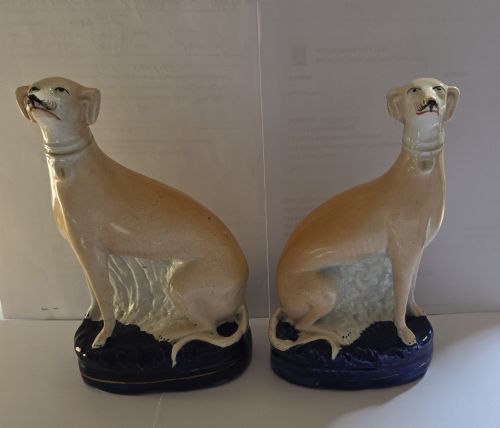
Victorian ceramic greyhounds are Staffordshire earthenware figures depicting seated hounds, prized by collectors for their charming portrayal of nineteenth-century domestic and sporting life.
Victorian Ceramic Greyhounds
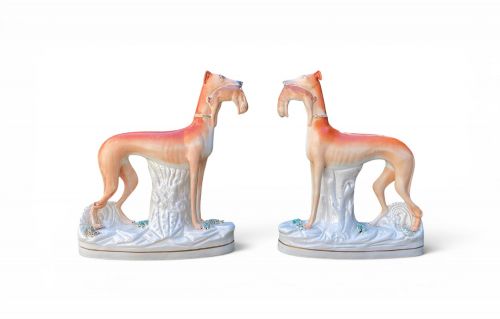
When searching for victorian ceramic greyhounds, a buyer encounters a variety of Staffordshire figures modelled as seated dogs, often accompanied by hares. These decorative pieces date from the nineteenth century, including periods such as eighteen fifty and eighteen eighty.
The most common items on this page are pairs of Staffordshire greyhounds and whippets, frequently designed with functional elements such as quill holders and inkwells. Larger figures and matched pairs also appear among the pottery and earthenware selections.
Many of these decorative ornaments reflect Victorian country pottery traditions, while other related objects include harvest cups and hunting dog groups. The origins remain rooted in English Staffordshire production of the eighteen hundreds.
How They Were Made
Porcelain and glazed ceramic techniques appear alongside traditional earthenware bodies, reflecting the diverse manufacturing methods of nineteenth-century Staffordshire potteries. Some pieces also incorporate silver rims on functional forms like mugs and cups.
Listings show earthenware, lead glaze, and enamel paint as the primary materials used across nineteenth-century Staffordshire dog figures and desk accessories.
What Varies In Quality
The standard of modelling and hand-painted detail largely distinguishes individual figures, with finer examples displaying more expressive faces and carefully delineated anatomy. Matched pairs with original glaze and minimal wear represent a higher tier of production.
The presence of functional utility, such as integrated inkwells or quill holders, combined with substantial scale, adds complexity to the pieces. Simpler single figures or later reproductions occupy a different category from large early nineteenth-century pairs.
Thomas Parr
The Victorian Ceramic Greyhounds Glossary
- Earthenware
- Porous pottery fired at lower temperatures, commonly used for nineteenth-century Staffordshire figures. It requires a glaze to become impermeable to liquids.
- Staffordshire
- A major English pottery-producing area known for figurative earthenware ceramics. Figures from this region often depict animals, people, and historical events.
- Lead Glaze
- A glossy coating applied to pottery before firing to give a shiny finish and waterproof surface. This technique was widely utilised on Victorian utilitarian and decorative wares.
- Quill Holder
- A desktop accessory designed to hold writing feathers. In Victorian ceramic form, these often feature a recumbent dog alongside a pen trough.
- Inkwell
- A small container for holding liquid ink, frequently incorporated into desk accessories. Ceramic examples from the nineteenth century often integrated animal figures into the design.
Victorian Ceramic Greyhounds: Frequently Asked Questions
Are these greyhound figures always found in pairs?
Many Victorian Staffordshire greyhound figures were manufactured and sold as matched pairs to adorn mantelpieces.
However, single figures and individual desk accessories also appear in the record.
What were the quill holders used for?
Quill holders served as functional desktop items designed to keep writing feathers close at hand during the nineteenth century.
Potters combined this utility with popular canine subjects to create decorative desk ornaments.
Did these dogs have a specific purpose?
Most of these ceramic greyhounds served as decorative mantel ornaments expressing Victorian tastes in domestic animal imagery.
Some specific variants incorporated inkwells or quill holders for practical use on writing desks.