


Ceramic Whippet Statue
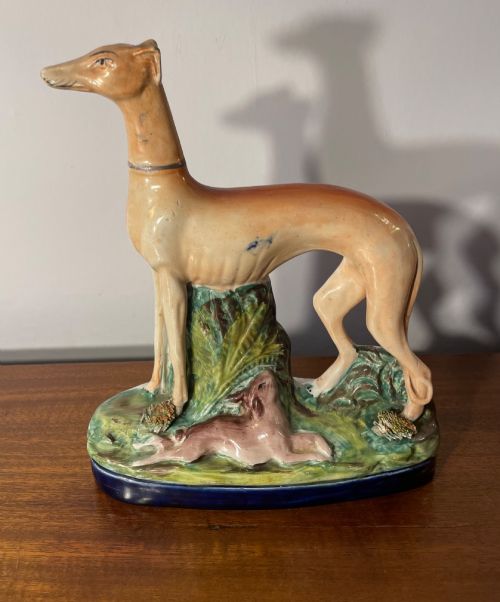
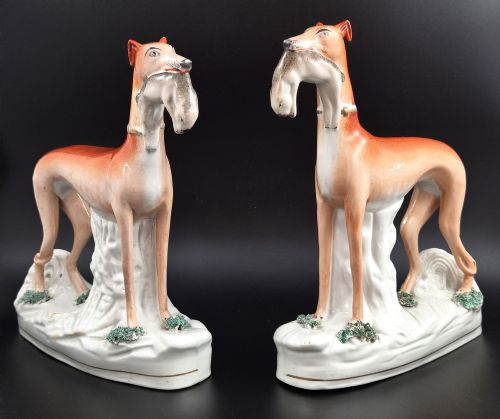
These ceramic whippet statue pieces capture the elegance of hound forms, offering a decorative centrepiece for the home.
Ceramic Whippet Statue
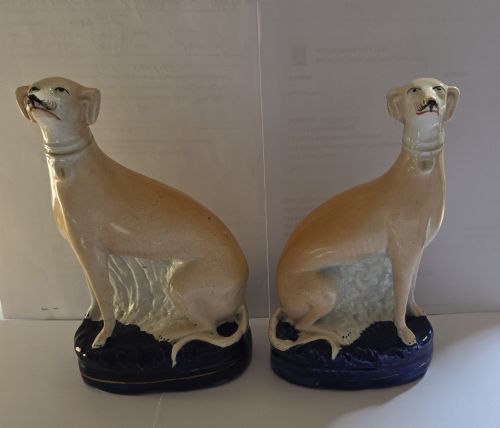
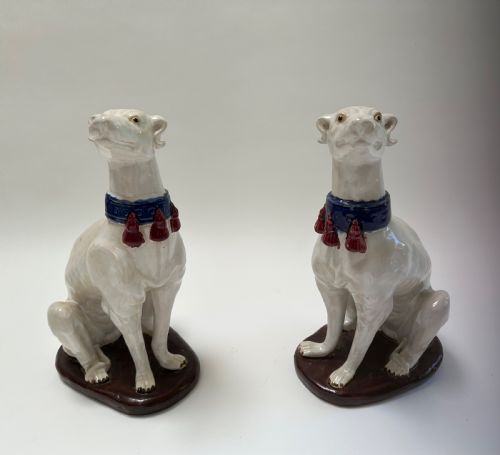
A ceramic whippet statue represents hound and greyhound forms, frequently produced as decorative figures and pairs. The selection on this page includes Victorian Staffordshire pieces alongside Italian Majolica and porcelain examples.
Most items you encounter here take the form of seated dogs, sometimes accompanied by hares or functioning as quill holders. These objects span the nineteenth and twentieth centuries, reflecting changing decorative tastes across periods like the Victorian era and Art Deco.
Originating largely from English potteries, these figures served as mantel or desk accessories. The designs range from early nineteenth-century earthenware models to later porcelain representations from continental European makers.
How they were made
Potters utilised earthenware and porcelain as base bodies, shaping them into detailed hound sculptures. Lead glaze and enamel paint were then applied to surface details, adding colour and sheen to the pottery figures.
Listings feature earthenware and porcelain materials, spanning the Victorian era through to the nineteen-forties.
What varies in quality
The fineness of the enamel painting and the crispness of the mould impress dictate the visual impact of each figure. Pieces with carefully rendered facial expressions and distinct fur markings stand apart from simpler models.
Scale and proportion also define the range, with unusually large examples and matched pairs demonstrating greater ambition from the potter. The depth and evenness of the glaze further distinguish standard production pieces from finer works.
The Ceramic Whippet Statue Glossary
- Staffordshire
- A term for pottery produced in the Staffordshire region of England, known for distinct animal figures. These pieces often feature hand-painted details over an earthenware body.
- Majolica
- A type of earthenware coated with an opaque tin glaze and painted with metallic oxide colours. This technique creates vibrant surfaces seen on Italian decorative objects.
- Quill holder
- A desk accessory featuring a hollow base or companion trough designed to hold writing feathers. In pottery figures, this function is integrated into the hound's base.
- Lead glaze
- A shiny coating applied to pottery before firing to waterproof the vessel and enhance colours. It produces a characteristic glossy finish on antique ceramics.
- Enamel paint
- Vitreous colours applied over a fired glaze and heated again to bond with the surface. This allows for fine details on ceramic figures.
Ceramic Whippet Statue: Frequently Asked Questions
What periods do these dog figures represent?
The listings encompass items from the early nineteenth century through to the mid-twentieth century. Victorian Staffordshire examples dominate, alongside Italian Majolica and Art Deco pieces.
Dates span specific decades such as eighteen-eighty and nineteen-twenty, reflecting broader stylistic shifts in ceramic sculpture.
How were these statues used originally?
These ceramic animals served primarily as decorative ornaments on mantelpieces and tables. Some specialised forms, such as quill holders, combined display with desk utility.
Pairs were often placed symmetrically in a room, following Victorian interior decoration customs.
Are these figures usually found in pairs?
Many listings feature matched pairs of greyhounds or whippets, often seated alongside hares. Single figures also appear, representing larger standalone decorative sculptures.
Pairs were modelled to face one another, designed for balanced placement on furniture.
What materials are used in these sculptures?
Makers employed earthenware and porcelain as the primary ceramic bodies for these animals. Surfaces are finished with lead glazes and detailed using enamel paint.
These materials determine the weight, sheen, and colour palette of each individual statue.