


Staffordshire Greyhound Figures
These Staffordshire greyhound figures capture the spirited charm of Victorian country pottery, offering collectors a delightful nod to nineteenth-century domestic displays.
Staffordshire Greyhound Figures
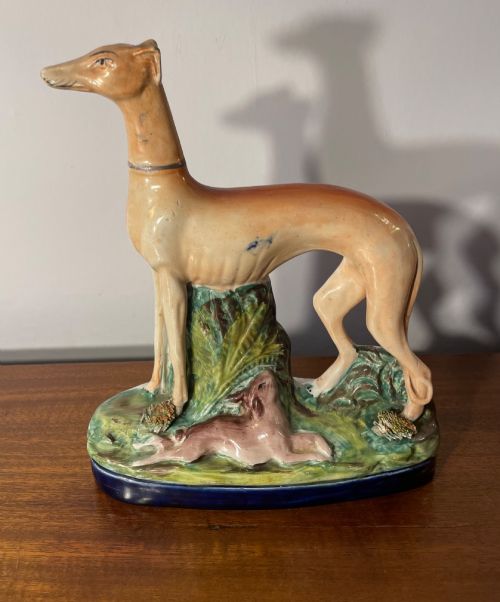
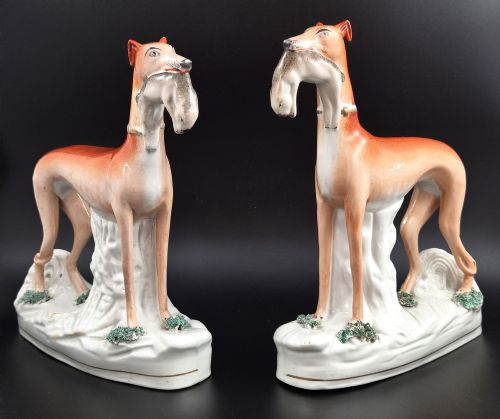
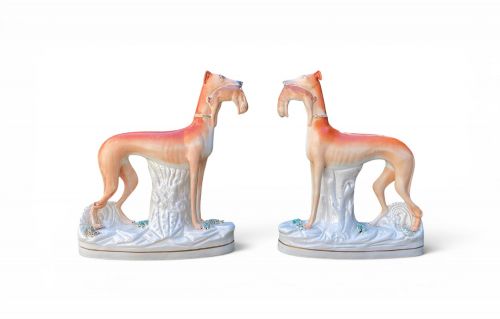
Staffordshire greyhound figures represent a specific tradition within nineteenth-century decorative pottery, appearing as single pieces, pairs, or functional desk accessories. Buyers encountering these works will most frequently find pairs modelled alongside hares, serving as mantel ornaments or inkwells.
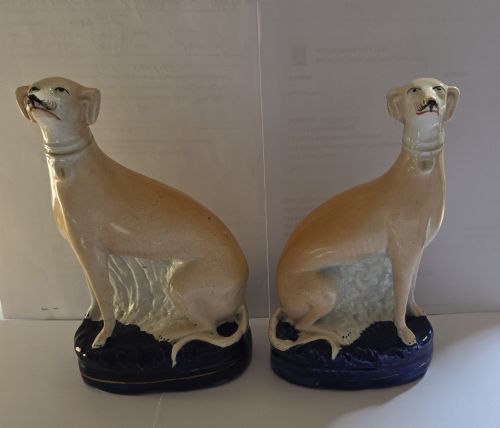
The objects span periods from the early nineteenth century through the Victorian era, showcasing both seated whippets and larger hounds. Formats include decorative figurines and quill holders that reflect the period interest in canine subjects and hunting motifs.
Originating largely from English potteries during the Victorian epoch, these pottery figures range in scale from standard mantel ornaments to unusually large statement pieces. The forms incorporate hunting dogs with hares as well as dedicated inkwell configurations.
Materials and methods
Pottery and earthenware form the core structural body of these figures, shaped through traditional moulding techniques in English workshops. Artisans applied lead glaze over the ceramic surface to achieve a smooth, protective finish.
Some Victorian greyhounds doubled as desk accessories, holding ink or quills while wearing remarkably stern expressions.
Assessing quality
The application of lead glaze and gold leaf significantly influences the visual depth of the piece, with superior specimens maintaining clean, even surfaces. Scale also plays a role, as larger or more complex functional forms like inkwells and quill holders demand greater technical skill.
Thomas Parr
The Staffordshire Greyhound Figures Glossary
- Earthenware
- Porous pottery fired at lower temperatures, serving as the standard base material for these Victorian figures. It requires a glaze to become impermeable to liquids.
- Lead glaze
- A glossy coating containing lead oxide applied to pottery before firing to create a smooth, shiny surface. This finish protects the underlying earthenware and enhances painted details.
- Enamel paint
- Vitreous pigments applied over the glazed ceramic surface and refired to bond with the piece. It provides the vivid colours seen on the dogs and hares.
- Gold leaf
- Extremely thin sheets of gold applied to highlight specific areas of the pottery figures. It appears on collars and decorative accents.
- Quill holder
- A desk accessory designed with dedicated slots or rests for writing feathers. In these listings, they take the form of recumbent greyhounds.
Staffordshire Greyhound Figures: Frequently Asked Questions
How were these figures used?
Victorian households primarily displayed these dogs as decorative ornaments on mantelpieces and tables. Many examples incorporate practical elements such as inkwells or quill holders.
Their dual role as sculpture and desk accessories made them common fixtures in nineteenth-century studies and parlours.
How do I date a Staffordshire greyhound?
Dating relies on stylistic markers, materials, and manufacturing techniques recorded across the Victorian period. Earlier pieces from around eighteen-forty often feature distinct modelling compared to later Victorian iterations from eighteen-eighty.
Glaze characteristics and the presence of enamel colours help narrow the decade of production.
Are these figures found in pairs?
Many listings feature matched pairs of greyhounds, which were designed to sit symmetrically on either side of a fireplace or shelf. Single figures also appear independently or as part of functional desk sets.
Pairs frequently incorporate hares beneath or beside the dogs to complete the hunting narrative.
What materials make up these dogs?
The core body consists of pottery earthenware shaped in moulds and finished with a clear lead glaze. Artisans then applied enamel paint and occasional gold leaf for surface decoration.
This combination created the characteristic glossy sheen and colourful detailing associated with Victorian Staffordshire ceramics.