
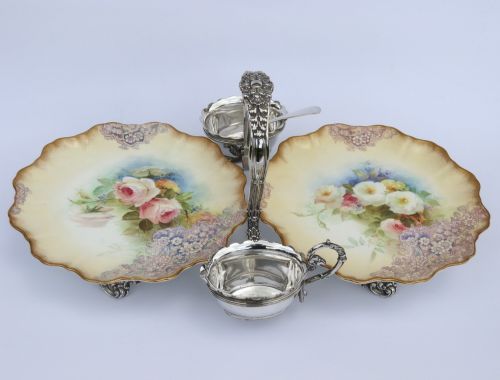


Victorian Ceramic Cream Jug
A victorian ceramic cream jug brings nineteenth-century table service to life with rich earthenware bodies and hand-decorated details.
Victorian Ceramic Cream Jug
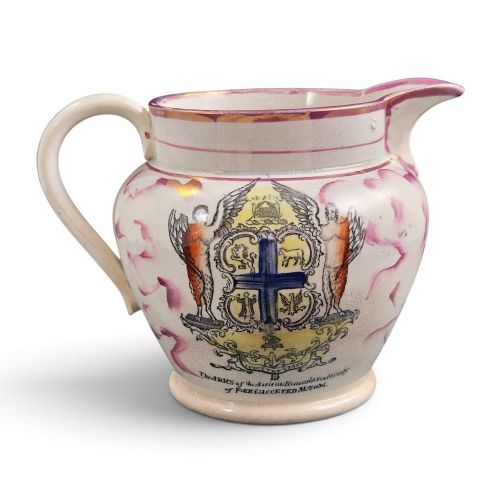
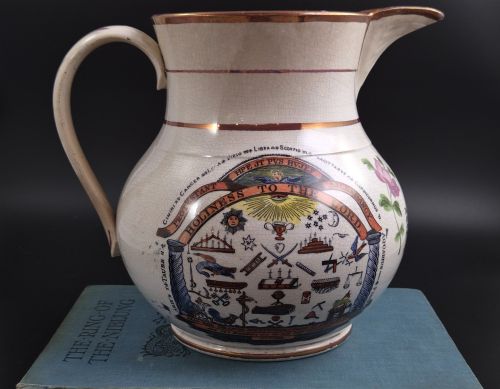
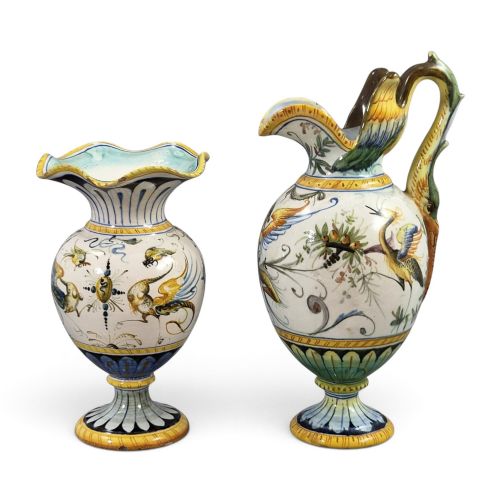
When searching for a victorian ceramic cream jug, collectors encounter practical domestic milk vessels alongside decorative ewers and figural pieces spanning the nineteenth century. The selection ranges from modest earthenware milk jugs to elaborate hand-decorated porcelain and transfer-printed tableware.
The material vocabulary draws on earthenware, stoneware, pearlware and porcelain, often enriched with copper lustre, gilt or polychrome painting. Forms vary from straightforward domestic creamers to sculptural animal creamers like cow jugs and neoclassical ewers.
Methods and materials of nineteenth-century potteries
Potters shaped these vessels using earthenware, stoneware and porcelain bodies, frequently employing relief moulding or transfer printing to apply intricate patterns. Glazes varied from smooth translucent finishes to salt-glazed surfaces and rich metallic lustres.
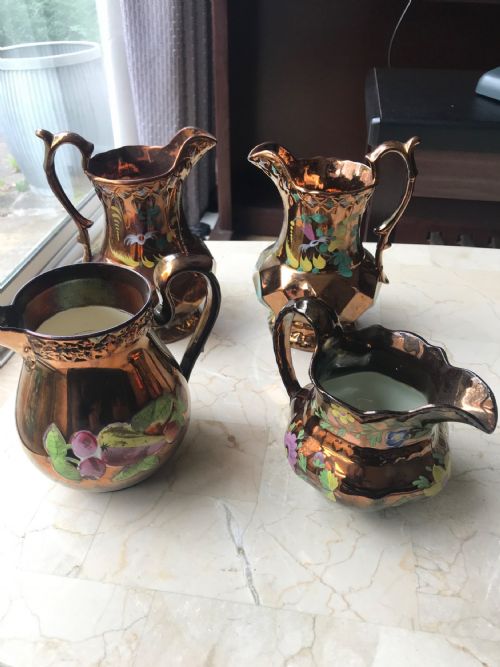
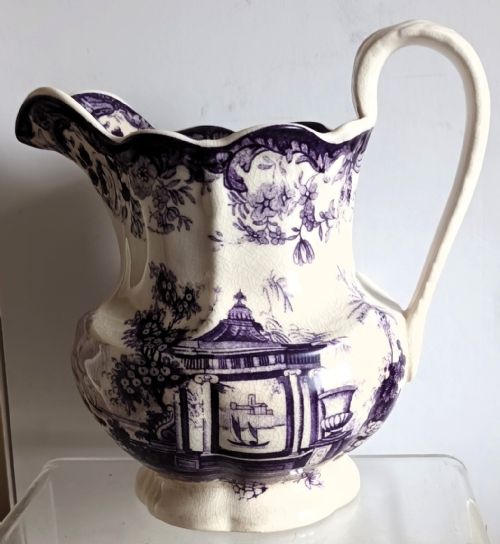
Decoration often involved hand-painted polychrome pigments, enamel highlights or gold leaf accents fired onto the ceramic body. Specialised techniques such as purple transfer printing and copper lustre dipping created the distinct metallic sheen characteristic of the period.
Listings feature earthenware, stoneware and porcelain bodies decorated with copper lustre, gold leaf and hand-painted polychrome enamel.
Distinctions in craftsmanship and design
Quality separates simple utilitarian vessels from exhibition pieces through the crispness of relief moulding and the precision of hand-painted decoration. Finer examples display meticulous attention to detail in transfer printing, well-balanced handles and sophisticated glaze application.
The prestige of the producing pottery significantly influences distinction, with renowned manufactories achieving superior clay refinement and artistic ambition. Condition, artistic ambition and the complexity of decorative schemes further elevate individual pieces above standard domestic wares.
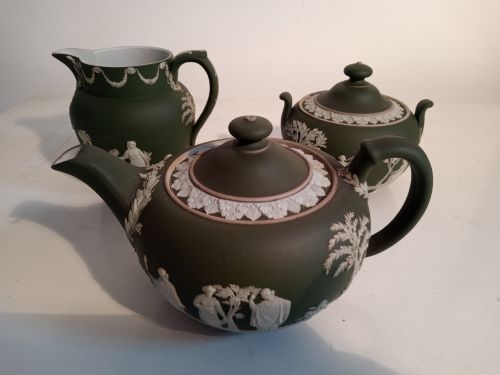
Wedgwood·Royal Worcester·Doulton Burslem·Doulton Lambeth·Jones and Walley
The Victorian Ceramic Cream Jug Glossary
- Earthenware
- A porous pottery body fired at lower temperatures, typically requiring an impervious glaze to hold liquids. It forms the basis of many nineteenth-century domestic creamers.
- Copper lustre
- A metallic glaze finish achieved by applying copper compounds to the ceramic surface during firing. This technique produces a reflective, coppery sheen popular on Victorian tablewares.
- Transfer printing
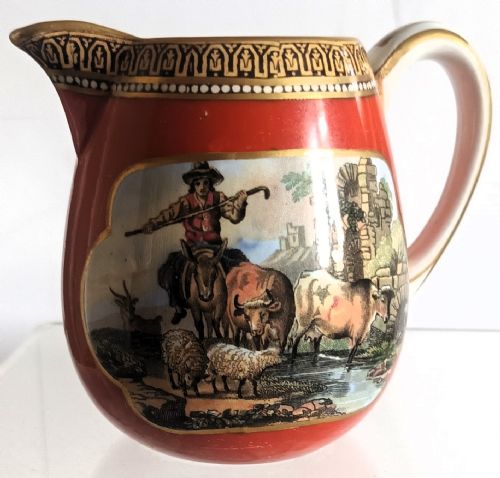
- A mechanical method of applying complex decorative patterns to pottery using an engraved copper plate and tissue paper. It allowed potteries to produce consistent, detailed pictorial scenes.
- Pearlware
- A refined earthenware developed during the Georgian period featuring a bluish-white glaze that pooled in recesses. It served as a direct precursor to many Victorian ceramic bodies.
- Stoneware
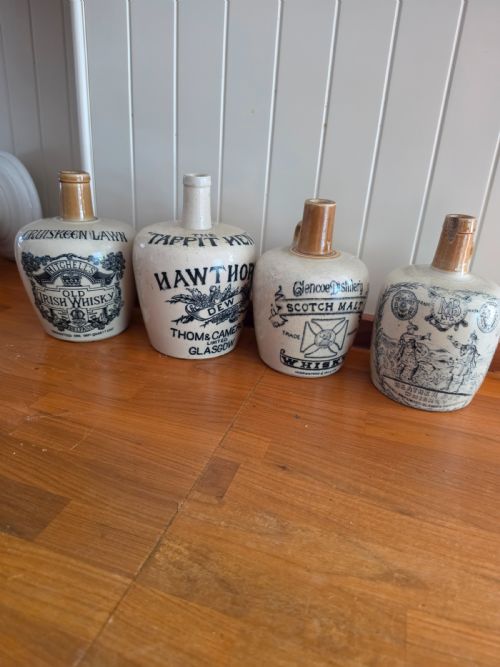
- A dense, vitrified ceramic material fired at high temperatures until non-porous. It provides exceptional durability for utilitarian jugs and flasks.
Victorian Ceramic Cream Jug: Frequently Asked Questions
What is a cow creamer?
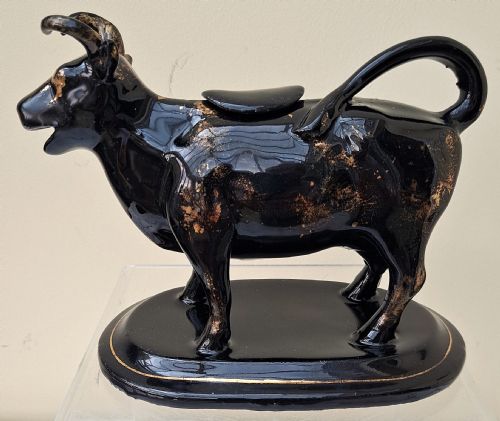
A cow creamer is a figural ceramic jug shaped like a cow, designed to dispense milk or cream from its mouth. These whimsical vessels were popular across the nineteenth century for formal tea service.
Fillers typically filled the jug through an opening on the cow's back, often fitted with a removable lid. They remain charming examples of Victorian novelty ceramics.
How do I clean antique cream jugs?
Wash antique ceramic cream jugs gently by hand using lukewarm water and mild dish soap. Avoid harsh scrubbers, scouring powders and automatic dishwashers, which can damage delicate gilding and earthenware bodies.
Dry the pieces thoroughly with a soft cloth to protect vulnerable glazes. Take extra care around handles and spout tips during handling.
Are these jugs safe for daily use?
Most nineteenth-century ceramic cream jugs are best reserved for display or light occasional service rather than robust daily use. The porous nature of older earthenware and the fragility of historic glazes make them sensitive to modern dishwashing and frequent thermal shock.
Enamel decorations and gold leaf can wear away over time with heavy friction. Careful handling preserves the integrity of these antique surfaces.
What is Gaudy Welsh pottery?
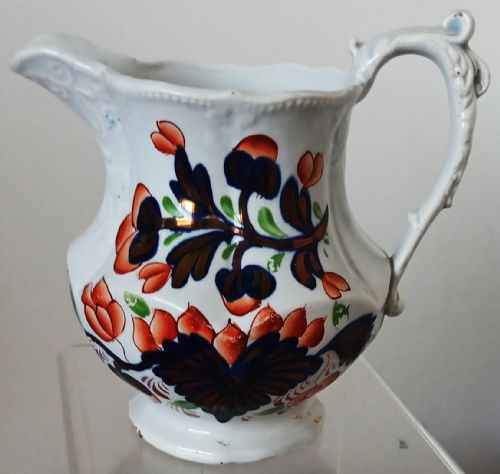
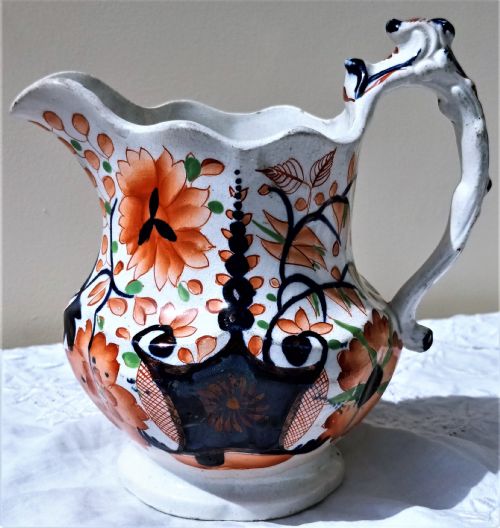
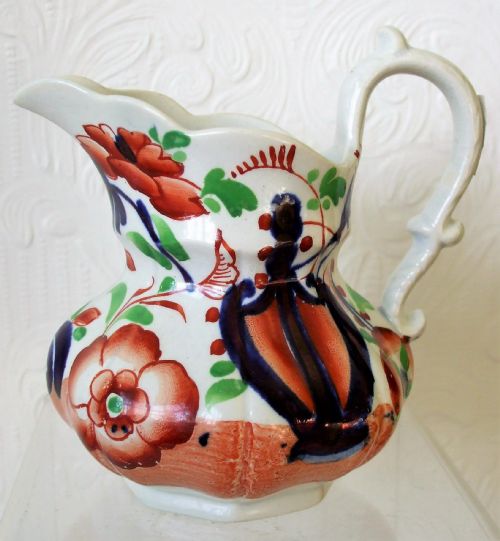
Gaudy Welsh refers to a colourful style of pottery decorated with vibrant cobalt blue, iron-red, copper lustre and green enamels. The patterns often feature floral or architectural motifs like the pagoda design found on nineteenth-century jugs.
Despite the name, much of this ware was produced in England for export and domestic markets. Its bold palette makes it easily recognisable among Victorian ceramics.