

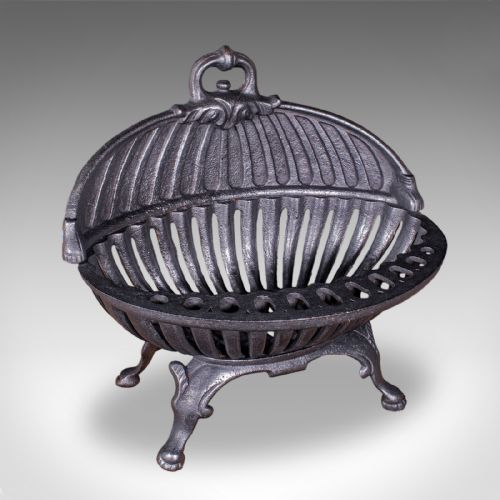
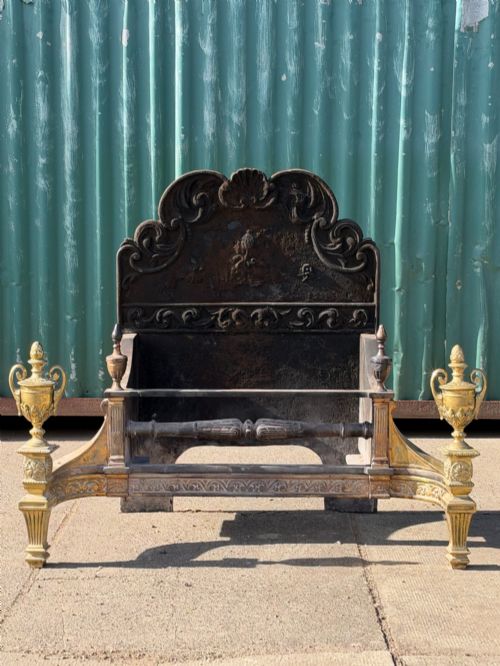
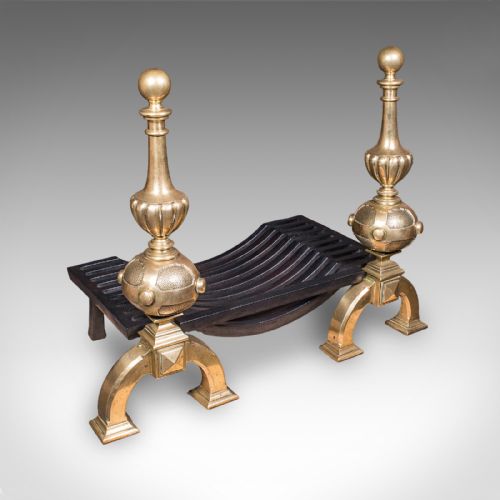
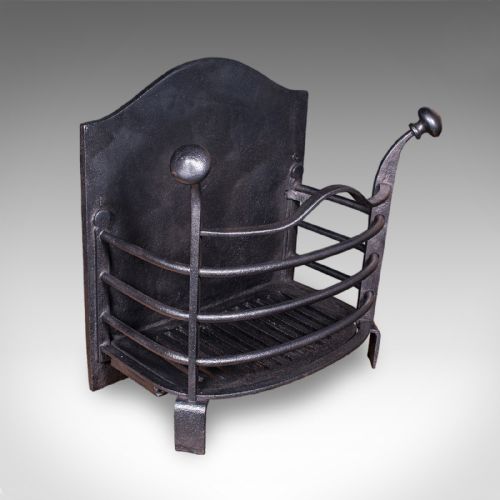


Victorian Cast Iron Fire Basket
These robust victorian cast iron fire basket pieces bring authentic hearth warmth and period character to domestic rooms.
Victorian Cast Iron Fire Basket
A victorian cast iron fire basket brings together heavy metal hearth furniture and period architectural styling. Buyers searching this phrase look for functional fireplace grates, log baskets, and register grates suited to open hearths.
The pieces appearing on this page span the Victorian era, the nineteenth century, and later revivals from the early twentieth century. Common forms include inglenook grates, free-standing fire grates, and sets paired with matching andirons.
Originating predominantly from English workshops, these items range from small domestic grates of modest proportions to large country house hearth assemblies. Design influences encompass Gothic Revival, Neoclassical, and George III styles.
Materials and construction
Construction relies heavily on durable cast iron, paired frequently with wrought iron elements for structural reinforcement. Brass details appear on decorative mouldings and andirons, adding contrast to the dark metalwork.
Internal firebrick linings protect the main body of the grate from direct heat exposure during use. Metal components are cast in moulds or worked by hand, producing heavy, solid hearth furniture designed to withstand intense temperatures.
Victorian Cast Iron Fire Basket Retail Price Guide 2026
Typical asking prices for victorian cast iron fire basket among the pieces listed under this phrase on Sellingantiques today, from the lower quarter to the upper quarter. They describe what is for sale here now, not the wider market.
Current listings feature items from the nineteenth century alongside early twentieth-century revivals, utilising cast iron, wrought iron, and brass.
Assessing quality and proportion
Quality rests upon the weight of the metal, the crispness of the cast ornamentation, and the integrity of the overall structure. Heavy, substantial examples demonstrate superior foundry work compared to lighter utilitarian alternatives.
Proportion and decorative detail dictate the visual appeal of each piece. Finer examples exhibit considered Neoclassical or Gothic Revival ornamentation, whereas simpler items serve purely functional roles in smaller fireplaces.
The Victorian Cast Iron Fire Basket Glossary
- Fire Basket
- A metal container designed to hold solid fuel or logs within an open fireplace. These baskets sit either directly on the hearth or upon supporting andirons.
- Andirons
- Supporting metal fire dogs placed on either side of the hearth. They often accompany fire baskets to hold logs and elevate the grate.
- Register Grate
- A fireplace insert featuring a moveable plate or damper to control the draught up the chimney. They became common in nineteenth-century domestic interiors.
- Fireback
- A heavy cast iron plate placed at the back of an open fireplace. It radiates heat back into the room and protects the masonry wall.
- Gothic Revival
- An architectural and decorative style drawing inspiration from medieval forms. This style frequently appears in Victorian metalwork and fireplace design.
Victorian Cast Iron Fire Basket: Frequently Asked Questions
Will a fire basket fit my fireplace?
Measuring your hearth opening precisely is essential before selecting a grate. These pieces vary greatly in physical scale, from small bedroom grates to massive inglenook units.
Consider the depth and width of the recess alongside the clearance needed for andirons or matching firebacks. Consulting a qualified installer ensures the chosen basket suits your chimney dimensions.
Can I burn real wood in these grates?
Most of these iron and steel baskets are built to burn solid fuel or logs. However, checking the condition of the cast iron and any firebrick linings is necessary prior to lighting a fire.
Over time, intense heat can stress older metal. Using a professional sweep or fireplace specialist helps confirm that your specific grate is safe for active use.
How do I clean cast iron fire baskets?
Regular maintenance involves brushing away ash and soot using a soft bristle brush once the metal cools completely. Avoid using harsh chemical cleaners that strip the natural dark finish of the iron.
Applying a light coating of grate polish or specialised oil helps protect the surface from rust. Keeping the metal dry prevents moisture damage in unused chimneys.
How do I identify a Victorian fire basket?
Victorian pieces often display characteristic decorative motifs such as Gothic Revival tracery or Neoclassical urns and swags. The weight and method of casting offer further clues to their period of origin.
Examining the construction reveals hand-wrought elements alongside machine-cast components typical of nineteenth-century foundry production. Comparing proportions with known period examples aids in accurate dating.