
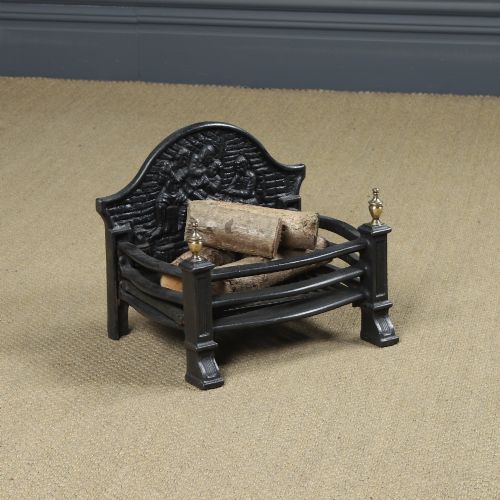
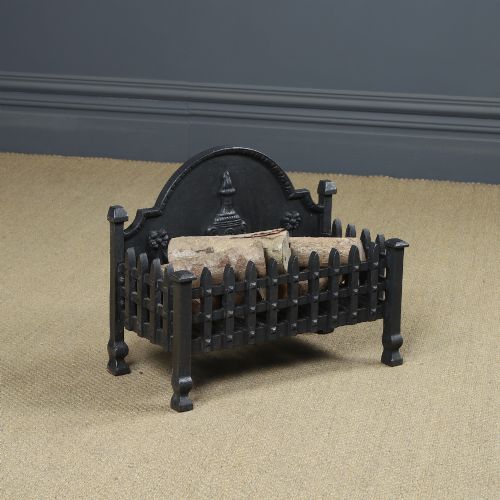
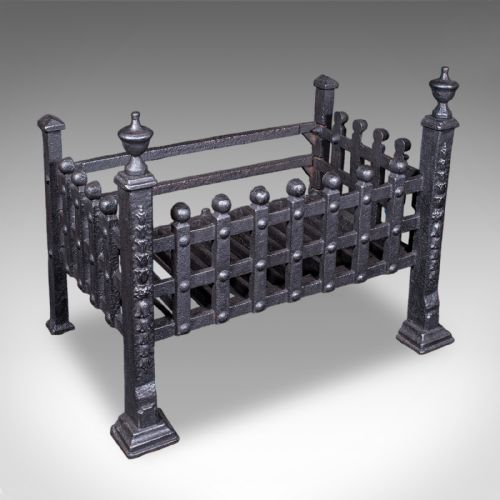


Black Cast Iron Fire Grate
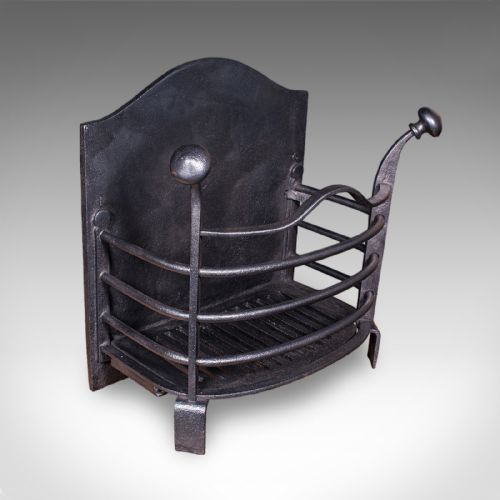
A black cast iron fire grate anchors the hearth with traditional weight, offering a sturdy frame for burning wood or coal.
Black Cast Iron Fire Grate
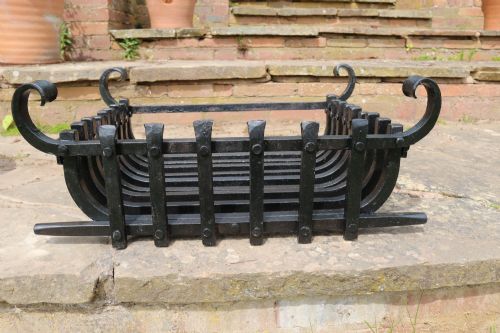
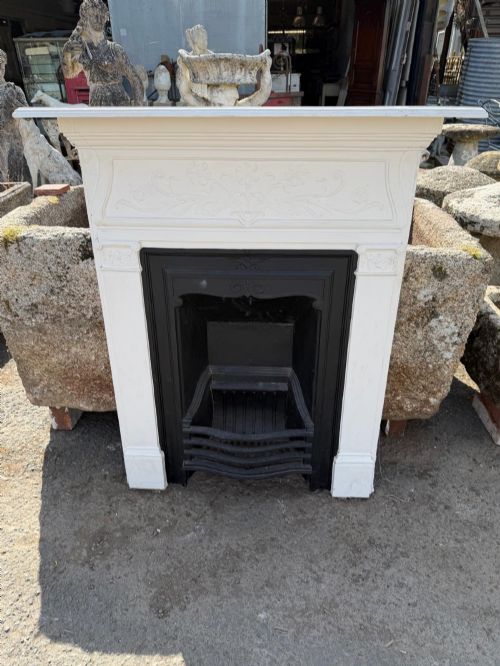
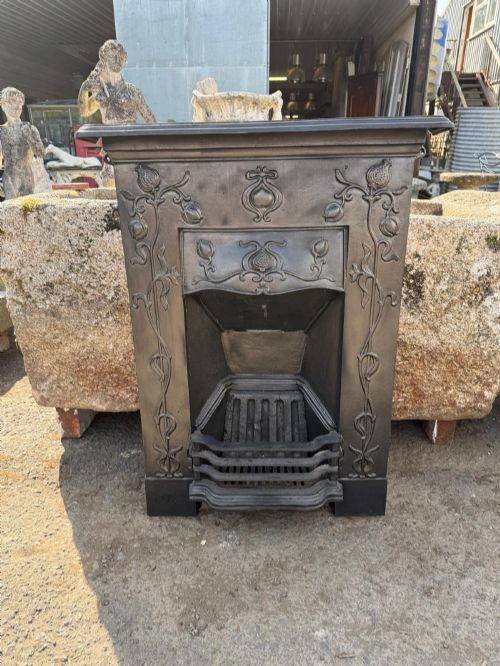
When you search for a black cast iron fire grate, you encounter hearth furniture designed to hold solid fuel within an open fireplace. These items range from freestanding baskets and hob grates to combination fireplaces and register grates.
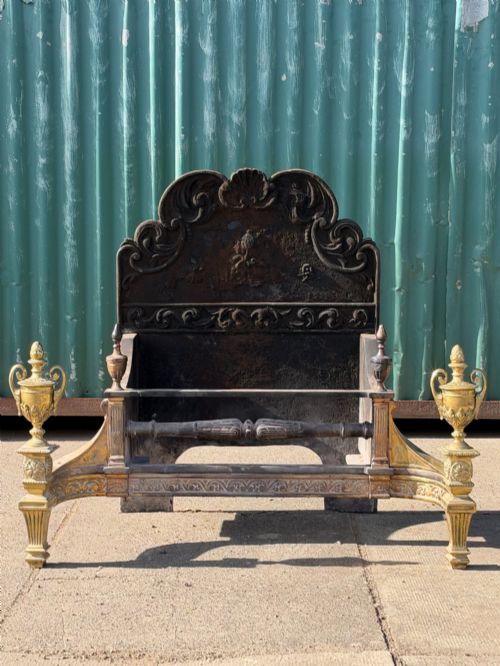
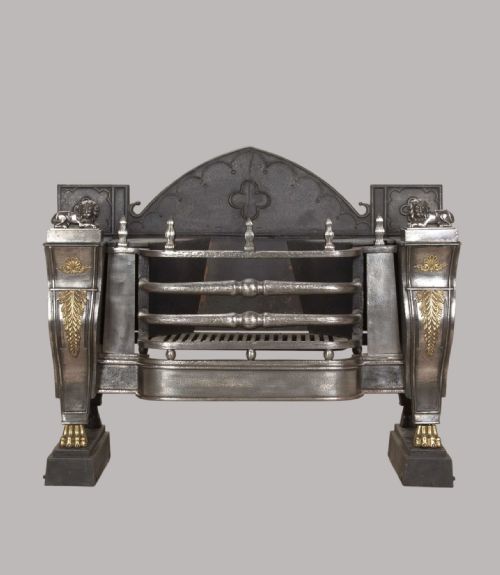
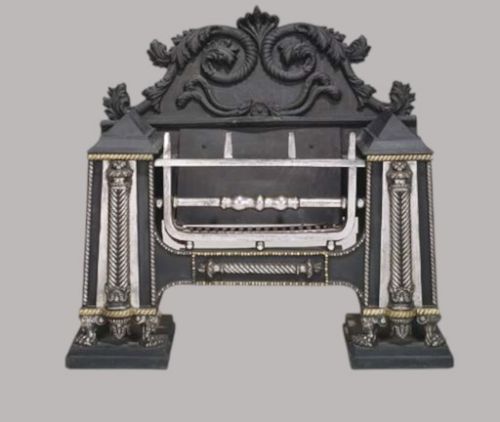
The pieces on this page span several periods, with Victorian and nineteenth-century examples appearing alongside Georgian, Regency, and early twentieth-century revivals. Forms vary from small independent baskets to large inglenook sets complete with andirons and fire backs.
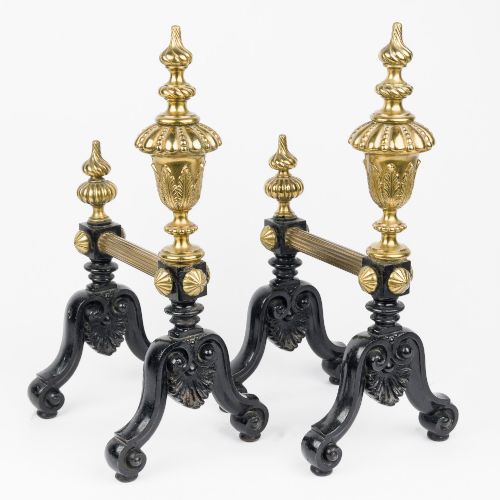
Makers and foundries utilised these designs to heat domestic spaces, resulting in utilitarian forms as well as decorative items featuring classical or Gothic detailing. You will frequently find cast iron paired with wrought iron, brass elements, or firebrick linings.
Materials and construction
Foundries cast iron into rigid frames, fire backs, and basket structures capable of withstanding intense hearth temperatures. Wrought iron often supplements the cast elements, providing movable parts, handles, or structural reinforcement.
Brass fittings and decorative mounts appear across various styles, contrasting with the dark iron surfaces. Certain designs incorporate firebrick panels inside the hearth insert to retain and redirect heat efficiently into the room.
Listings feature periods from the Georgian era through the Victorian epoch up to the 1930s, using cast iron, wrought iron, brass, timber, and firebrick.
Assessing quality and proportion
The distinction between standard utility items and superior examples lies in the weight of the metal and the crispness of the casting. Heavier grates with substantial fire backs and well-defined decorative motifs demonstrate a higher standard of foundry work.
Proportion and stylistic consistency also separate the ranges, particularly in revival pieces where classical or Gothic details must align correctly with the overall frame. The integration of complementary brass work and robust andirons further elevates the status of a hearth set.
The Black Cast Iron Fire Grate Glossary
- Cast iron
- An iron-carbon alloy poured into moulds to create rigid shapes. It forms the primary structure of most fire grates and fire backs.
- Hob grate
- A fireplace type featuring raised side plates intended for keeping kettles warm. These units are common in Georgian and Regency interiors.
- Andirons
- Supporting metal bars or fire dogs placed horizontally in a hearth to hold logs. They frequently accompany larger fire baskets.
- Register grate
- A fireplace insert equipped with a flap or damper to control the draught up the chimney. They emerged during the nineteenth century to regulate heat.
- Fire basket
- An open metal container designed to hold coal or wood inside a hearth. They stand independently or integrate with larger fireplace surrounds.
- Inglenook
- A large recessed hearth space designed to accommodate substantial fire grates and seating. Grates built for these spaces are typically heavy and deep.
Black Cast Iron Fire Grate: Frequently Asked Questions
How do I install a vintage fire grate?
Most freestanding grates simply sit within an existing fireplace opening on the hearth floor. Larger combination grates and register grates require professional installation into the chimney structure to ensure safe smoke clearance.
Ensure the dimensions of the grate match your fireplace recess before placement. Heavy iron units require adequate hearth clearance to support their substantial weight safely.
Can I burn real wood in these grates?
Traditional cast iron and wrought iron grates are built to handle solid fuels like wood and coal. Many pieces feature sturdy fire backs and thick bars designed for regular burning.
Check whether the specific grate includes a firebrick lining or a solid iron base suitable for your preferred fuel type. Smaller decorative baskets are sometimes better suited for display or gas conversion.
How do I clean and maintain cast iron?
Regular maintenance involves brushing away ash and soot using a soft brush after the metal has cooled completely. Avoid using water or harsh chemical cleaners that can cause rust on bare iron surfaces.
Applying a traditional grate polish helps preserve the dark finish and protects the metal from moisture. Ensure the room remains dry to keep the iron in stable condition.