








Victorian Cased Bird Mount
A victorian cased bird mount brings preserved specimens into the domestic interior inside glass fronts and domes.
Victorian Cased Bird Mount
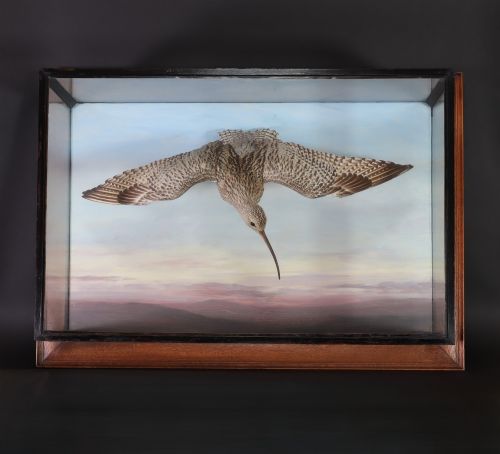
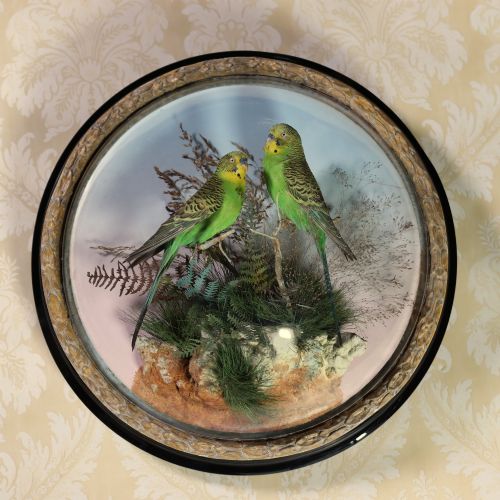
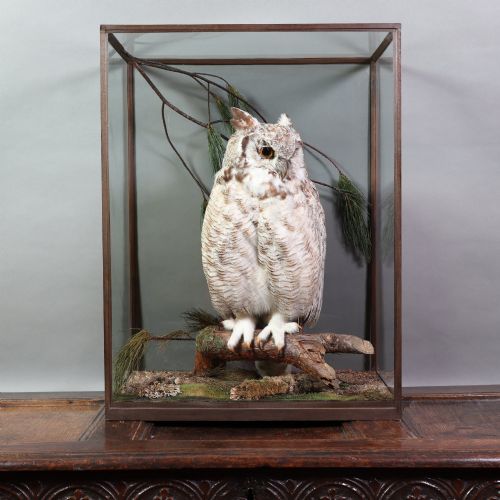
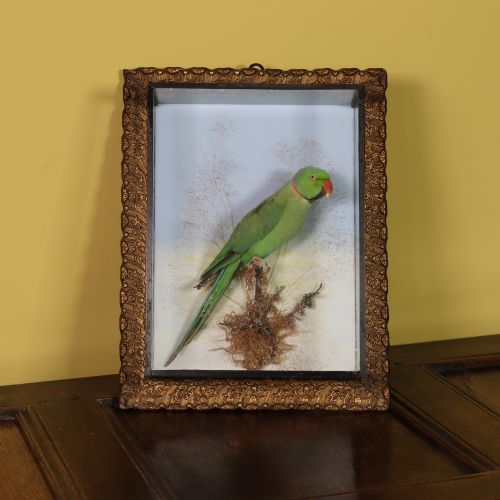
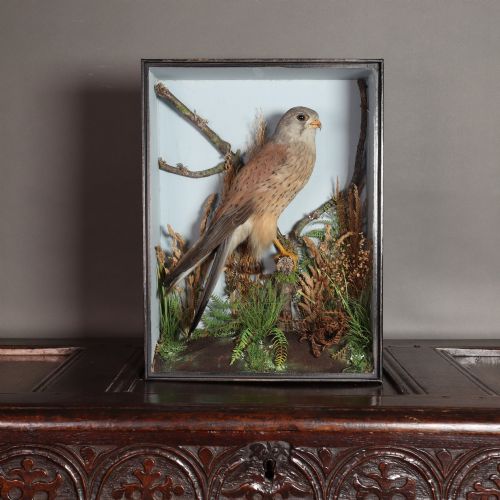
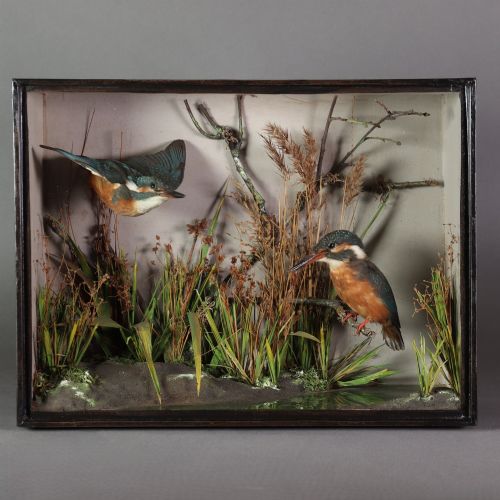
A victorian cased bird mount comprises preserved specimens arranged within glazed wooden frames, boxes, or domes. These pieces sit in interior spaces as natural history displays and curiosity cabinet decor.
The selections on this page span the Victorian and Edwardian periods, stretching from the late nineteenth century into the early twentieth century. Common forms include single specimens, pairs, and elaborate compositions of multiple birds.
Species range from British farmland and woodland birds to exotic parrots, kingfishers, and birds of paradise originating from South America, Australia, and New Guinea.
Materials and construction
Makers constructed the protective enclosures using timber frames and curved or flat glass panels. Inside these glazed housings, taxidermists arranged preserved specimens alongside dried vegetation, moss, and paper backgrounds.
Display formats vary between wall-hanging picture frame cases, freestanding wooden cabinets, and glass domes resting on wooden bases. Snow scenes and naturalistic groundworks complete the interior settings.
Victorian Cased Bird Mount Retail Price Guide 2026
Typical asking prices for victorian cased bird mount among the pieces listed under this phrase on Sellingantiques today, from the lower quarter to the upper quarter. They describe what is for sale here now, not the wider market.
Listings feature wooden frames, glass panels, dried vegetation, paper backgrounds, moss, and preserved specimens from Victorian and Edwardian periods.
Assessing quality and origin
Quality rests upon the skill of the taxidermist in rendering realistic posture and plumage condition. Named makers such as Rowland Ward, James Gardner, and T.E. Gunn bring documented provenance to individual pieces.
Complex multi-bird compositions and exotic foreign species demonstrate greater ambition than simple single-specimen displays. The preservation state of the feathers and the clarity of the original glass influence the character of each mount.
J Griffiths of Burford·Rowland Ward Ltd·T. E. Gunn·William Bazeley & Sons·James Gardner·W.F. Homer London
The Victorian Cased Bird Mount Glossary
- Taxidermy
- The art of preparing, stuffing, and mounting the skins of animals for display. It forms the basis of all natural history specimens found in nineteenth-century cases.
- Dome
- A rounded glass cover set upon a wooden base to protect interior displays from dust. These circular housings offer a 360-degree view of the subjects.
- Curiosity cabinet
- A collection of diverse objects and natural specimens amassed during the Victorian era. Bird mounts served as focal points within these scholarly displays.
- Specimen
- An individual animal preserved as an example of its species for scientific or decorative study. In these cases, they capture ornithological variety.
- Provenance
- The chronology of the ownership, custody, or location of a historical item. Maker signatures and trade labels provide this documentation.
Victorian Cased Bird Mount: Frequently Asked Questions
How do I clean the glass?
Clean the exterior glass using standard glass cleaner applied to a cloth rather than directly onto the surface. Avoid letting moisture seep into the wooden joints or interior.
Keep the delicate interior sealed and undisturbed to protect the fragile feathers and preserved vegetation from accidental damage.
Where should I place a case?
Position cases away from direct sunlight to prevent the plumage colours from fading over time. Stable indoor humidity levels protect the wooden structures and internal paper components.
Select a spot with minimal temperature fluctuations to ensure the long-term stability of the historic materials.
Are these birds native species?
The selections include both British wildlife such as jays, kestrels, and pheasants alongside exotic birds from regions like South America and New Guinea. Taxidermists sourced specimens from local fields as well as global expeditions.
This mix reflects Victorian enthusiasm for documenting both local fauna and global natural history.
How do I identify the maker?
Look for paper trade labels pasted inside the wooden case or attached to the base. Prominent firms often signed their work or included printed business details within the display.
Absence of a label remains common, as many regional practitioners operated without signing every completed piece.