






Brown Taxidermy Bird
These brown taxidermy bird specimens bring Victorian natural history indoors, offering preserved historic wildlife mounted within glass and wood display cases.
Brown Taxidermy Bird
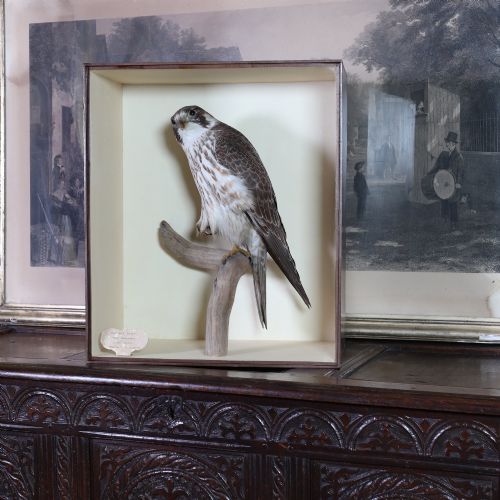
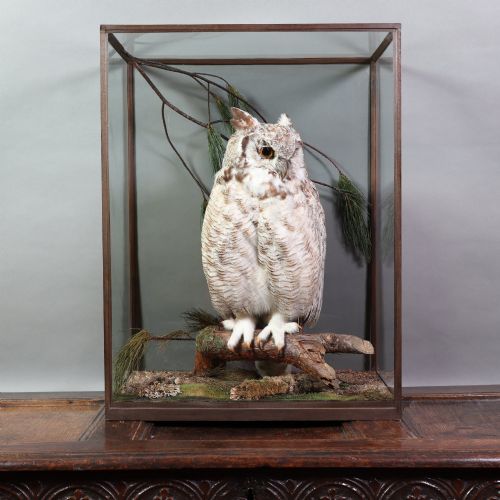
When you search for a brown taxidermy bird, you encounter preserved avian specimens ranging from solitary birds of prey to multi-species dioramas housed in glazed wooden enclosures. The pieces appearing here predominantly span the Victorian era, alongside early twentieth-century examples.
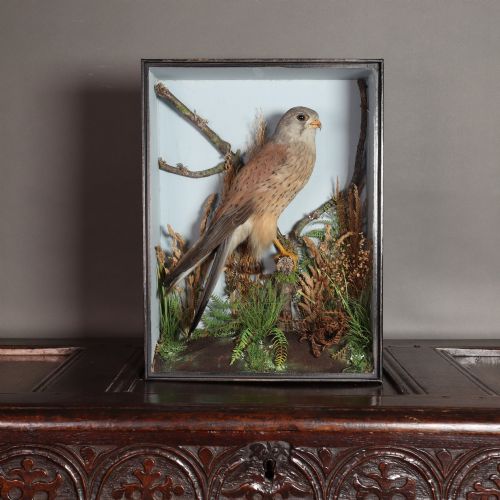
Common forms include single perching birds such as kestrels and kingfishers, as well as complex groupings like bantams, owls, jays, herons, and pheasants. These mounts capture the appearance of the living creature using preserved specimens arranged amidst naturalistic settings.
Victorian natural history displays dominate the selection, often taking the form of wall-mounted or freestanding glazed cabinets known as curiosity cabinet decor. Each arrangement utilises preserved specimens accompanied by dried vegetation, moss, and paper backgrounds.
Materials and construction methods
Taxidermists constructed these displays using preserved bird specimens mounted over internal armatures, arranging the feathers by hand to recreate lifelike postures. These mounts were then secured inside wooden cases featuring glass viewing panels to protect the delicate feathers from dust and handling.
Makers completed the interior scenes using dried vegetation, moss, and painted paper backgrounds to simulate natural woodland or riverbank habitats. Oak and other timber frames provided sturdy structural support for the glazed display boxes.
Brown Taxidermy Bird Retail Price Guide 2026
Typical asking prices for brown taxidermy bird among the pieces listed under this phrase on Sellingantiques today, from the lower quarter to the upper quarter. They describe what is for sale here now, not the wider market.
Listings feature Victorian and early 20th-century pieces utilising glass, wood, feathers, moss, paper, and preserved specimens.
Distinctions in craftsmanship and preservation
The degree of realism achieved in the taxidermist's initial mounting sets the standard for each piece, with skilled practitioners capturing accurate anatomical proportions and alert postures. Master taxidermists arranged feathers and positioned glass eyes to reflect the genuine vitality of the living bird.
The condition and complexity of the accompanying diorama enclosure influence the overall character of the piece. Intact glass cases with well-preserved painted backdrops and detailed botanical elements enhance the contextual value of the specimen inside.
J Griffiths of Burford·Rowland Ward Ltd·T. E. Gunn
The Brown Taxidermy Bird Glossary
- Taxidermy Specimen
- The preserved body of an animal prepared for exhibition. These specimens form the central focus of natural history displays.
- Diorama
- A three-dimensional scene depicting wildlife in a simulated natural habitat. These displays incorporate painted backgrounds alongside physical elements like moss and wood.
- Curiosity Cabinet
- A glazed piece of furniture or wall case used to exhibit natural history specimens and oddities. Such cabinets protect delicate specimens while allowing clear visibility.
- Taxidermy Mount
- A prepared animal specimen posed upon a support structure or base. These mounts range from simple tabletop figures to elaborate multi-bird compositions.
Brown Taxidermy Bird: Frequently Asked Questions
Where is the best place to display these birds?
Position cases away from direct sunlight and damp environments to protect the organic feathers and paper backdrops.
Stable indoor temperatures help preserve the structural integrity of both the wooden frame and the preserved specimen.
How can I tell a Victorian case from a later one?
Examine the construction of the wooden frame and the type of glass utilised in the viewing panels. Victorian examples often feature heavy timber mouldings and hand-finished interior paper backdrops.
Early twentieth-century pieces frequently display slight shifts in case design and painted scenery styles.
What materials make up the diorama settings?
Makers utilised dried vegetation, preserved moss, and painted paper to construct convincing natural environments inside the wooden enclosures.
These organic components were arranged around the mounted bird to replicate its native habitat.