
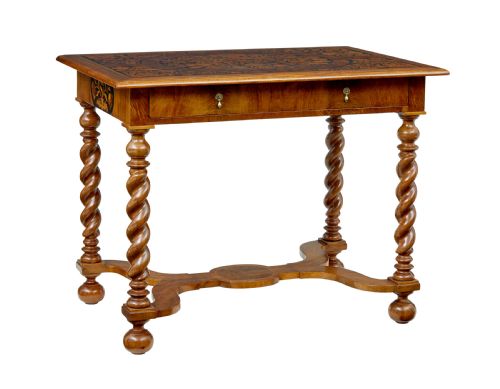
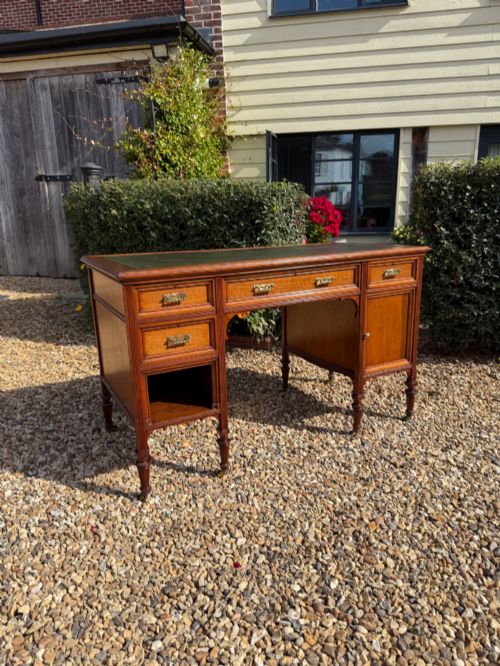
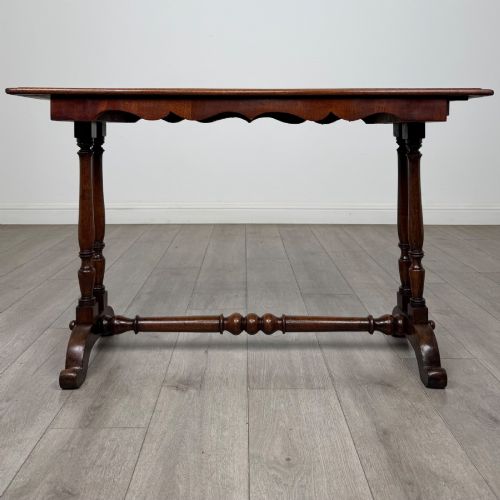
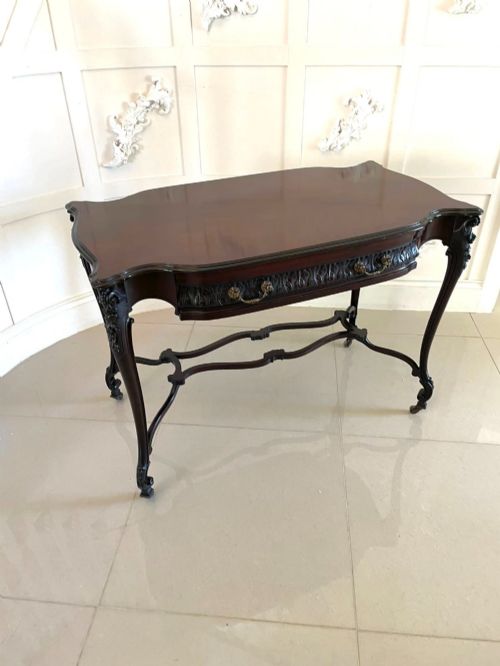
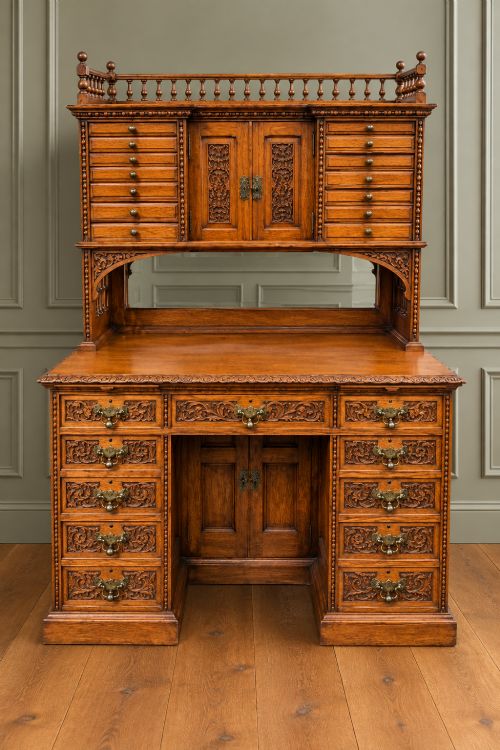
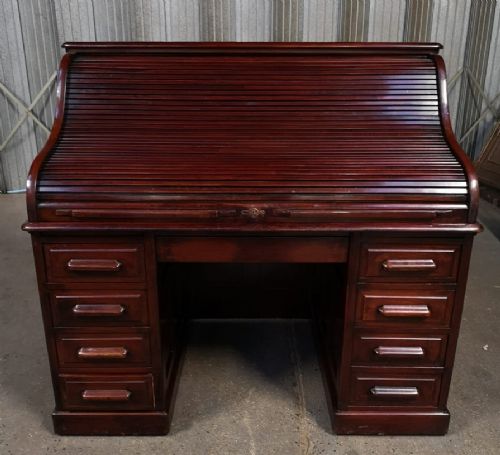

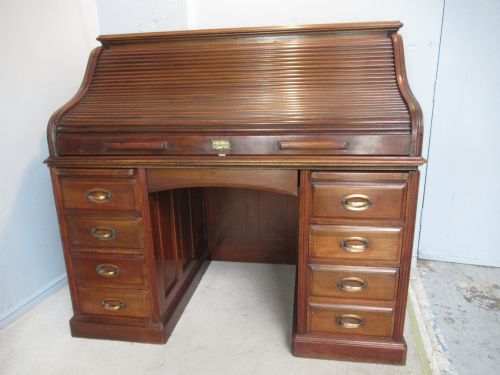
Victorian Carved Writing Table
A victorian carved writing table brings the solid presence of nineteenth-century timber into a room, offering a dedicated surface for correspondence.
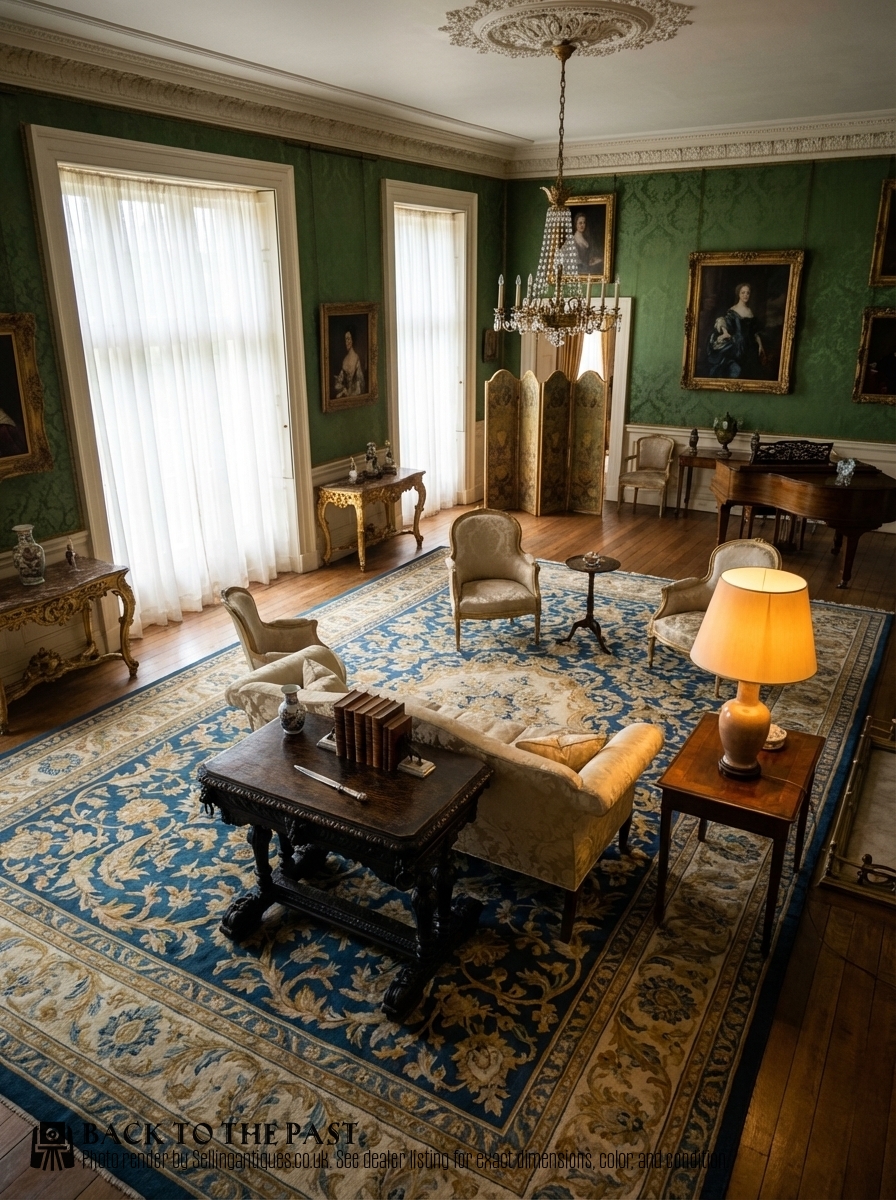
Victorian Carved Writing Table
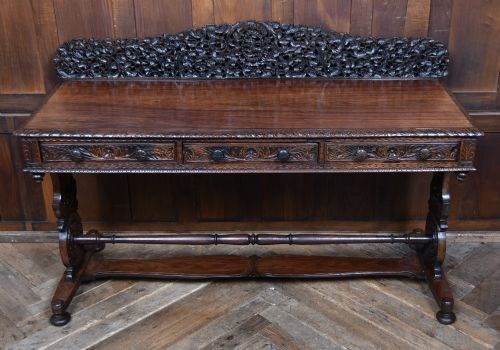
Buyers frequently encounter nineteenth-century oak tables bearing elaborate relief carving, often fitted with drawers beneath the writing surface. These pieces bridge the gap between utilitarian office furniture and decorative reception room furnishings.
Origins span standard Victorian workshops to specific revival styles, with many examples utilising inset leather panels for everyday use.
How They Were Made
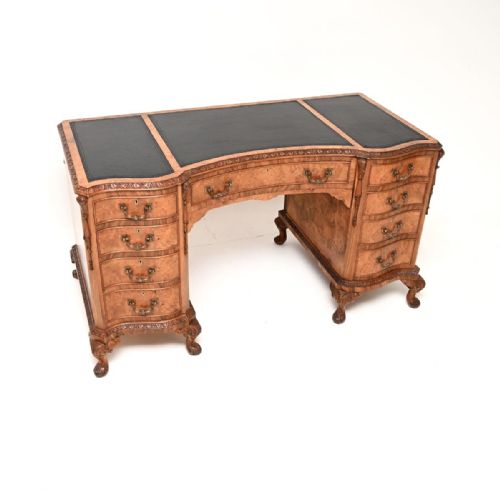
Cabinet makers built these tables using dense hardwoods like oak, mahogany, and walnut, often selecting burr veneers for decorative surfaces. Secondary timbers provided internal framing for drawers, while brass hardware secured handles and locks.
Surfaces were frequently fitted with tooled leather inserts, sometimes incorporating commemorative designs or gilt tooling. Carved details, such as Corinthian capitals or foliate scrolls, were worked directly into the solid timber framework.
Several tables conceal small secret compartments behind carved panels, once intended for private correspondence and hidden keepsakes.
What Varies in Quality
Depth and crispness of the carving distinguish standard production from superior pieces, particularly on oak and walnut friezes. Finer examples display meticulous attention to detail in secondary elements like fluted legs and fitted drawer interiors.
The selection of timber grain significantly impacts visual appeal, with choice burr walnut and flame mahogany commanding attention. Integration of original hardware and well-preserved leather inserts elevates the overall integrity of the table.
Maple and Co·James Shoolbred and Co·Edwards and Roberts·Frank Giles·Mein of Kelso
The Victorian Carved Writing Table Glossary
- Partners Desk
- A double-sided desk designed for two people to work opposite one another, featuring drawers on both faces. These large pieces were traditionally used in libraries and banks.
- Green Man
- A sculptural architectural ornament depicting a human face entwined with foliage and vines. It appears frequently on carved oak furniture from the nineteenth century.
- Library Table
- A large freestanding table designed for central placement in a room, often equipped with frieze drawers. They differ from standard desks by lacking back panels, allowing access from all sides.
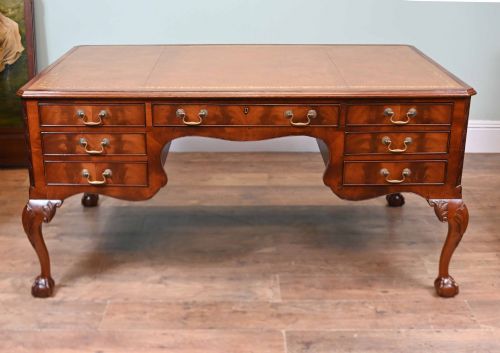
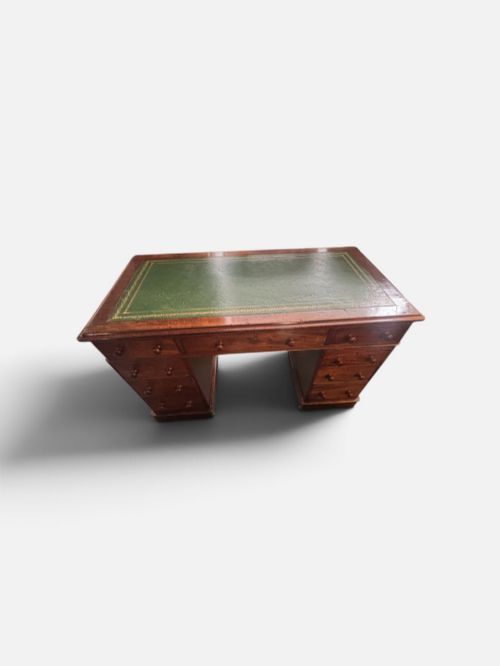
- Pedestal Desk
- A heavy desk comprising two box-like pedestals of drawers supporting a wide writing top. They often feature inset leather writing surfaces.
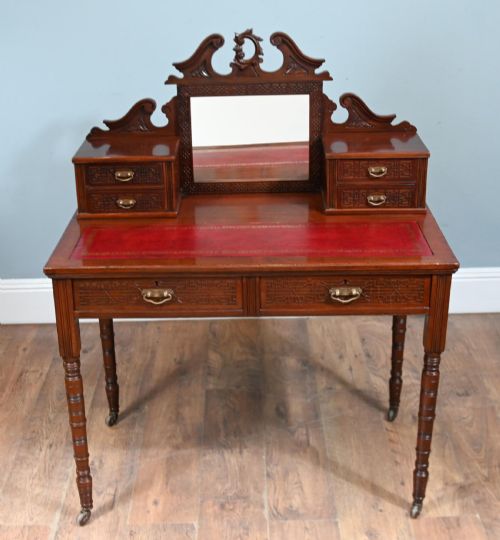
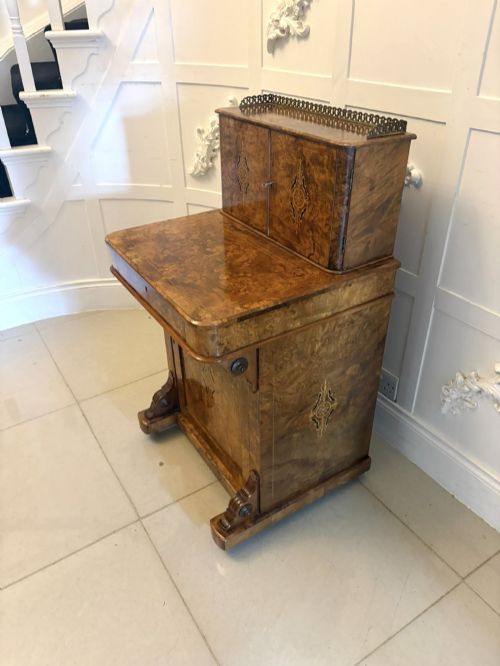
- Bonheur Du Jour
- A light lady's writing desk featuring a small cabinet or set of drawers superstructure above the main writing surface. These decorative pieces became popular during the nineteenth century.
Victorian Carved Writing Table: Frequently Asked Questions
Where were these tables placed?
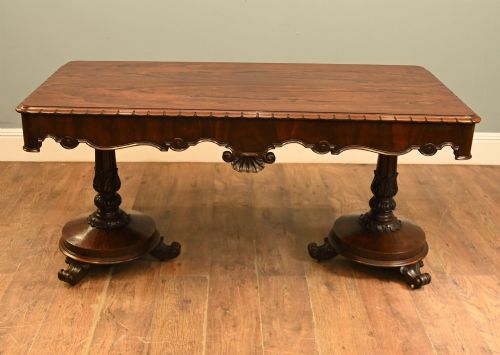
These tables sat centrally in libraries, studies, or private offices where light from a window fell across the writing surface. Freestanding library tables allowed access from all sides in large rooms.
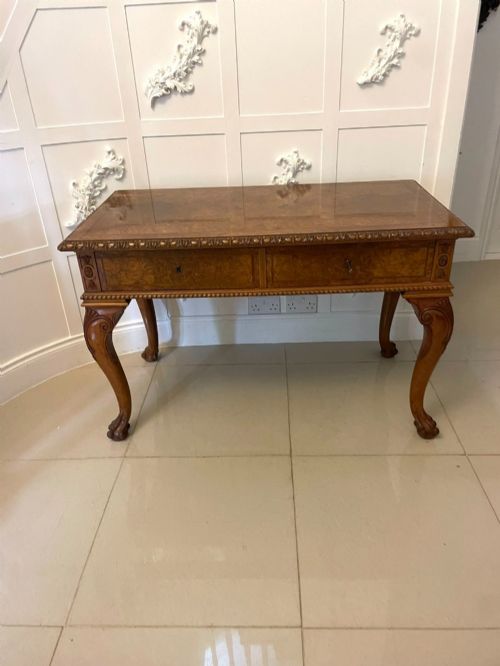
Smaller side variants often stood against walls in hallways or drawing rooms, serving dual purposes for display and occasional correspondence.
How do I care for the leather top?
To maintain the leather writing surface, dust it regularly with a dry cloth and avoid harsh chemical cleaners that strip the finish. Applying a neutral leather balm periodically prevents the material from drying out.
Keep liquids away from the edges where moisture can seep beneath the gold tooling and lift the hide from its wooden base.
Can I use one as a modern desk?
Many nineteenth-century writing tables accommodate contemporary laptops and desk accessories comfortably, provided the kneehole height is sufficient. Pedestal versions offer ample drawer storage for modern stationery and equipment.
Buyers should verify internal drawer dimensions and surface areas before purchase to ensure daily practicality.
What defines Gothic Revival style?
Gothic Revival pieces incorporate medieval architectural motifs such as pointed arches, quatrefoils, and heavy tracery carved into the solid oak framework. This aesthetic sought to emulate medieval craftsmanship within nineteenth-century domestic interiors.
Such tables possess a stern, monumental presence compared to lighter walnut or mahogany designs.