



Victorian Carved Wall Clock
These Victorian carved wall clock examples bring architectural presence and precise nineteenth-century movement into a room.
Victorian Carved Wall Clock
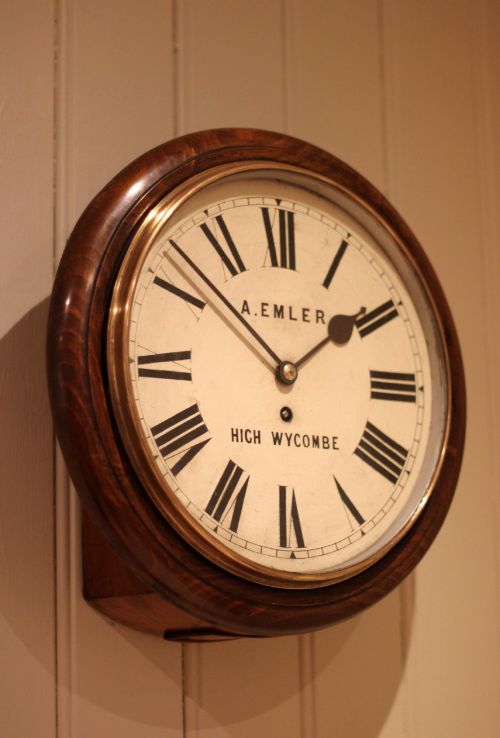
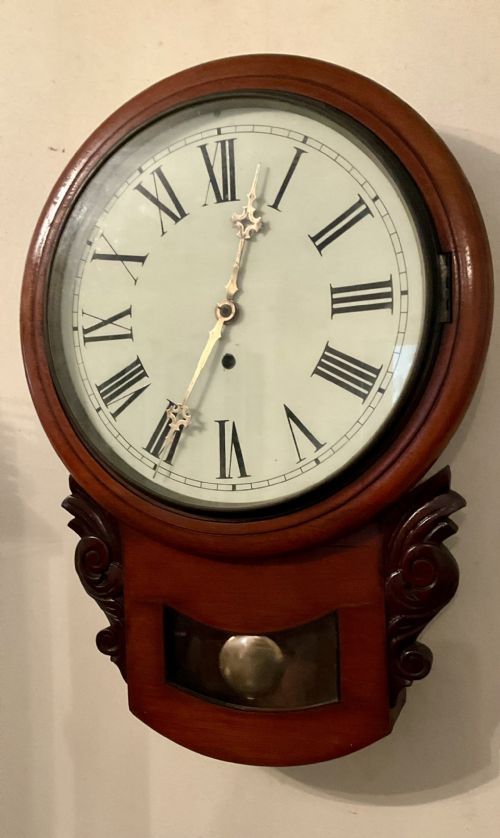
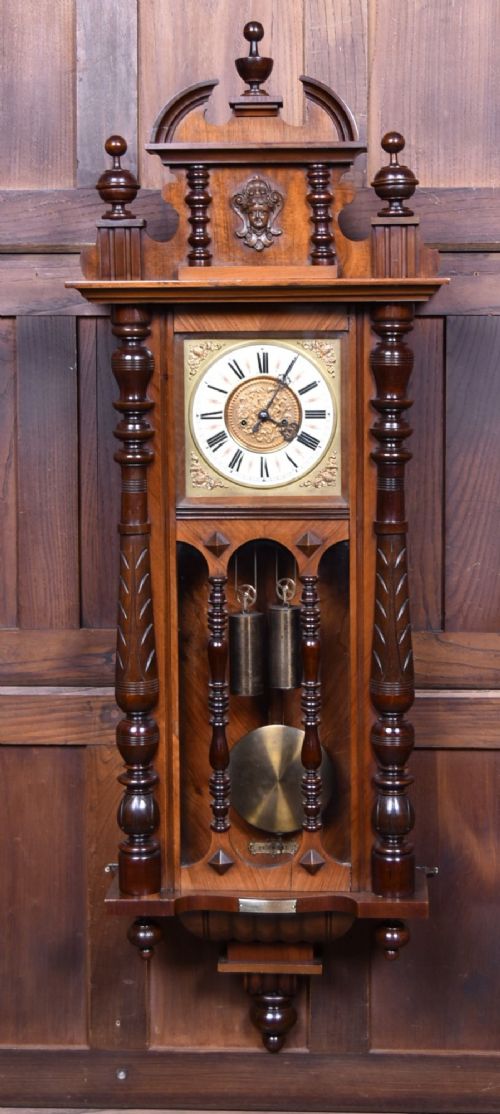
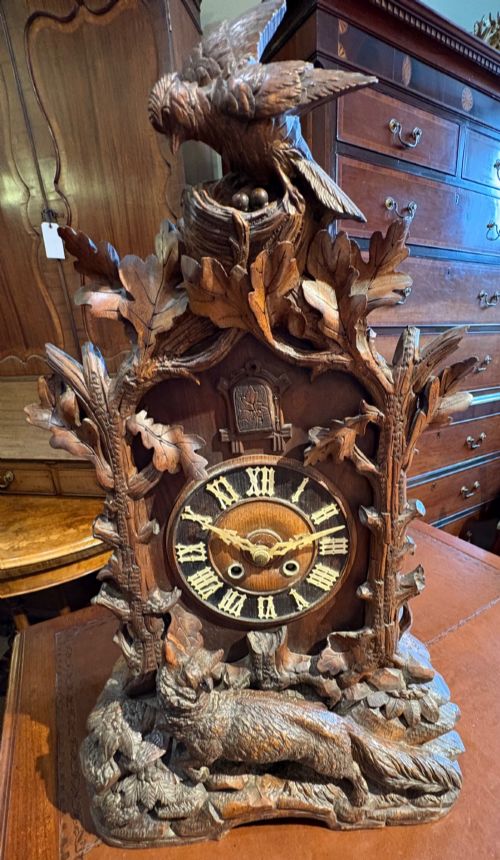
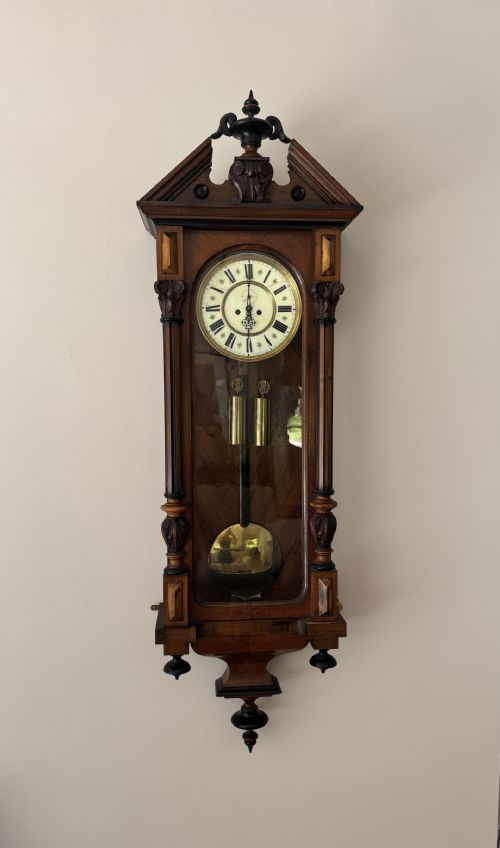
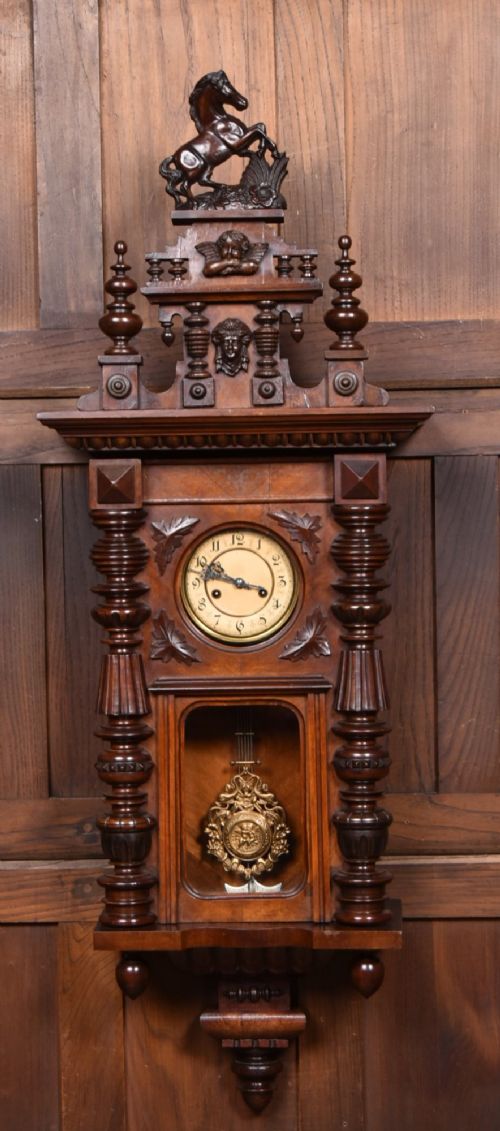
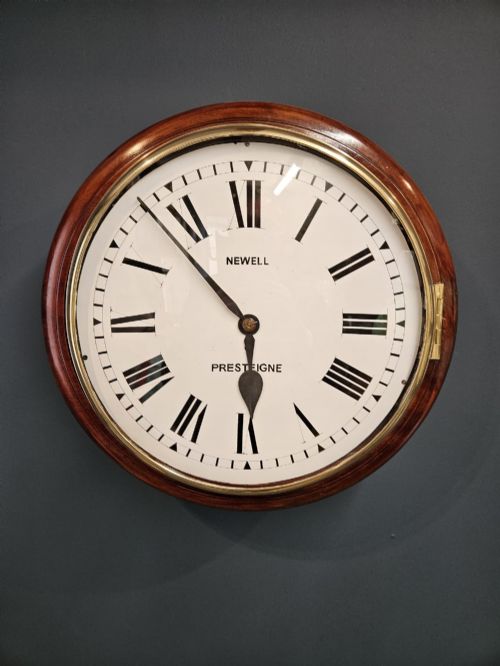
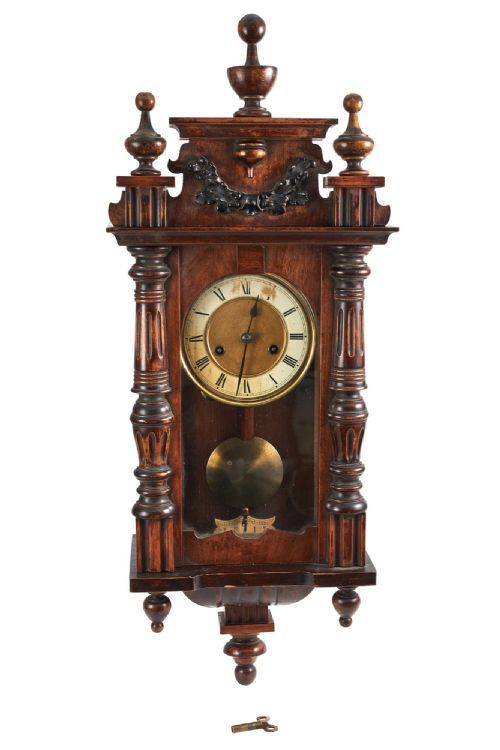
A victorian carved wall clock combines practical timekeeping with ornate timber casing, frequently taking the form of drop dial designs or grand Vienna regulators. You will encounter walnut, oak, and mahogany structures bearing deep relief carvings alongside simpler railway dial clocks.
The selection ranges from robust English fusee movements housed in rich mahogany to elaborate Black Forest cuckoo variants and continental double weight regulators. These pieces served both domestic and municipal spaces, reflecting distinct regional craftsmanship across the nineteenth century.
Materials and construction
Cabinetmakers utilised dense timbers such as walnut, oak, and mahogany, often shaping the cases with ebonised highlights or intricate hand-carved foliage. Dial faces typically combined white enamel with brass bezels and protective glass covers to shield the hands.
Internal mechanisms relied on brass gear trains driven by weights or fusee chains, delivering steady tension to ensure reliable timekeeping over eight-day intervals. Carpenters constructed robust backboards to support the considerable weight of these movements and their cascading pendulums.
The listings span multiple regional styles, uniting English fusee mechanisms with continental Vienna regulators and carved Black Forest woodwork.
Distinguishing finer examples
Excellence resides in the crispness of the timber carving and the precision of the internal fusee movement, where hand-finished components operate with minimal friction. Superior specimens display well-figured burr walnut or deep oak patination matched with crisp enamel dials free from heavy restoration.
The architectural harmony of the case, from balanced finials to proportioned side pillars, separates workshop pieces made for volume from those commissioned from established makers. Original matching pendulums and signed movements further elevate the standing of a wall clock.
Dent of London·Joseph Mansfield·Connell of London·W. Davis and Sons·Gustav Becker·Chave Taunton
The Victorian Carved Wall Clock Glossary
- Fusee
- A conical pulley used in mechanical clocks to maintain even drive force as the mainspring unwinds. This device ensures consistent timekeeping throughout the duration of the winding cycle.
- Drop dial
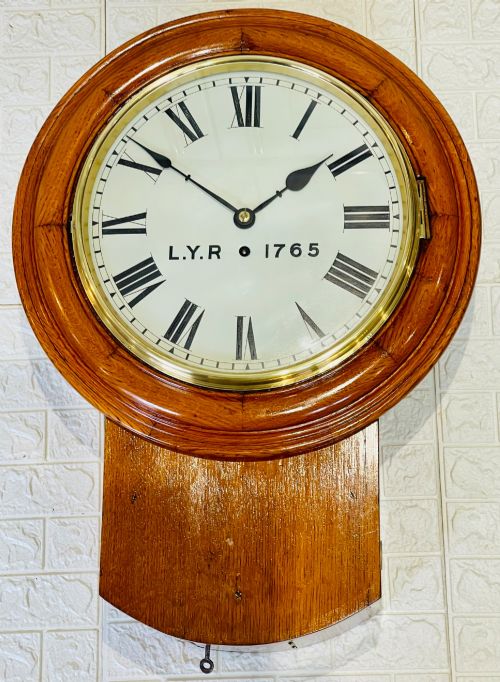
- A clock case featuring a circular dial at the top and a vertical trunk below to house the pendulum. This format became popular in offices, stations, and domestic halls during the nineteenth century.
- Vienna regulator
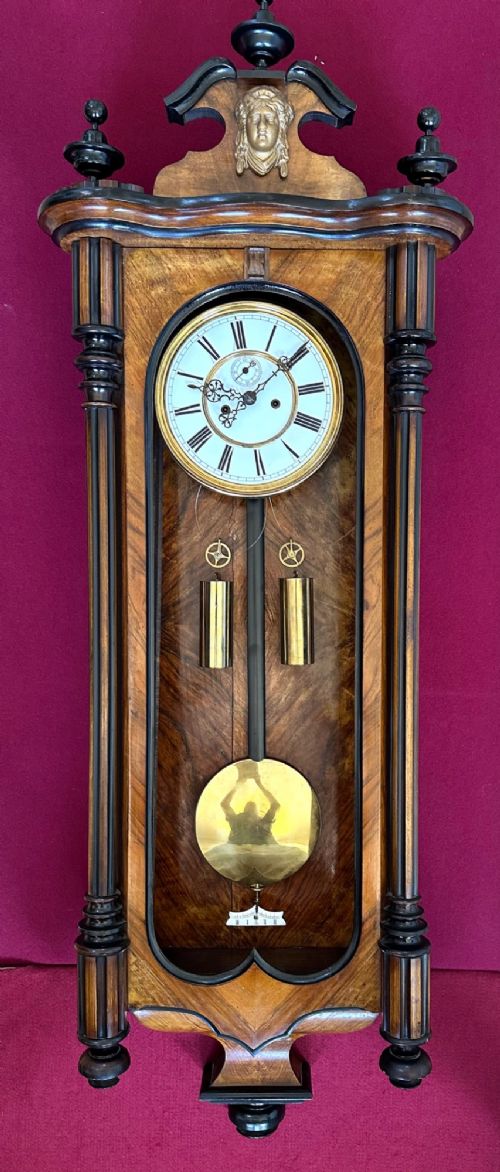
- A precision wall clock developed in Austria, characterised by a long glass door and a weight-driven movement. These clocks are known for their accurate timekeeping and elaborate walnut cases.
- Aneroid barometer
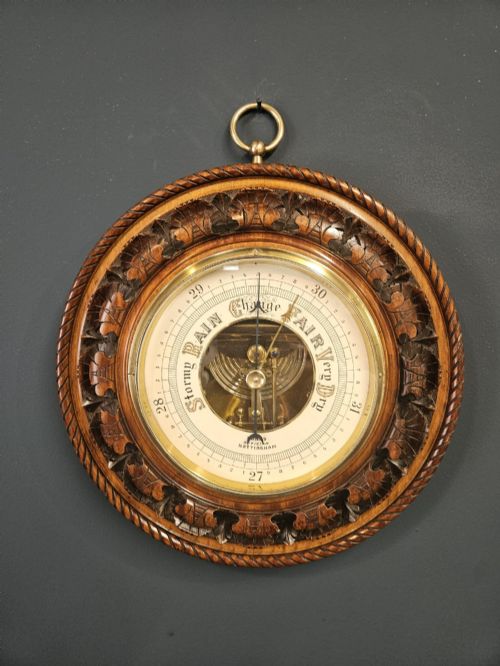
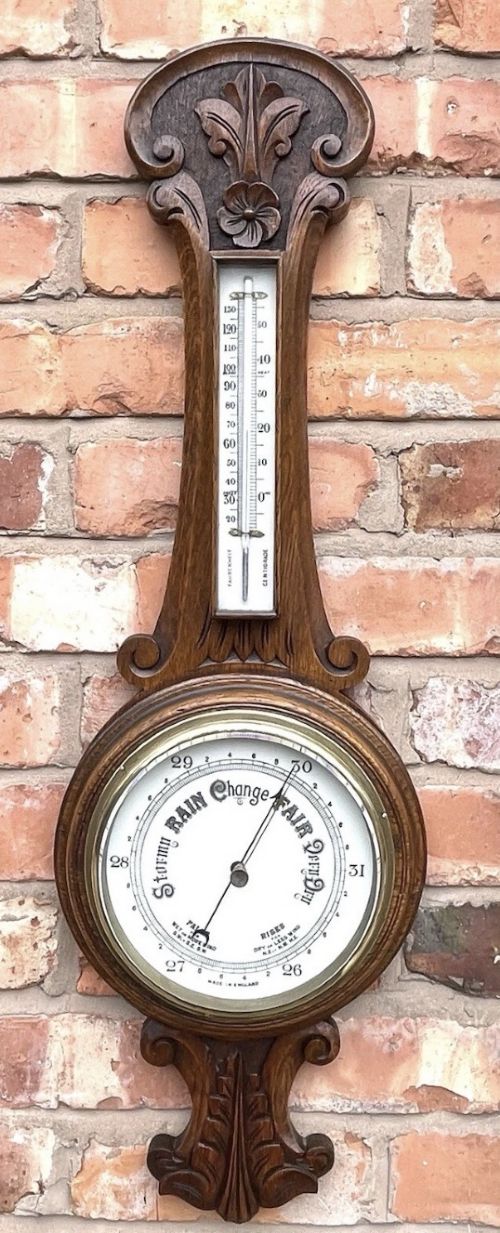
- An instrument measuring atmospheric pressure without liquid mercury, using a flexible metal box that expands or contracts. They often accompany clocks in carved wooden banjo frames.
- Ebonised wood
- Timber treated with a dark stain or finish to imitate ebony. This technique provided sharp contrast against lighter carved details on Victorian cases.
Victorian Carved Wall Clock: Frequently Asked Questions
Where should I hang a heavy wall clock?
Mount the clock directly into a solid wall stud or masonry using appropriate fixings to support the substantial weight of the timber case and movement.
Ensure the hanging position is level so the pendulum swings evenly and the escapement maintains a steady beat.
How do eight-day movements work?
An eight-day movement requires winding once a week using a key that tensions the internal mainspring or draws up the driving weights.
This mechanism offers a practical balance between regular maintenance and consistent mechanical performance.
Why does my clock need to be level?
A level case allows the pendulum to swing in a true vertical plane, ensuring the pallet arms interact correctly with the escape wheel.
If the clock is tilted, the beat becomes uneven and the movement will eventually stop.
How do I identify a Vienna wall clock?
Vienna wall clocks feature tall glass-fronted wooden cases designed to display the swinging pendulum and weighted brass works.
They generally house refined movements intended for domestic precision rather than public utility.